
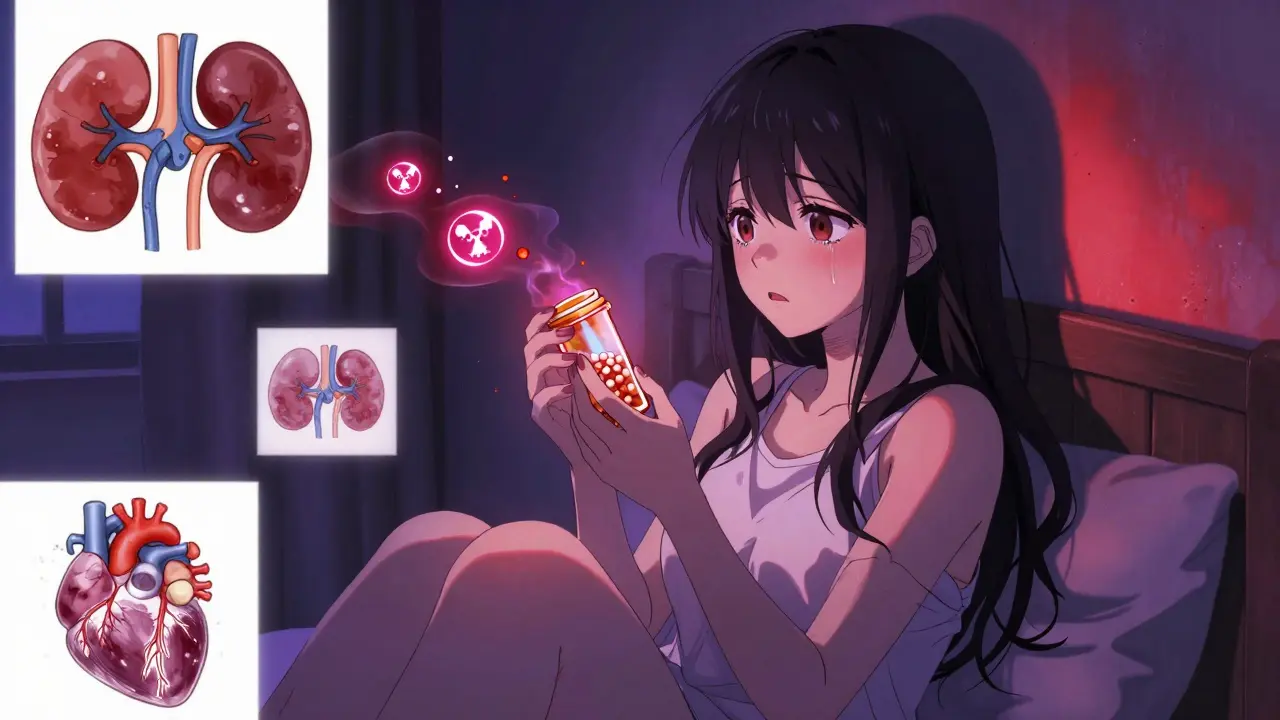
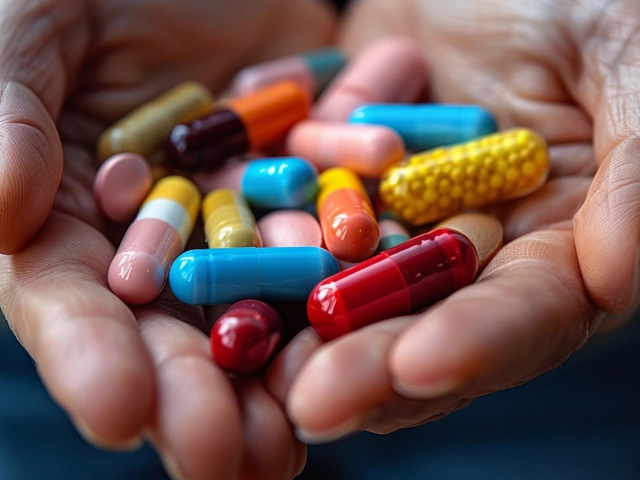
When you take a pill, you expect it to help - not hurt. But what if that pill isn’t what it claims to be? Counterfeit drugs aren’t just ineffective. They’re often laced with deadly toxins that can shut down your kidneys, stop your heart, or kill you in minutes. This isn’t science fiction. It’s happening right now, in hospitals, pharmacies, and online stores around the world.
More Than Just Fake Pills
Most people think counterfeit drugs are just weak versions of real medicine - maybe missing the active ingredient. But that’s only part of the story. The real danger lies in what’s added on purpose: industrial chemicals, heavy metals, and synthetic opioids. These aren’t mistakes. They’re deliberate choices by criminal networks looking to cut costs and maximize profits.
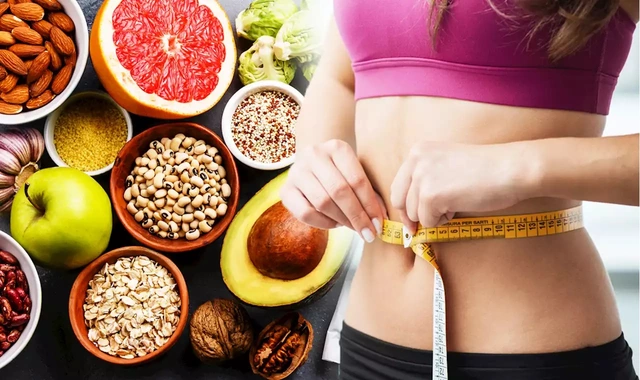
Take weight-loss pills sold online. A 2023 FDA investigation found some contained lead, mercury, and arsenic at levels more than 120 times the safe limit. One woman in Ohio took a pill labeled as a natural supplement. Within days, she developed acute kidney failure. She didn’t have a history of kidney disease. The culprit? Undeclared heavy metals mixed into the powder.
Or consider counterfeit erectile dysfunction pills. Instead of sildenafil, many contain analogues with uncontrolled doses - 80mg to 220mg, when the safe dose is 25-100mg. Between 2020 and 2022, over 1,200 men in the U.S. suffered priapism - a painful, prolonged erection that can permanently damage penile tissue. Some needed emergency surgery.
The Silent Killers: Fentanyl and Other Opioids
Fentanyl is the most terrifying contaminant in counterfeit drugs today. It’s 50 to 100 times stronger than morphine. A single milligram can kill. And it’s being pressed into pills that look exactly like oxycodone, Xanax, or Percocet.
In 2022, 73,838 people in the U.S. died from drug overdoses. Nearly half of those deaths involved counterfeit pills containing fentanyl. The CDC says 6 out of every 10 fake pills seized in 2023 had enough fentanyl to kill an adult. People think they’re taking a recreational pill. They’re not. They’re taking a lethal dose.
One Reddit user from Texas shared that he bought what he thought was Adderall. He took one pill. His heart raced. His vision blurred. He woke up in the hospital. The pill contained 1.9mg of fentanyl - more than enough to stop his breathing. He survived. Thousands didn’t.
Contaminants You Can’t See
Some poisons aren’t even drugs. They’re industrial waste.
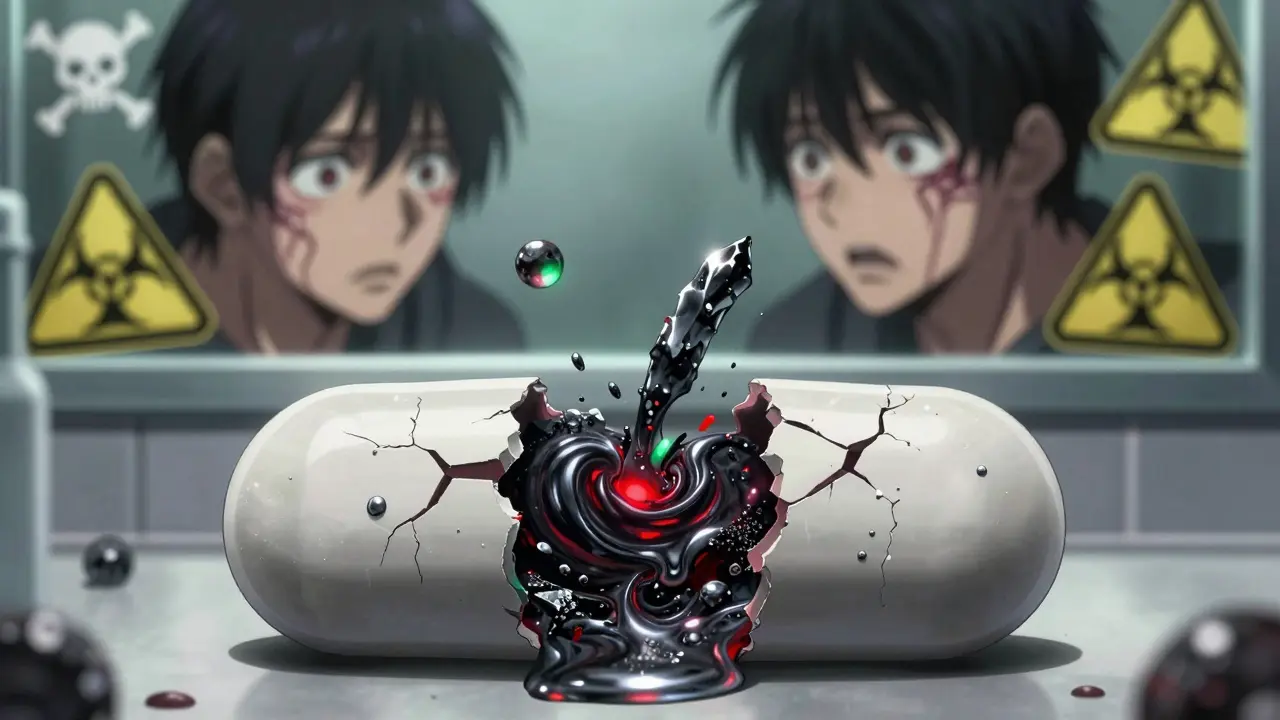
In 2022, 66 children in Gambia died from acute kidney failure after drinking cough syrup. The syrup was labeled as acetaminophen. But instead of the active ingredient, it was filled with diethylene glycol - a chemical used in antifreeze. The same toxin killed 100 people in Panama in 2006 and 70 in Haiti in 2012. Each time, the syrup came from the same unregulated manufacturer.
Even injectables aren’t safe. A 2019 FDA report found counterfeit epinephrine vials contaminated with Pseudomonas aeruginosa, a bacteria that causes sepsis. Patients who injected them developed abscesses, fever, and organ failure. One man lost his leg.
And then there’s talc. In counterfeit cancer drugs, manufacturers sometimes replace real ingredients with chalk or talcum powder. When injected, these particles travel through the bloodstream and lodge in lungs, liver, and lymph nodes. Over time, they cause granulomatous disease - scarring that mimics cancer. At least 89 cases have been documented since 2020.
How It Gets to You
Most counterfeit drugs don’t come from shady street vendors. They come from websites that look real.
The FDA found that 96% of online pharmacies selling prescription drugs operate illegally. They mimic real pharmacies. They use fake logos. They even have professional-looking contact pages. But they don’t require prescriptions. They ship from warehouses in China, India, or Eastern Europe. No inspections. No quality control.
Even in Australia, where drug regulations are strict, counterfeit products are rising. In 2023, a Melbourne man bought Ozempic online to manage his diabetes. The vial looked authentic. But instead of semaglutide, it contained insulin glargine - a different, faster-acting insulin. He had five hypoglycemic episodes in two weeks. He nearly died.
WHO’s 2023 Medical Product Alert system tracked 47 specific counterfeit alerts that year. One involved fake insulin. Another, fake antibiotics. All of them contained contaminants that turned treatment into a life-threatening gamble.
Who’s at Risk?
You might think this only happens in poor countries. But that’s outdated thinking.
Low- and middle-income nations still face the highest rates - 1 in 10 medicines fail quality tests. But in wealthy countries, the danger is growing fast. The EUROPOL report showed a 317% increase in contaminated drug seizures between 2018 and 2022. Fentanyl-laced pills are now flooding the U.S., Canada, and parts of Europe.
Older adults buying medications online to save money. Young people buying pills for anxiety or focus. People with chronic illnesses who can’t afford brand-name drugs. All of them are targets.
A 2022 survey found 417 cases across 32 countries where people developed new-onset diabetes after taking counterfeit weight-loss pills. The pills didn’t just fail to work - they contained hidden thiazolidinediones, powerful drugs that affect insulin sensitivity. People didn’t know they were taking diabetes medication. They didn’t know they were being poisoned.
How to Protect Yourself
There’s no foolproof way to spot every fake drug. But there are steps you can take to reduce risk.
- Only buy from licensed pharmacies. In Australia, check if the pharmacy is listed on the Therapeutic Goods Administration (TGA) website. In the U.S., look for the VIPPS seal - only 6,312 of over 38,000 online pharmacies have it.
- Check the packaging. Look for misspellings, poor print quality, mismatched colors, or missing batch numbers. Real pharmaceuticals have precise labeling. Fakes often don’t.
- Don’t trust prices that seem too good. If a brand-name drug is being sold for 80% off, it’s fake. No legitimate pharmacy discounts that much.
- Watch for side effects. If you suddenly feel dizzy, nauseous, or have chest pain after taking a new pill - stop. Call your doctor. Report it to your country’s health authority.
Pharmacists can spot 83% of counterfeits just by looking at the packaging. Handheld devices like Raman spectrometers can detect chemical contaminants with 94% accuracy - but they cost thousands. Most people won’t have access. So awareness is your best defense.
What’s Being Done?
Some progress is being made. The FDA’s new Counterfeit Drug Sensor (CDS-1) can scan a pill and identify 97% of contaminants in seconds - no lab needed. Blockchain tracking is reducing fake drug infiltration by 73% in pilot programs across 12 countries. Countries like Canada and Australia are working on tighter import controls.
But the scale of the problem is overwhelming. The global counterfeit drug market is now worth $200 billion - up from $75 billion in 2010. And it’s growing because enforcement is patchy. Regulations vary by country. Online sales are nearly impossible to police. And the profit margins for counterfeiters are enormous.
Without international cooperation, experts predict a 40% increase in contaminant-related deaths by 2027. The next big wave won’t be in a distant country. It could be in your town.
The Bottom Line
Counterfeit drugs aren’t a distant problem. They’re in your medicine cabinet, your purse, your friend’s backpack. The contaminants inside aren’t just harmful - they’re lethal. Fentanyl, lead, antifreeze, bacteria - these aren’t theoretical risks. They’re real, documented killers.
There’s no magic solution. But you can protect yourself. Don’t buy drugs online unless you’re certain of the source. Talk to your pharmacist. Report suspicious products. And remember: if a pill looks too easy to get, too cheap to be real - it probably is.
The next time you pick up a prescription, ask: Do I really know where this came from? Because the answer could mean the difference between life and death.
Can counterfeit drugs cause long-term damage even if I don’t die?
Yes. Many contaminants cause irreversible damage. Heavy metals like lead and mercury can build up in your organs over time, leading to kidney failure, nerve damage, or cognitive decline. Industrial solvents like diethylene glycol can scar your kidneys permanently. Even if you survive an overdose, you might need lifelong dialysis or suffer chronic pain. Some people develop new-onset diabetes or heart conditions after exposure to hidden chemicals in fake pills.
Are all online pharmacies dangerous?
No - but most are. In the U.S., only about 6,300 of over 38,000 online pharmacies are verified by the VIPPS program. In Australia, only pharmacies listed on the TGA website are legal. If a site doesn’t require a prescription, ships from overseas, or has no physical address, it’s almost certainly illegal. Stick to trusted, licensed pharmacies - even if it costs more.
How do I report a suspicious drug?
In Australia, report it to the Therapeutic Goods Administration (TGA) through their online portal. In the U.S., use the FDA’s MedWatch system. In the EU, contact your national medicines agency. Keep the packaging, the pill, and any receipts. Photos help. Reporting isn’t just about helping yourself - it can prevent others from being poisoned.
Can I tell if a pill is fake just by looking at it?
Sometimes. Look for differences in color, size, markings, or texture compared to previous batches. Check for spelling errors on the label. But many fakes are nearly identical. Even pharmacists can’t spot every one. The safest approach is to avoid buying from unverified sources entirely. Don’t rely on appearance alone.
Why are counterfeit drugs so common now?
Because it’s cheap and profitable. Making fake pills costs pennies. Selling them online can bring thousands in profit. Criminals use social media, encrypted apps, and fake websites to reach customers. Governments struggle to track them because they operate across borders. The rise of online shopping and pandemic-era telehealth created perfect conditions for this illegal trade to explode.
There are 13 Comments
Christina VanOsdol
Alfred Noble
Brooke Exley
lela izzani
Stephen Archbold
Emily Wolff
Jacob Carthy
Khaya Street
Vanessa Drummond
Anil bhardwaj
Nerina Devi
Dinesh Dawn
Matthew Brooker
Write a comment
Your email address will not be published. Required fields are marked *