

Why Mixing Up Side Effects and Allergies Can Hurt Your Health
You take a new medication and feel nauseous. Your skin breaks out in a rash. You get dizzy after your pill. What do you tell your doctor? Side effect or allergy? It seems like a small detail, but it changes everything - your treatment, your future prescriptions, even your risk of antibiotic resistance.
Here’s the hard truth: most people don’t know the difference. A 2022 study at UCSF found that 70% of patients call any bad reaction an allergy, even when it’s not. That means you might be avoiding a drug you could safely take - or worse, your doctor might keep giving you something that’s making you sick because they think it’s just a "side effect."
The CDC says adverse drug events send over a million people to the ER every year in the U.S. And a big chunk of those? Mistakes in how symptoms are reported. If you say "I’m allergic to penicillin" when you just had a stomachache, you’re more likely to get stronger, broader antibiotics. That increases your risk of superbugs. That’s not just theory - it’s real. People with a penicillin allergy label (even if it’s wrong) get 63% more broad-spectrum antibiotics, according to JAMA.
So how do you stop guessing? How do you talk to your care team so they actually understand what’s happening in your body?
Know the Difference: Side Effects vs. Allergic Reactions
Side effects and allergic reactions are not the same. They don’t work the same way in your body, and they don’t need the same response.
Side effects are predictable. They happen because the drug affects more than just what it’s meant to. For example:
- Statins (for cholesterol) can cause muscle aches in 5-10% of users.
- NSAIDs like ibuprofen upset the stomach in 15-30% of people.
- Diphenhydramine (Benadryl) makes you sleepy in half of users.
These aren’t dangerous - just annoying. And often, they fade. About 60-70% of side effects go away within 2-4 weeks as your body adjusts.
Allergic reactions are your immune system overreacting. It sees the drug as an invader and attacks. This can happen with any dose - even a tiny one. Symptoms include:
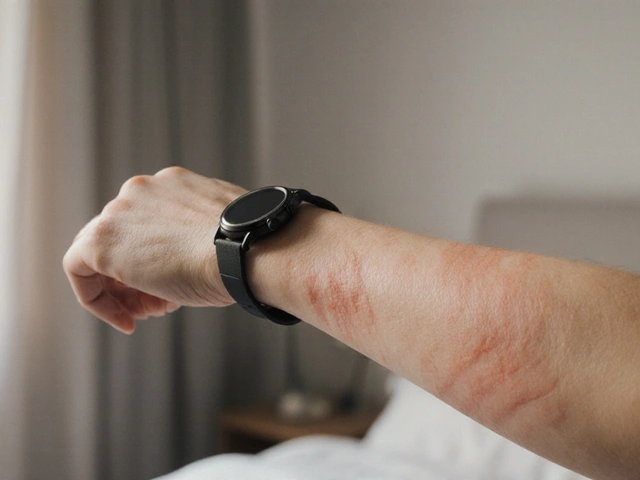
- Hives or raised, itchy red welts on the skin
- Swelling of lips, tongue, or throat
- Wheezing or trouble breathing
- Dizziness, rapid pulse, or passing out
These are emergencies. If you have any of these, stop the drug and get help immediately. Anaphylaxis - the most severe allergic reaction - can kill in minutes.
And here’s the kicker: 90% of people who think they’re allergic to penicillin aren’t. A 2023 AAAAI study showed most of them had a rash years ago - maybe from a virus - and were mislabeled. They’ve avoided penicillin ever since, even though it’s often the best, safest, cheapest option.
What to Say Before Your Appointment
Don’t walk in saying, "I think I’m allergic to this." That’s too vague. You need to be specific. Your care team needs facts, not feelings.
Start by writing down:
- What happened? Be precise. Not "I felt weird." Say: "I got a red, itchy rash on my chest." Or: "I threw up twice within an hour of taking the pill."
- When did it start? Timing matters. Side effects often show up after a few days. Allergies? Usually within minutes to hours. If your rash appeared 3 hours after your first dose - that’s a red flag. If it showed up on day 5? Probably a side effect.
- How bad was it? Use a scale. "On a scale of 1 to 10, the itching was an 8."
- Did it get better or worse? Did it go away when you skipped a dose? Did it return when you took it again? That’s key evidence.
- What else was going on? Were you sick? Had you eaten something new? Were you stressed? Sometimes other things cause symptoms that look like drug reactions.
Bring your symptom log to the appointment. A 2021 study from UC San Diego showed patients who did this reduced miscommunication by 37%. That’s huge.
Bring Your Medications - All of Them
Don’t just say, "I’m on lisinopril." Bring the bottle. The label says the dose, the manufacturer, the expiration date. Your doctor might not know what generic version you’re on - and some have different fillers that cause reactions.
UCLA Health found that bringing physical medication bottles cuts communication errors by 28%. Why? Because people misremember names. "I think it was amoxicillin... or maybe azithromycin?" That’s not helpful. The bottle tells the truth.
Also, bring your list of all current meds - including supplements, OTC painkillers, and herbal stuff. Some side effects come from interactions, not the main drug.

Ask These Exact Questions
Don’t wait for your doctor to ask. Lead the conversation with these:
- "What are the most common side effects of this medication - the ones that happen in more than 10% of people?"
- "Which symptoms mean this could be an allergic reaction - and I need to stop it right away?"
- "If this is a side effect, will it likely go away? How long should I wait before calling back?"
- "Are there other drugs in a different class I could try if this doesn’t work for me?"
- "Could this be something else - like a virus or food reaction - and not the medication at all?"
These questions come straight from Harvard Health and the American Medical Association’s 2023 guidelines. They’re not just polite - they’re strategic. They shift the conversation from guessing to evidence.
Use the S.O.A.P. Method to Organize Your Thoughts
Doctors use S.O.A.P. to document patient visits. You can use it too:
- Subjective: "I’ve had a headache every morning since I started this pill."
- Objective: "I took the pill at 8 a.m. Headache started at 9:30 a.m. Pain level: 7/10. No nausea, no vision changes."
- Assessment: "This seems like a side effect - it’s timing matches the drug’s peak level. It’s not an allergic reaction because there’s no rash or swelling."
- Plan: "I’ll keep taking it for 7 more days. If the headache doesn’t improve, I’ll call to discuss alternatives."
A Johns Hopkins study showed this method improves provider understanding by 41%. It’s not complicated - just structured.
What If You’ve Been Mislabelled?
Many people carry an allergy label for life - even if it’s wrong. Penicillin is the biggest offender. But you can fix this.
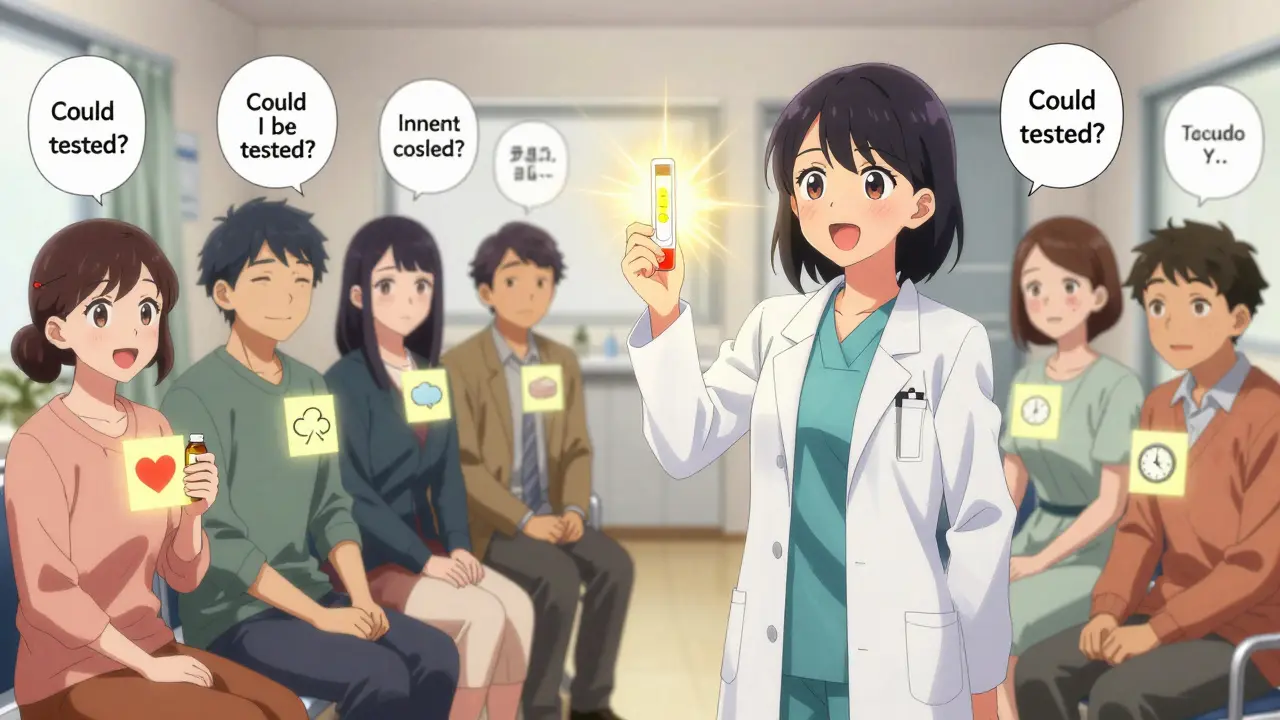
Ask your doctor: "Could I be tested for a true penicillin allergy?"
There’s a simple skin test - done by an allergist - that can confirm or rule it out. Most people with a history of "penicillin allergy" test negative. The American Academy of Allergy, Asthma & Immunology now recommends testing for anyone with a vague history, especially if they’re on multiple meds or have chronic conditions.
And if you’ve been told you’re allergic to sulfa, NSAIDs, or even codeine? Ask the same question. Mislabeling happens with all drugs.
Tools That Help
You don’t have to do this alone. There are free tools built for patients:
- The Medication Reaction Tracker app by the American Pharmacists Association guides you through logging symptoms with clinical prompts. It’s been downloaded over 87,000 times since January 2023.
- The FDA now requires all new prescription medication guides to clearly list side effects vs. allergy symptoms. Check the paper insert that comes with your pill bottle.
- Some clinics use the Allergy Reconciliation Protocol - a structured interview that reduces penicillin mislabeling by 62%. Ask if your provider uses it.
What Happens When You Get It Right
When you clearly describe your symptoms, you get better care. You avoid unnecessary drugs. You reduce your risk of side effects from stronger alternatives. You help fight antibiotic resistance.
A 2023 study in the Journal of General Internal Medicine found that clinics using clear communication protocols reduced unnecessary antibiotic use by 27%. That’s not just good for you - it’s good for everyone.
And if you’ve been avoiding a drug you could safely take? You might get better results, fewer pills, and lower costs. One analysis found mislabeling adds $1,200-$2,500 in annual healthcare costs per person.
Final Tip: Don’t Wait Until You’re in Crisis
Don’t wait until you’re dizzy, breaking out in hives, or in the ER to speak up. Start tracking now. Write it down. Bring it next time you see your doctor, pharmacist, or nurse.
Medications are powerful. But your voice is more powerful. You’re not just a patient - you’re the expert on your own body. Use that power. Ask the right questions. Give the right answers. And protect your health - one clear conversation at a time.




There are 10 Comments
Rajni Jain
Natasha Sandra
Erwin Asilom
Sumler Luu
sakshi nagpal
Sandeep Jain
roger dalomba
Brittany Fuhs
Sophia Daniels
Nikki Brown
Write a comment
Your email address will not be published. Required fields are marked *