
Methadone QT Risk Calculator
Risk Assessment Guide
This tool helps assess your risk of QT prolongation when taking methadone. Remember: methadone can cause dangerous heart rhythms even at low doses, especially when combined with certain medications that inhibit CYP enzymes.
Important: This is not a medical diagnosis. Always consult your healthcare provider before making any medication decisions.
Enter Your Information
Risk Assessment Results
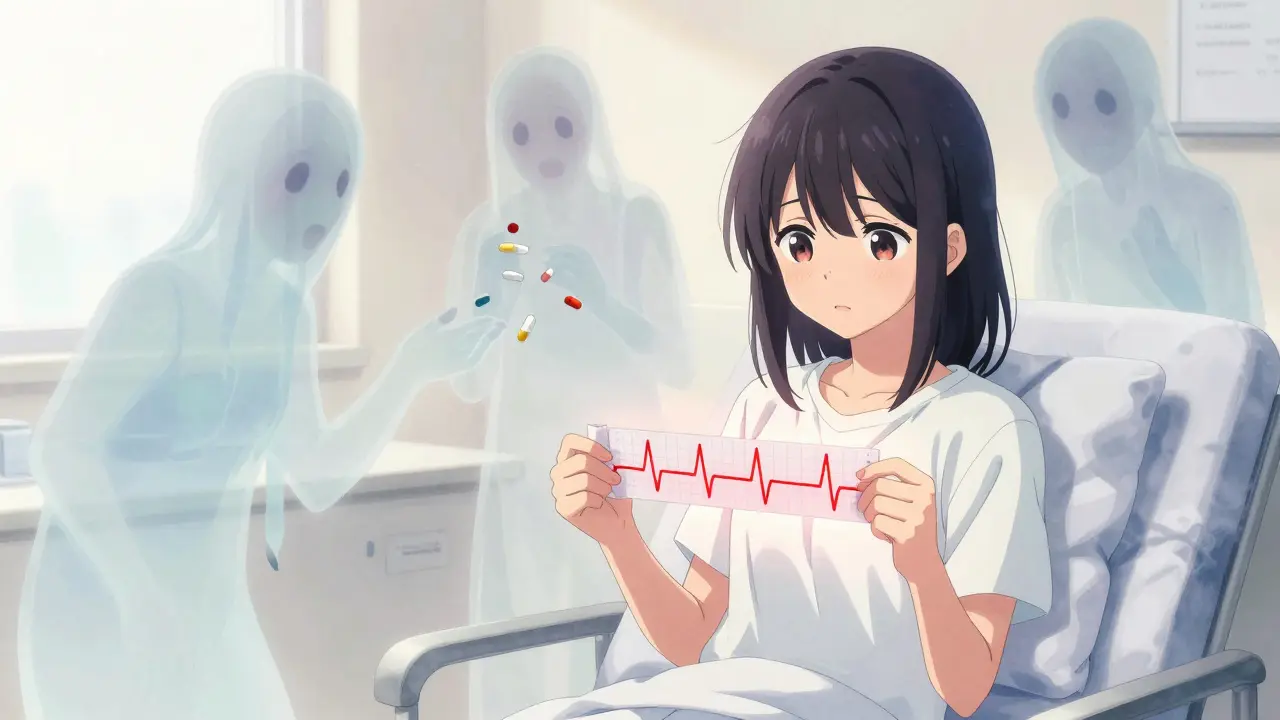
When someone starts methadone for opioid dependence, they’re often told it’s safe, effective, and once-daily. But behind that simplicity is a hidden danger: methadone can quietly mess with your heart - especially when other medications are in the mix. This isn’t theoretical. People have died from irregular heart rhythms triggered by methadone, and many of those cases happened because of common drug interactions that no one checked for.
How Methadone Affects Your Heart
Methadone doesn’t just block opioid receptors. It also blocks a specific potassium channel in the heart called hERG. When that channel is blocked, the heart takes longer to reset between beats. On an ECG, that shows up as a longer QT interval. A normal QTc (corrected QT) is under 430 milliseconds for men and under 450 for women. Once it crosses 450 in men or 470 in women, the risk of a dangerous rhythm called torsade de pointes starts climbing. At 500 ms or higher, the chance of sudden cardiac death jumps fourfold.
Studies show that nearly 30% of people on methadone have QTc intervals over 460 ms - way above normal. And in about 16% of patients, it hits 500 ms or more. That’s not rare. That’s common enough that every clinic treating methadone patients should be watching for it.
The CYP Enzyme Problem
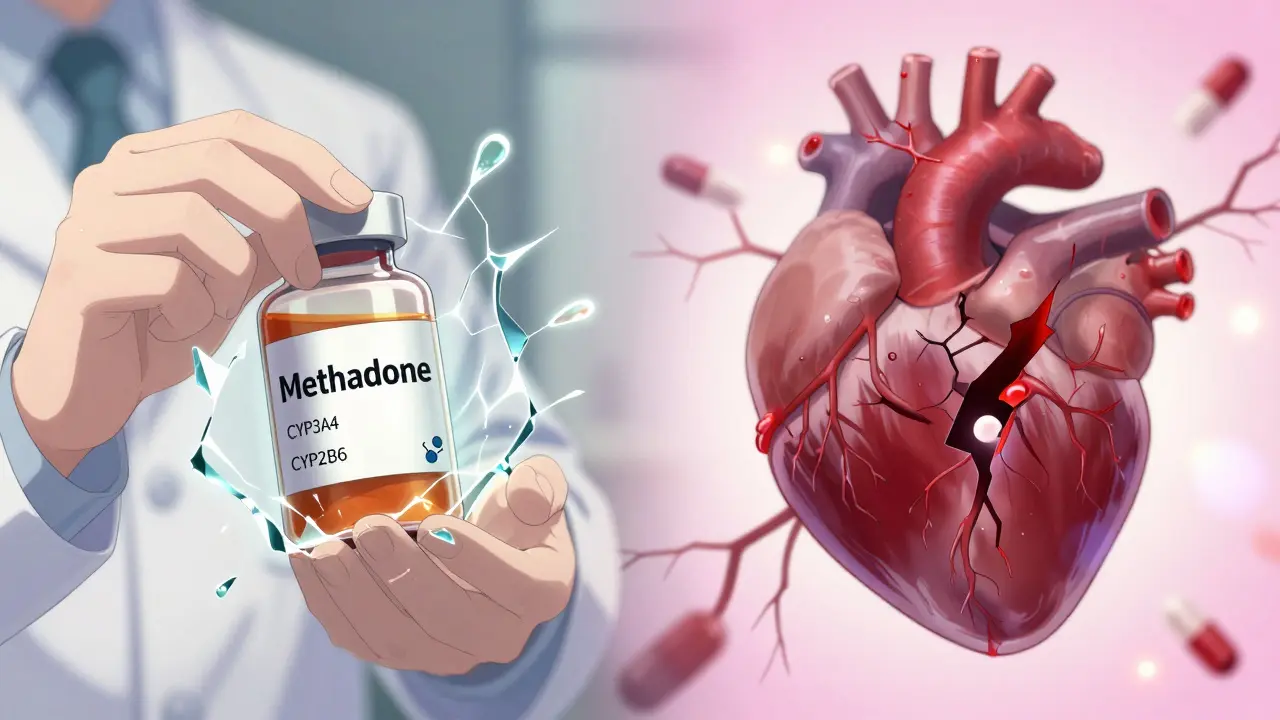
Methadone is broken down mostly by two liver enzymes: CYP3A4 and CYP2B6. If something blocks those enzymes - like a common antibiotic, antifungal, or antidepressant - methadone doesn’t get cleared. It builds up. And when methadone levels rise, so does the QT prolongation risk.
Some of the most dangerous offenders include:
- Fluoxetine (Prozac)
- Clarithromycin (Biaxin)
- Fluconazole (Diflucan)
- Valproate (Depakote)
- Ritonavir (part of Paxlovid)
A 2007 study in JAMA Internal Medicine found that 6 out of 167 methadone patients on fluoxetine had dangerously long QT intervals. Three others were on clarithromycin. Fluconazole and valproate each showed up in three cases. These aren’t rare drugs. They’re prescribed all the time - for depression, infections, fungal issues, seizures. And most prescribers don’t realize they’re stacking risks.
It’s not just inhibitors. Some drugs speed up methadone breakdown. Rifampin, carbamazepine, and St. John’s wort can drop methadone levels so fast that withdrawal kicks in - even if the dose hasn’t changed. That’s another kind of danger.
Dose Isn’t the Only Factor
You might think: higher dose = higher risk. And yes, doses over 100 mg/day are linked to more QT prolongation. But here’s the catch - it’s not that simple.
A 2018 review of 32 cases of methadone-related torsade found that only 21 of them had clear links to high doses. Nearly 40% had heart disease. One-third had low potassium. And over half were on another QT-prolonging drug or CYP inhibitor. Some patients on 50 mg had dangerous QT intervals. Others on 200 mg never did. That unpredictability is what makes methadone so tricky.
Genetics play a role too. Some people have a CYP2B6 gene variant that slows methadone metabolism. That means even a normal dose can build up to toxic levels. That’s why some patients react badly to methadone while others don’t - even on the same dose.
Who Needs an ECG?
Guidelines have changed. In 2020, the threshold for ECG monitoring was 100 mg/day. Now, the American Society of Addiction Medicine says: monitor everyone on more than 50 mg/day. Why? Because studies show QT prolongation can happen at lower doses - especially when CYP inhibitors are involved.
Here’s what clinics should do:
- Get a baseline ECG before starting methadone.
- Repeat it after 2-4 weeks, and again after any dose increase.
- Check electrolytes - especially potassium - every time you adjust the dose.
- Review every other medication the patient takes. Not just prescriptions. Include over-the-counter drugs, supplements, and herbal products.
Don’t wait for symptoms. People don’t feel QT prolongation. No chest pain. No dizziness. Just sudden cardiac arrest.
Buprenorphine: The Safer Alternative?
Compared to methadone, buprenorphine is far less likely to prolong the QT interval. Studies show minimal cardiac effects, even at high doses. That’s one reason its use has grown - from 1.4 million prescriptions in 2016 to over 2.1 million in 2021.
It’s not perfect. Buprenorphine can still cause respiratory depression. But for patients with heart disease, low potassium, or those on multiple medications, it’s often the smarter choice.
Some clinics now use buprenorphine as first-line for anyone with a history of heart rhythm problems, or who are on fluoxetine, clarithromycin, or similar drugs.
What Clinicians Miss
Many providers think: “I checked the drug interaction checker. No red flags.” But here’s the problem - most tools don’t flag methadone’s QT risk. They only warn about respiratory depression or sedation. They miss the silent cardiac danger.
Another blind spot: patients on methadone often have multiple chronic conditions. They’re on antidepressants, antifungals, antivirals, anticonvulsants. One drug alone might be fine. But three together? That’s a recipe for trouble.
And then there’s Paxlovid. Since 2021, it’s been used widely for COVID-19. Its ritonavir component is a potent CYP3A4 inhibitor. A patient stable on 80 mg of methadone can crash into toxicity within days of starting Paxlovid. Emergency rooms have seen cases of cardiac arrest after just one course of Paxlovid in methadone patients.
What You Can Do
If you’re on methadone:
- Ask your prescriber if you’ve had an ECG.
- Tell them every medication you take - even if you think it’s harmless.
- Know your potassium level. Low potassium makes QT prolongation worse.
- Don’t stop methadone suddenly. It stays in your system for days. QT risk doesn’t vanish when you skip a dose.
If you’re a provider:
- Don’t assume a patient is safe just because they’re on a low dose.
- Check for CYP inhibitors before prescribing anything new.
- Use the Bazett formula to correct QT for heart rate - don’t rely on automated ECG readings alone.
- Consider switching high-risk patients to buprenorphine.
The data is clear: methadone saves lives - but it can also end them. The difference is often a simple ECG and a careful medication review.
Can methadone cause sudden death even at low doses?
Yes. While higher doses increase risk, methadone can cause dangerous QT prolongation even at doses below 50 mg/day - especially when combined with CYP inhibitors like fluoxetine, fluconazole, or clarithromycin. Genetics, low potassium, and heart disease also play major roles. Some patients develop life-threatening rhythms at doses others tolerate safely.
Which drugs should I avoid with methadone?
Avoid fluoxetine, fluconazole, clarithromycin, valproate, ritonavir (in Paxlovid), amiodarone, sotalol, and certain antipsychotics like haloperidol or ziprasidone. Even some antibiotics, antifungals, and antidepressants can dangerously raise methadone levels. Always check for CYP3A4 and CYP2B6 inhibitors before adding any new medication.
Do I need an ECG if I’m on methadone for pain, not addiction?
Yes. The cardiac risk isn’t tied to why you’re taking methadone - it’s tied to the drug itself. Whether for chronic pain or opioid use disorder, methadone affects the heart the same way. Guidelines now recommend ECG monitoring for anyone on more than 50 mg/day, regardless of indication.
How long does methadone stay in the body after stopping?
Methadone has a half-life of 8 to 59 hours, meaning it can stay in your system for up to a week. QT prolongation doesn’t disappear immediately after stopping methadone or an interacting drug. Patients can still be at risk for torsade de pointes days after discontinuation. That’s why monitoring should continue for at least 7-10 days after stopping methadone or a CYP inhibitor.
Is buprenorphine really safer for the heart?
Yes. Multiple studies show buprenorphine has minimal to no effect on the QT interval, even at high doses. Unlike methadone, it doesn’t significantly block hERG channels. For patients with heart disease, electrolyte imbalances, or those on multiple medications, buprenorphine is often the safer choice for opioid use disorder treatment.
Can I take over-the-counter meds like ibuprofen or antacids with methadone?
Ibuprofen and most antacids are generally safe. But avoid antacids containing aluminum or magnesium if you’re also on certain antibiotics or antifungals - they can interfere with absorption. More importantly, check any cold, flu, or sleep aids. Many contain diphenhydramine or dextromethorphan, which can also prolong QT. Always disclose everything you’re taking, even if it’s “just an OTC pill.”


There are 13 Comments
John O'Brien
Yo this is wild how no one talks about this. I’ve seen three people crash from methadone + antibiotics and nobody checks their ECGs. It’s not rocket science but everyone’s too lazy.
Paul Taylor
Look I’ve been in addiction treatment for 12 years and I’ve had my QT monitored every time they bumped my dose. But most clinics? They don’t even have an ECG machine on site. They just trust the algorithm on the chart and hope for the best. I’ve had friends drop dead from this and the system didn’t blink. It’s not about the dose it’s about the combo. Fluoxetine and methadone? That’s a silent killer. And don’t get me started on how often patients are on three or four QT-prolonging meds at once and nobody connects the dots. We treat addiction like it’s a math problem not a biological minefield. The fact that Paxlovid is still being handed out like candy to people on methadone is criminal. I had a buddy go in for COVID and come out with a heart attack. He was on 60mg. No history of heart disease. Just fluconazole and methadone. The system is broken because we don’t treat this like the emergency it is.
Candice Hartley
This needs to be in every ER. Seriously.
Kegan Powell
It’s wild how we’ve built this whole system around trust and hope instead of data and vigilance 🤔 We tell people methadone is safe but we don’t give them the tools to stay safe. It’s like giving someone a chainsaw and saying ‘be careful’ without teaching them how to wear goggles. The heart doesn’t care if you’re trying to get clean. It just reacts to the chemistry. And if your potassium’s low and you’re on fluoxetine and your doc didn’t check your QT? That’s not negligence that’s a lottery ticket you didn’t buy but got drawn anyway 😔
April Williams
Of course people are dying. We let untrained staff hand out methadone like candy and then act shocked when someone drops dead. This is a failure of compassion and competence. Why aren’t clinics required to have a cardiologist on call? Why are we still using outdated guidelines? Someone should sue every clinic that doesn’t do baseline ECGs. This isn’t just negligence it’s institutional murder.
suhail ahmed
Man this hits different in India where we don’t even have ECG machines in half the clinics. Methadone is available over the counter in some places and doctors prescribe fluconazole like it’s aspirin. I’ve seen patients on 120mg with no monitoring and a whole shelf of antifungals and SSRIs. No one checks electrolytes. No one knows what CYP means. The system here is built on scarcity and silence. This isn’t just an American problem it’s a global blind spot. We need training programs that don’t assume you’ve got a lab or a cardiologist down the hall.
Harry Henderson
Stop being soft. If you’re on methadone you need to be monitored like you’re on chemo. No excuses. No ‘maybe’. Baseline ECG. Monthly labs. Full med review. If your doc won’t do it find a new one. Your life isn’t a suggestion it’s a protocol. And if you’re on Paxlovid? You’re not getting methadone until you’re off it and your QT’s back to normal. No debate. No ‘I feel fine’. Your heart doesn’t feel anything until it stops.
Andrew Clausen
There is a fundamental error in the post: QTc correction via Bazett’s formula is known to be inaccurate at high and low heart rates. The Fridericia correction is superior and should be preferred. Additionally, the claim that ‘QT prolongation doesn’t vanish when you skip a dose’ is misleading-methadone’s half-life is long, but QT prolongation is concentration-dependent and will resolve as levels decline. The assertion that monitoring must continue for 7–10 days post-discontinuation lacks robust evidence. Furthermore, buprenorphine is not entirely devoid of QT risk-case reports exist, albeit rare. Precision matters.
Anjula Jyala
Let’s be clear this isn’t about methadone it’s about patients who refuse to follow basic pharmacokinetic principles. If you’re on CYP inhibitors you’re not a candidate for methadone. Period. The fact that clinics even consider it without full genotyping and continuous telemetry is irresponsible. You think your OTC cold medicine doesn’t matter? You’re a walking arrhythmia waiting to happen. And buprenorphine? Only for the weak who can’t handle real treatment. Methadone is gold standard if you respect the science not ignore it.
Kirstin Santiago
I’ve been on methadone for 8 years and got my first ECG last year because I asked. Turns out I was at 480ms. No symptoms. No idea. My doc said ‘you’re fine’ until I showed him the article. Now I get checked every 3 months. Just ask. Just check. It takes 5 minutes. I’m alive because I didn’t trust the silence.
Kathy McDaniel
so i was on methadone for a while and my doc gave me clarithromycin for a sinus infection and i felt kinda weird but thought it was just the bug… turns out my qt was up and they had to switch me to buprenorphine. i didn’t know any of this till now. thanks for posting. i’m so glad i’m alive 😅
Desaundrea Morton-Pusey
Of course this is happening. The government wants us addicted so we stay dependent on their clinics. Methadone is a tool of control. They don’t want you healthy they want you tethered. And now they’re using COVID to push more people into this trap. Paxlovid? It’s not about the virus it’s about forcing you into cardiac risk so they can justify more monitoring more fees more control. Wake up.
Murphy Game
They’re not telling you this because they don’t want you to know methadone is a slow poison. The whole addiction treatment industry is built on keeping people on it forever. ECGs? Labs? Monitoring? Too expensive. They’d rather you die quietly than lose the funding stream. This isn’t medicine it’s a business model. And you’re the product.
Write a comment
Your email address will not be published. Required fields are marked *