
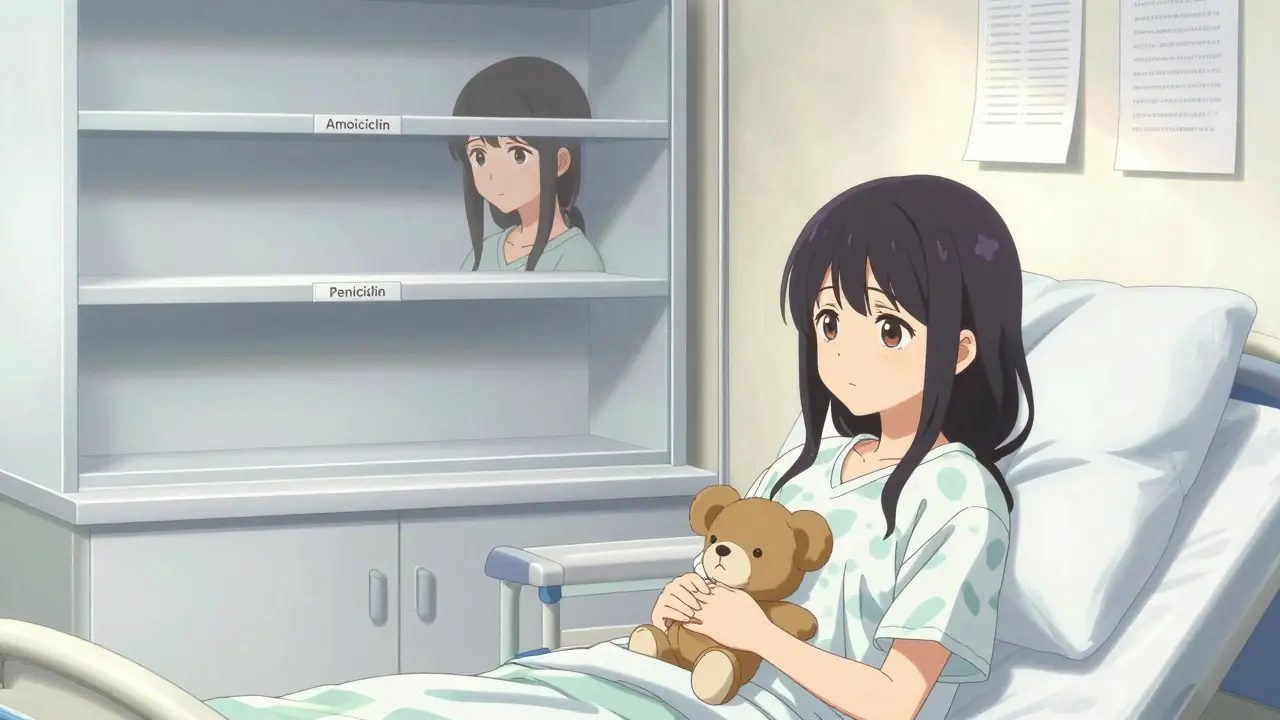
When a child gets pneumonia or an adult develops a urinary tract infection, the expectation is simple: a few days of antibiotics, and they’ll feel better. But in 2026, that’s no longer guaranteed. Across the globe, antibiotics are vanishing from hospital shelves, pharmacy counters, and clinics - not because they’re outdated, but because they’re too cheap to make. The result? People are dying from infections that should be treatable.
What’s Really Happening to Our Antibiotics?
In 2023, one in six bacterial infections worldwide was resistant to first-line antibiotics, according to the World Health Organization’s GLASS report. For urinary tract infections, that number jumped to one in three. And now, nearly half of all drug shortages involve antibiotics - 42% higher than any other class of medicine. This isn’t random. It’s a system failure. The problem starts at the factory. Making sterile injectable antibiotics like penicillin G benzathine or amoxicillin requires clean rooms, strict quality controls, and constant monitoring. But because these drugs are cheap - often sold for less than $1 per dose - manufacturers don’t see the profit. Why invest millions in compliance when you can make more money producing cancer drugs or diabetes meds? The result? A handful of factories, mostly in India and China, produce most of the world’s antibiotics. If one plant shuts down for maintenance, or if supply chains break down after events like Brexit, shortages ripple across continents. The U.S. alone had 147 active antibiotic shortages as of December 2024. In the European Economic Area, 28 countries reported shortages, with 14 calling them “critical.” In the UK, shortages more than doubled after Brexit, from 648 in 2020 to 1,634 in 2023. Meanwhile, in low- and middle-income countries, 70% of antibiotics are already inaccessible. For many, the choice isn’t between drug A and drug B - it’s between treatment and no treatment at all.When the First-Line Drug Disappears
Doctors don’t just pick antibiotics randomly. They follow guidelines based on decades of research. For a simple UTI, amoxicillin or trimethoprim-sulfamethoxazole are standard. For pneumonia, amoxicillin-clavulanate or azithromycin. But when those drugs vanish, clinicians are forced into dangerous territory. Take amoxicillin. In early 2023, the European Medicines Agency confirmed a major shortage. Across 22 databases, amoxicillin use dropped by 55%. Amoxicillin with clavulanate? Down 69%. What replaced them? Broader-spectrum drugs like ceftriaxone, or worse - carbapenems. These are powerful antibiotics meant for life-threatening infections. Using them for routine cases? That’s like using a flamethrower to light a candle. And it’s accelerating resistance. When third-generation cephalosporins become unavailable - which now happen in over 40% of E. coli infections - doctors turn to last-resort drugs like colistin. One infectious disease specialist in California described giving colistin to a patient with a simple UTI because nothing else was available. Colistin is toxic. It can damage kidneys. But with no alternatives, it’s the only option left. In rural Kenya, nurses report sending patients home without antibiotics because penicillin isn’t stocked. In Mumbai, a mother waited 72 hours for azithromycin to treat her child’s pneumonia. By the time it arrived, the infection had worsened. The child ended up in intensive care.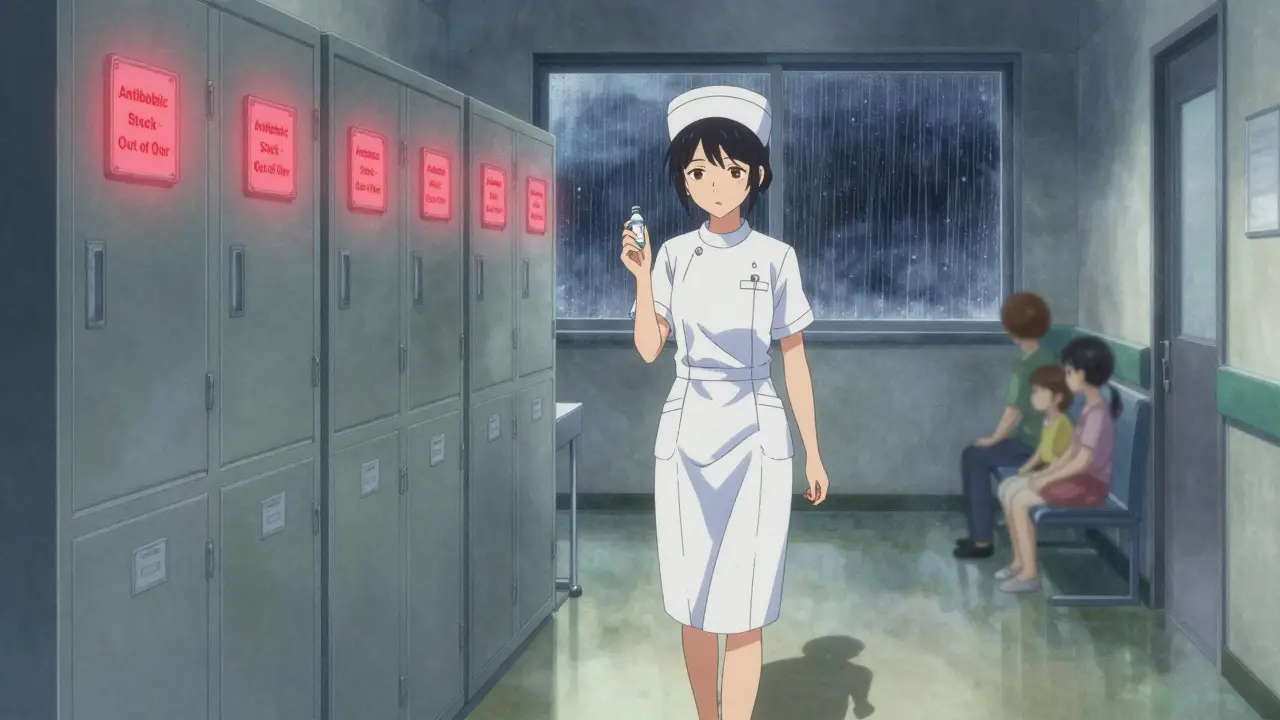
Why This Isn’t Just a Supply Problem
Most people think shortages mean we just need more pills. But it’s deeper than that. Antibiotics are fundamentally different from other drugs. If you run out of insulin, you can switch to another type. If your blood pressure med isn’t available, there are usually five alternatives. But antibiotics? Not so much. Resistance makes alternatives useless. If a patient has an infection caused by a strain of K. pneumoniae that’s resistant to ceftriaxone, and meropenem is also unavailable, there may be no safe, effective option left. The global antibiotic market was worth $38.7 billion in 2024 - but grew at just 1.2% annually from 2019 to 2024. Compare that to the rest of the pharmaceutical industry, which grew at 5.7%. Why? Because antibiotics are cheap. Generic versions dominate. Prices have dropped 27% since 2015. Regulatory costs? Up 34%. Profit margins? Gone. Manufacturers aren’t evil. They’re responding to economics. If you can’t make money, you stop making the product. And with 85% of antibiotic use coming from generics, the system is built on thin margins. When one company exits, the entire supply chain wobbles.What Hospitals Are Doing - And Failing to Do
Hospitals are scrambling. A 2025 survey found 78% of U.S. hospital pharmacists had to change treatment protocols because of shortages. Sixty-two percent reported more patient complications - longer hospital stays, more readmissions, more deaths. Some hospitals created antibiotic stewardship programs (ASPs) to monitor usage, avoid waste, and prioritize drugs. Johns Hopkins cut unnecessary broad-spectrum antibiotic use by 37% during shortages by using rapid diagnostics to identify infections faster. That’s smart. But only 37% of U.S. hospitals meet all WHO standards for these programs. Most are still reacting, not preparing. Rationing has become common. In 89% of U.S. hospitals, staff are forced to decide who gets the last dose. Pharmacists spend 22% more time managing shortages. Nurses are overwhelmed. And patients? They’re the ones paying the price. California’s regional antibiotic sharing network, launched in 2024, is one of the few success stories. By pooling inventory across 12 hospitals, they reduced critical shortage impacts by 43%. But it’s not scalable yet. Most places don’t have the infrastructure, funding, or coordination to pull this off.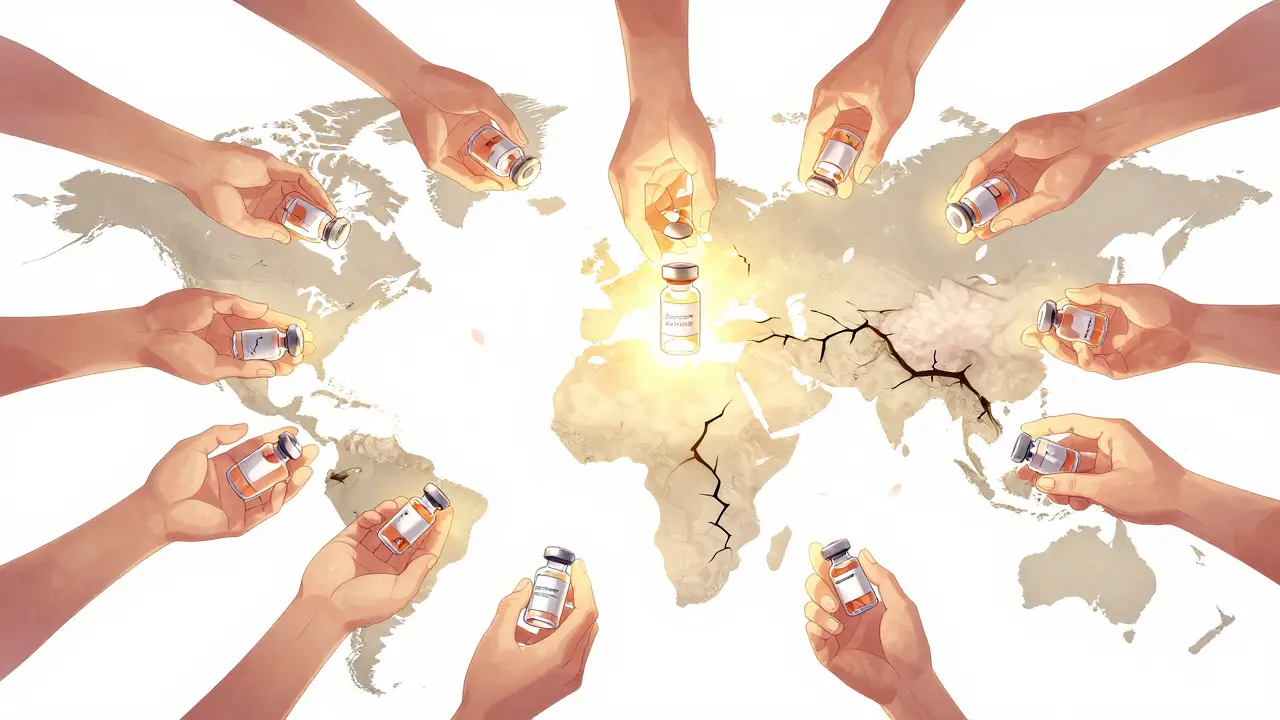
The Bigger Picture: Resistance, Access, and Inequality
This isn’t just about drugs running out. It’s about a deadly cycle: shortages force overuse of broad-spectrum antibiotics → overuse breeds resistance → resistance makes antibiotics useless → fewer effective drugs mean more shortages. The WHO calls this a “syndemic” - a perfect storm of resistance and under-treatment. The most dangerous infections are now rising fastest in regions with the weakest health systems. In South-East Asia and the Eastern Mediterranean, one in three infections is resistant. In Africa, it’s one in five. Meanwhile, high-income countries use 10 times more antibiotics per person than low-income nations - yet they’re the ones running out. The WHO’s 2025 action plan includes a $500 million Global Antibiotic Supply Security Initiative, with funding from G7 nations. The U.S. FDA approved two new manufacturing facilities in January 2025, expected to relieve 15% of shortages by late 2025. The European Commission is also rolling out new rules to stabilize production. But these are short-term fixes. The real solution? Rewriting the economics. Pay manufacturers fairly for antibiotics. Fund public production of critical drugs. Build regional stockpiles. Reward hospitals that use antibiotics wisely. And stop treating life-saving drugs like commodities. Right now, we’re treating antibiotics like they’re disposable. They’re not. They’re the last line of defense against a world where common infections kill again.What’s Next? The Numbers Don’t Lie
Without major intervention, the Review on Antimicrobial Resistance predicts antibiotic shortages will rise 40% by 2030 - and cause 1.2 million extra deaths each year from infections we used to cure easily. The WHO wants 70% of global antibiotic use to come from the “Access” group - safer, narrower-spectrum drugs. Right now? Only 58% does. That gap isn’t just a statistic. It’s the difference between life and death for millions. We can’t wait for another hospital to run out of penicillin. We can’t wait for another child to die because the only drug that works isn’t in stock. The system is broken. And fixing it won’t take more money - it will take courage.Why are antibiotic shortages worse than shortages of other drugs?
Unlike most medications, antibiotics often have no safe or effective alternatives. If a patient has a resistant infection and their first-choice antibiotic is unavailable, switching to another drug can mean using a toxic last-resort option like colistin or overusing powerful carbapenems - which worsens antibiotic resistance. Other drugs, like insulin or blood pressure meds, usually have multiple alternatives. Antibiotics don’t.
Which antibiotics are most commonly in short supply?
Penicillin G benzathine has been in chronic shortage since 2015 due to manufacturing issues and low profit margins. Amoxicillin and amoxicillin-clavulanate faced major global shortages in 2023, with use dropping by over 50% in some regions. Third-generation cephalosporins like ceftriaxone and cefazolin are also frequently unavailable, especially in hospitals treating resistant infections. Injectable forms of antibiotics are more likely to be affected than oral ones.
How do antibiotic shortages affect antibiotic resistance?
When first-line antibiotics aren’t available, doctors are forced to use broader-spectrum drugs like carbapenems or vancomycin. These drugs are more potent and kill a wider range of bacteria - including good ones. This overuse and misuse accelerates resistance. The more we rely on last-resort antibiotics, the faster bacteria evolve to survive them. Shortages don’t just delay treatment - they fuel the next wave of untreatable infections.
Are low-income countries affected the same way as high-income ones?
No. High-income countries can sometimes import antibiotics or shift to alternatives, even if it’s risky. Low- and middle-income countries often have no backup. In these regions, 70% of antibiotics are already inaccessible. When a shortage hits, there’s no supply chain to fall back on. People go without treatment entirely. This creates a deadly gap: the places with the least access to antibiotics are also the ones where resistance is rising fastest.
What’s being done to fix this?
The WHO launched a $500 million Global Antibiotic Supply Security Initiative in 2025, backed by G7 nations. The U.S. FDA approved two new manufacturing facilities in early 2025, expected to ease 15% of shortages by late 2025. The European Commission is also updating regulations to incentivize production. Some regions, like California, have created hospital-sharing networks that cut critical shortages by 43%. But these are small steps. The real fix requires changing how antibiotics are priced, produced, and distributed - not just making more of them.

There are 15 Comments
Sean Bechtelheimer
Namrata Goyal
Alex Arcilla
Donna Fogelsong
Kenneth Jones
Brandon Shatley
Blessing Ogboso
Jefferson Moratin
Zola Parker
Korn Deno
Marissa Staples
Seth Eugenne
florence matthews
Rachele Tycksen
Raphael Schwartz
Write a comment
Your email address will not be published. Required fields are marked *