

Living beyond cancer doesn’t mean the journey ends when treatment does. For millions of people, the real challenge begins after the last round of chemo, the final radiation session, or the recovery from surgery. Cancer survivorship isn’t just about staying alive-it’s about learning how to live well with the lasting impacts of treatment and staying alert for signs that cancer might come back.
What Does Survivorship Really Mean?
Survivorship starts the day you hear the words, "You have cancer." It doesn’t end when your oncologist says you’re in remission. It includes everything that happens after active treatment: dealing with fatigue that won’t go away, managing memory issues, coping with anxiety about scans, and figuring out how to return to work or rebuild relationships. The Institute of Medicine first laid out the framework for this in 2006, and since then, over 16.9 million people in the U.S. alone have become cancer survivors-projected to hit 22.2 million by 2030.Yet most survivors aren’t getting the care they need. Only about half have a formal survivorship care plan-a written roadmap that explains what treatments they had, what side effects to watch for, and who to contact when problems arise. Without it, survivors often fall through the cracks between oncology and primary care.
Common Long-Term Effects You Might Not Expect
Cancer treatments don’t just attack tumors-they can damage healthy tissues too. These effects don’t always show up right away. Some take years to appear.- Heart problems: Women treated with anthracycline chemotherapy for breast cancer face a 15-20% risk of heart damage over time. Regular echocardiograms every 6-12 months are recommended.
- Bone loss: Hormone therapies for breast and prostate cancer, along with radiation to the spine or pelvis, can lead to osteoporosis. Bone density scans are critical for survivors over 50.
- Cognitive changes: Often called "chemo brain," memory lapses, trouble focusing, and slower thinking affect up to 75% of survivors. Simple tools like calendars, reminders, and scheduling tasks during your most alert hours help.
- Lymphedema: After lymph node removal or radiation, swelling in arms or legs can develop months or even years later. Compression garments and specialized physical therapy can manage it.
- Early menopause or infertility: Chemo and radiation can shut down ovarian or testicular function. Even if you didn’t plan for it, fertility preservation options should have been discussed before treatment began.
- Second cancers: Radiation increases the risk of new cancers in the treated area. For example, Hodgkin lymphoma survivors who had chest radiation have a 30% lifetime risk of developing breast cancer-so annual mammograms and MRIs start 8 years after treatment.
These aren’t rare. They’re expected. And they’re manageable-if you know what to look for.
How to Spot Recurrence Early
Cancer recurrence is one of the biggest fears for survivors. The good news? Most recurrences happen within the first five years after treatment, and many are caught early through routine checkups.Surveillance isn’t about scanning you constantly-it’s about smart, targeted monitoring based on your cancer type and treatment history. For example:
- Colorectal cancer survivors get colonoscopies every 1-3 years, depending on initial findings.
- Melanoma survivors do monthly skin self-checks and see a dermatologist every 6-12 months.
- Leukemia survivors have regular blood counts and bone marrow tests if they had high-risk features.
Don’t ignore new symptoms just because you’re "supposed to be fine." A persistent cough, unexplained weight loss, new lumps, or bone pain that doesn’t go away could be red flags. Report them right away-even if your oncologist says you’re "off the radar."
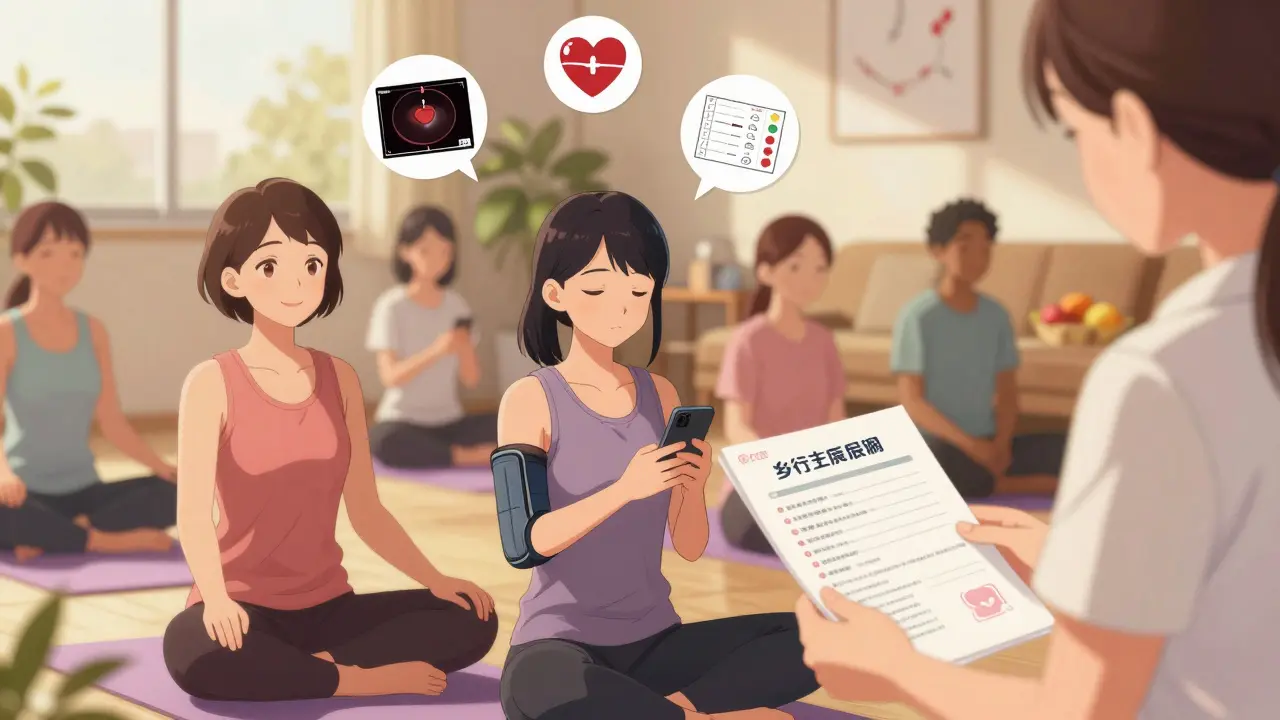
The Power of a Survivorship Care Plan
A survivorship care plan isn’t just paperwork. It’s your health insurance against confusion. It includes:- A summary of your treatments: what drugs, doses, radiation fields, and surgeries you had.
- A list of possible late effects and how to monitor for them.
- Recommended screenings and when to get them.
- Contact info for your oncology team and who to call for non-cancer issues.
- Guidance on lifestyle changes: diet, exercise, smoking cessation, alcohol limits.
Studies show survivors with a care plan are 27% less likely to experience cancer-related complications, 32% less likely to get unnecessary tests, and 40% more likely to start exercising regularly. They also report better quality of life and fewer emergency room visits.
By law, accredited cancer centers must provide these plans to every survivor. If you didn’t get one, ask for it. If your oncologist says they don’t have one, demand it. You’ve earned it.
Who Should Be Managing Your Care?
Too many survivors are stuck in a system where oncologists focus only on cancer, and primary care doctors don’t know enough about cancer treatment side effects. That’s a dangerous gap.Here’s how it should work:
- First 2-5 years: Your oncologist leads care, with check-ins every 3-6 months.
- After 5 years: If you’re low-risk, your primary care provider can take over routine health maintenance-with oncology on standby for questions.
- High-risk survivors: Keep seeing a cancer specialist annually, even if you’re stable. Genetics, radiation exposure, or aggressive treatments mean you need ongoing monitoring.
Research shows 78% of older survivors already have a primary care provider who knows their full health history. That’s a huge advantage. But only if that provider gets the right information. That’s why your care plan must be shared with your PCP.

Lifestyle Changes That Actually Make a Difference
You don’t need a miracle cure. Small, consistent habits reduce recurrence risk and improve daily life.- Exercise: Just 150 minutes of moderate activity a week-like brisk walking or swimming-cuts fatigue by 40-50% and improves bone density by 3-5%. Studies show it also lowers recurrence risk for breast, colon, and prostate cancers.
- Diet: Focus on whole foods: vegetables, fruits, whole grains, lean proteins. Limit processed meats, added sugar, and alcohol. A 2022 study found survivors who followed a Mediterranean-style diet had 30% lower inflammation markers.
- Weight management: Being overweight increases recurrence risk for several cancers. Even losing 5-10% of body weight helps.
- Sleep and stress: Poor sleep and chronic stress weaken immunity. Try mindfulness, yoga, or therapy. Survivors using integrative programs report 82% better quality of life.
It’s not about perfection. It’s about progress. One healthy choice today matters more than a perfect plan you never start.
Financial and Emotional Burdens Are Real
Survivorship isn’t just physical. It’s emotional and financial too.- 73% of survivors report financial stress from medical bills, lost income, or insurance gaps.
- 68% say they struggle to work due to fatigue, pain, or brain fog.
- 57% experience strained relationships with partners or family.
- 32% have been denied health or life insurance.
Help exists. Many cancer centers offer financial counselors who can negotiate bills, find patient assistance programs, or help with disability applications. Support groups, therapy, and survivor-led networks (like Livestrong or CancerCare) provide emotional safety nets.
Don’t suffer in silence. Asking for help isn’t weakness-it’s part of healing.
What’s Next for Survivorship Care?
The system is slowly improving. The Oncology Care Model (OCM), launched in 2016, pays practices to provide comprehensive follow-up care. Telehealth survivorship clinics are growing fast-with 75% of users at Mayo Clinic reporting high satisfaction. Precision survivorship is the new frontier: using your genetic profile, treatment history, and lifestyle to predict your unique risks and tailor your follow-up.But progress depends on you. If you’re a survivor, get your care plan. Ask questions. Advocate for yourself. If you’re a caregiver or provider, make sure the person you’re supporting has a clear roadmap forward.
Cancer may have changed your life-but it doesn’t get to define your future. With the right care, awareness, and support, you can live fully, actively, and confidently beyond diagnosis.
How long do I need to keep seeing an oncologist after cancer treatment?
Most survivors see their oncologist every 3-6 months for the first 2-5 years after treatment. After that, if you’re low-risk, your primary care provider can manage routine care with occasional check-ins with your oncologist. High-risk survivors-like those with genetic syndromes or aggressive treatments-may need annual specialist visits for life. Your care plan should outline this timeline.
Can I get life insurance after cancer?
Yes, but it’s harder. Many insurers require you to be cancer-free for 2-5 years, depending on the type and stage. Some companies specialize in policies for survivors. Work with a broker who understands cancer history. Your care plan and documentation of remission can help strengthen your application.
What should I do if I feel fine but am still scared of recurrence?
It’s normal. Fear of recurrence affects most survivors. Talk to a therapist who specializes in cancer survivorship. Join a support group. Keep up with your screenings-knowing you’re being monitored reduces anxiety. Write down your worries and bring them to appointments. You’re not alone, and your feelings are valid.
Do I still need mammograms or colonoscopies if I had a different type of cancer?
Yes-if you’re due for them based on your age or family history. Cancer treatments don’t exempt you from general cancer screenings. A breast cancer survivor still needs mammograms. A colon cancer survivor still needs colonoscopies. Your survivorship care plan should list all recommended screenings, regardless of your original diagnosis.
Is it safe to get vaccinated after cancer treatment?
Most vaccines are safe and recommended, especially flu, pneumonia, and COVID-19 shots. But timing matters. If you had chemotherapy or stem cell transplant recently, your immune system may be weak. Talk to your oncologist before getting vaccinated. Live vaccines (like MMR or shingles) may need to be delayed. Inactivated vaccines are generally safe.
Can exercise really help prevent cancer from coming back?
Yes. Regular physical activity reduces inflammation, helps regulate hormones like estrogen and insulin, and strengthens the immune system-all factors linked to lower recurrence risk. Studies show survivors who exercise regularly have up to 30% lower risk of cancer returning, especially for breast, colon, and prostate cancers. Start slow: 10 minutes a day, five days a week. Build from there.
There are 14 Comments
Corey Chrisinger
Survivorship isn’t just about surviving-it’s about relearning how to be alive. I used to think "beating cancer" meant I was done. Turns out, my body’s still negotiating peace treaties with chemo’s leftovers. Fatigue? Still here. Brain fog? Oh yeah. But I started walking 20 minutes a day, and now I notice the way sunlight hits the trees in the morning. That’s the new victory.
Also, emojis are mandatory for emotional labor: 🌱💪🧠
Christina Bilotti
Oh sweetie, you’re telling me people don’t know they need a care plan after being told they have cancer? Did you get your oxygen mask on before helping others? Half of these survivors probably didn’t even know chemo could wreck their heart. I’m not surprised-modern oncology treats cancer like a video game boss, then kicks you out with a pamphlet and a ‘congrats!’
Also, ‘Mediterranean diet’? Please. I’m still trying to find someone who can tell me if oat milk counts as a vegetable.
brooke wright
My mom had breast cancer and now she gets panic attacks every time she has to go to the bathroom alone. She says she feels like her body is a landmine field and she’s the only one who knows where the bombs are. She doesn’t talk about it to anyone except me. I think she’s scared if she says it out loud, it’ll come true again.
Also, I found a lymphedema sleeve on Amazon for $22. It’s ugly as hell but it works. You’re not alone.
vivek kumar
While your data is statistically sound, you fail to address systemic failures in healthcare accessibility. In India, a survivor without insurance is often abandoned post-treatment. The concept of a ‘care plan’ is a luxury. Your 27% reduction in complications assumes access to specialists, labs, and time off work-all privileges of the Western elite. This is not survivorship-it’s privilege with a medical label.
And yet, exercise? Yes. Diet? Yes. But tell a laborer in Punjab who works 14 hours a day to ‘walk 150 minutes weekly.’ Tell him to ‘meditate.’ Tell him his body is not a machine to be optimized.
Survivorship must be decolonized.
Nick Cole
I’m a prostate cancer survivor. Two years out. My oncologist handed me a PDF and said, ‘Call if anything changes.’ That’s it. No follow-up. No roadmap. I ended up in the ER because I thought my joint pain was arthritis-turned out it was bone metastasis. Turned out it wasn’t. But I lost three months of my life terrified.
If you’re reading this and you’ve been told you’re ‘in remission’-don’t wait for them to give you a plan. Demand it. Print it. Give it to your PCP. Your life depends on it.
Henry Ip
Just wanted to say thank you for this. I’m 3 years out from colon cancer. I started with 10 minutes of walking. Now I do yoga. I cook real food. I don’t obsess over scans anymore. It’s not perfect. But it’s mine. And I’m still here. That’s enough.
Also, if you’re scared to ask for your care plan-just say ‘I want to live well.’ That’s all you need to say.
waneta rozwan
My sister got her care plan… on a napkin. Literally. The oncologist scribbled ‘mammogram every year’ and ‘avoid sugar’ and handed it to her like it was a grocery list. She cried in the parking lot.
And now she’s being denied life insurance because she’s ‘high risk’-even though she’s been clean for 7 years. I’m so angry I could scream.
Why is surviving cancer still a liability in this country?
Nicholas Gabriel
Let me be very clear: your survivorship care plan is not optional. It is not a suggestion. It is not something you can ‘ask for later.’ It is your legal right under the Oncology Care Model. If your oncologist says they don’t have one, say: ‘I understand. But I need one now. Can we schedule a 15-minute appointment to create it together?’
And if they say no? Call the hospital’s patient advocate. Or the American Cancer Society. Or me. I’ve helped over 80 people get their plans. You are not alone. You are not a burden. You are a survivor. And you deserve this.
Cheryl Griffith
I used to think my anxiety was just ‘normal post-cancer stuff.’ Turns out, it was trauma. I started seeing a therapist who specializes in oncology survivors. She didn’t tell me to ‘just relax.’ She told me: ‘Your body remembers. Your mind remembers. That’s not weakness. That’s wisdom.’
Now I journal. I light candles. I scream into pillows. And I tell my husband, ‘I’m having a cancer day.’ He knows what that means. No explanation needed.
You’re allowed to not be okay.
Kasey Summerer
Oh wow, a whole article about survivorship and not a single mention of the fact that your insurance company will drop you if you breathe wrong? 🤡
And don’t even get me started on ‘Mediterranean diet’-I tried it. My wife made me eat fish. I cried. I’m from Ohio. We have cheese curds. That’s our superfood.
Also, exercise? I walk to the fridge. That’s my cardio. Don’t judge me. I’m alive, aren’t I? 😎
Samyak Shertok
Let me be the one to say it: survivorship is capitalism’s way of making you feel guilty for not being productive enough after nearly dying. ‘Exercise more!’ ‘Eat clean!’ ‘Get a care plan!’
What about the people who can’t? Who are still paying medical bills? Who are too tired to cook? Who lost their job? Who are still grieving?
You’re not failing if you don’t ‘live well.’ You’re surviving. And that’s more than enough.
Also, ‘30% lower recurrence risk’-who funded that study? Pharma? Who benefits? 🤔
Stephen Tulloch
My oncologist told me to ‘go live my life’ after treatment. That’s it. No follow-up. No scans. No nothing. So I went to the gym. Then I got a second cancer. Turns out, my body was still a warzone.
Now I’m 5 years out. I’ve got a care plan. I see a specialist annually. I do bloodwork. I track my symptoms. And I still get panic attacks before every appointment.
But I’m alive. And I’m not letting the system forget me again. 🤝
Joie Cregin
I used to think survivorship meant ‘getting back to normal.’ But normal is gone. What’s left is something softer. More tender. I nap now. I say no. I cry during commercials. I hug my dog extra hard.
And I finally stopped apologizing for being tired.
My body didn’t betray me. It fought for me. And now? I’m learning how to love it again. Not perfectly. Just honestly.
Also, I bought a plant. It’s dying. So am I. So what? We’re both still here.
evelyn wellding
YOU GOT THIS. 💪❤️
One step. One day. One breath. That’s all you need. You’re not behind. You’re not broken. You’re a warrior who’s still standing. And guess what? The world needs your light. Keep going. I’m cheering for you. 🌟
Write a comment
Your email address will not be published. Required fields are marked *