
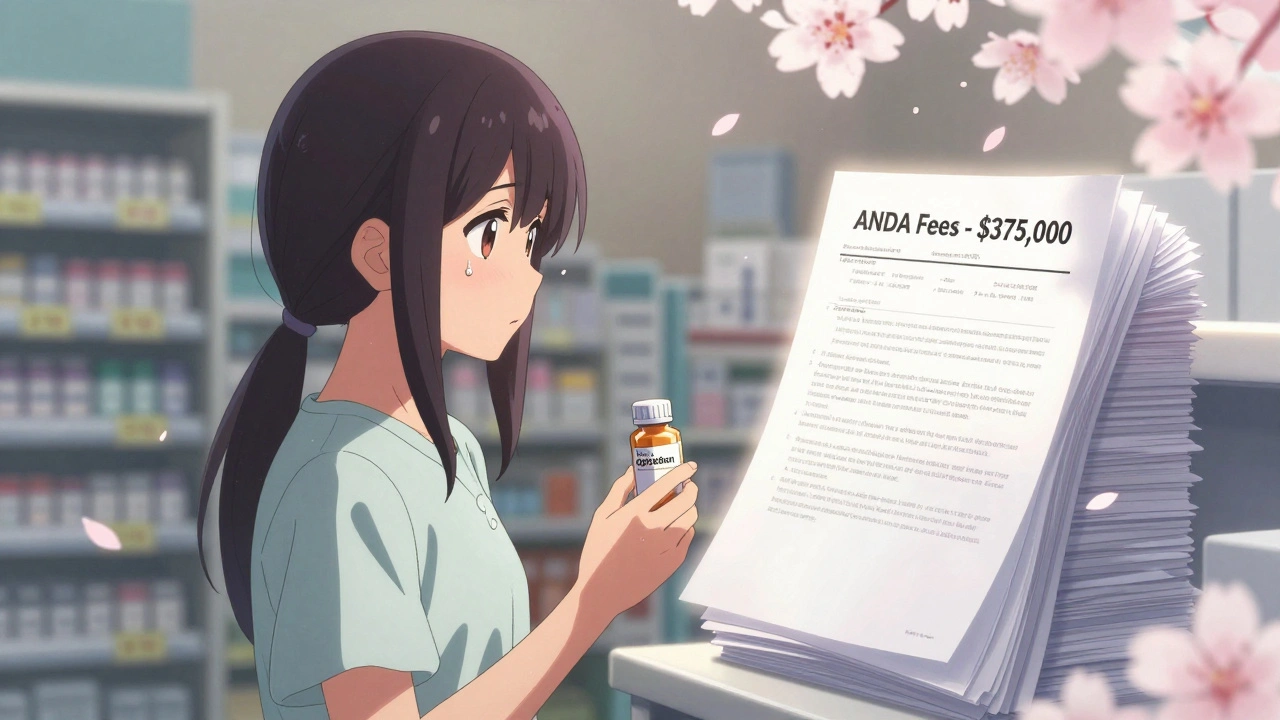
For most Americans, a generic pill costs less than $5. But behind that low price tag is a complex, expensive, and often frustrating regulatory maze. The FDA doesn’t just approve drugs - it charges companies tens of thousands of dollars just to apply. And for generic drugs, those fees add up fast. In 2025, a single generic drug application can cost over $375,000 just in FDA fees alone. That’s not including the millions spent on research, testing, and reformulation. This isn’t just bureaucracy - it’s a hidden tax on affordable medicine.
What You Pay Just to Apply
The FDA doesn’t fund its generic drug reviews with taxpayer money. Instead, it collects fees from drugmakers under the Generic Drug User Fee Amendments (GDUFA). This system started in 2013 and was renewed in 2022 under GDUFA III. For fiscal year 2025, the total fee structure is nearly $639 million. Of that, generic drug applications (called ANDAs) make up about one-third - $211 million. That breaks down into three main fees: a $136,485 product fee per drug, a $238,055 facility fee per manufacturing site, and a separate application fee. Small companies with fewer than 1,000 employees can get waivers, but most mid-sized manufacturers pay full price.
Compare that to brand-name drugs. A New Drug Application (NDA) costs $3.7 million in 2025. That’s nearly 10 times more. But here’s the twist: generics make up 90% of all prescriptions filled in the U.S., yet they account for only 12% of total drug spending. That’s because they’re cheaper to make - but not cheaper to get approved.
The Hidden Cost: Reformulation Roulette
It’s not just the upfront fees. The real financial trap comes after submission. In 2015, the FDA stopped giving specific feedback on the chemical makeup of generic drugs - especially complex ones like nasal sprays, inhalers, or injectables. Before that, companies could ask the FDA: "Is this formulation close enough?" Now, they’re left guessing. One company spent $8.7 million and three separate reformulation attempts over five years just to get a single nasal spray approved. That’s not an outlier. A 2025 analysis by Patients Rising found that 30% of complex generic applications go through multiple review cycles, compared to just 15% for simpler ones.
Each failed review means a Complete Response Letter (CRL). Responding to a CRL costs $2 million to $5 million and adds 8 to 12 months to the timeline. For a drug that could save patients $1,200 a month - like a generic version of apixaban - that delay means thousands in out-of-pocket costs for people who can’t afford the brand-name version.
Why It Takes So Long - And Why It Matters
The FDA says it targets an 11-month review time for standard generics. In reality, it’s 11.2 months on average. For complex generics, it’s often 18 to 24 months. And only 42% of complex applications get approved on the first try. That’s down from 65% for simpler drugs. Meanwhile, the paperwork has ballooned. ANDA submissions now average 150,000 to 200,000 pages. A decade ago, it was half that. Deloitte estimates this increase added 35% to preparation costs.
Meanwhile, patients pay the price. Between 2016 and 2020, generic versions of testosterone replacement therapy were delayed for 4.7 years. During that time, patients paid 300% more for the brand. On Reddit, one patient wrote: "I’m paying $1,200 a month for my generic glipizide because the FDA won’t approve the cheaper version." That thread had 147 comments - all from people in the same boat.
Who Benefits? Who Loses?
On one side, the system protects patients. In 2022, a valsartan recall affected 22 million people because of contamination. Pharmacists argue that the extra scrutiny prevents that kind of disaster. One New York pharmacist put it bluntly: "Better to wait a year than give someone a toxic pill."
But on the other side, the delays hurt competition. In 2024, 83% of brand-name drugs had no generic competitor even five years after their patent expired. That’s not because no one tried - it’s because the cost and uncertainty make it too risky. Big pharma benefits. Small generic makers struggle. And patients? They’re stuck paying more.
The Push for Change
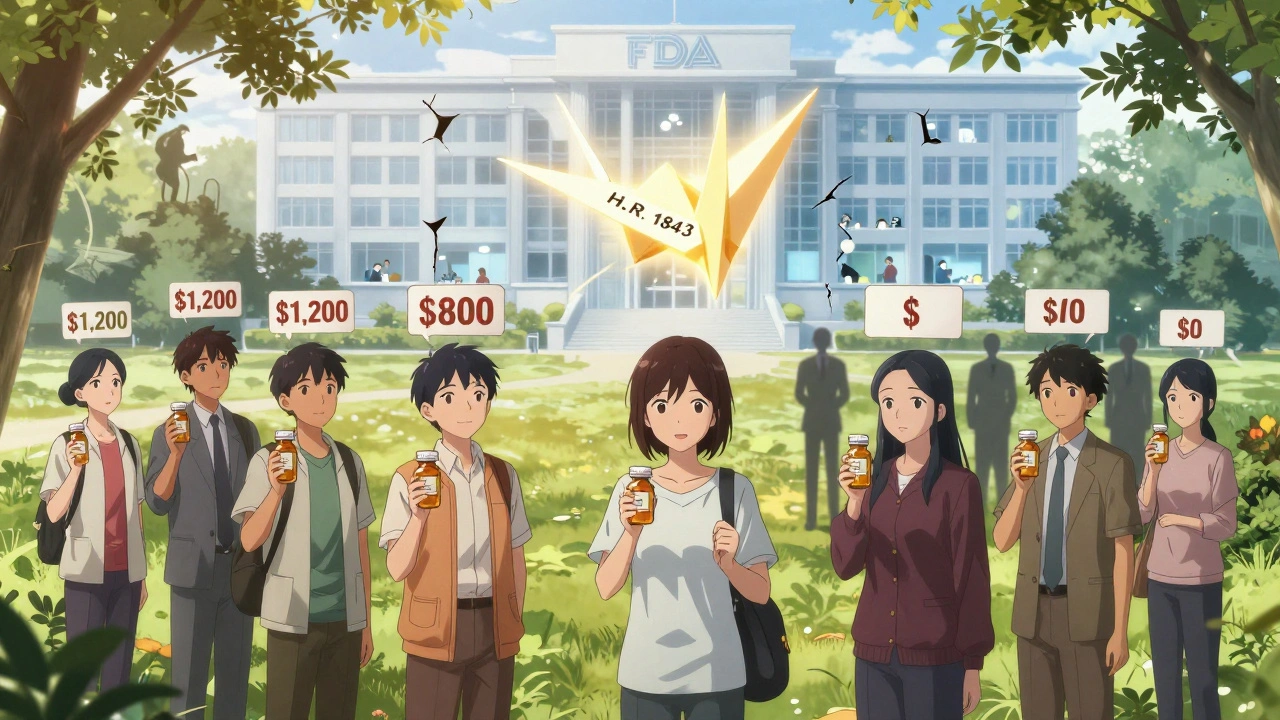
In September 2025, Congress introduced H.R. 1843 - the "Increasing Transparency in Generic Drug Applications Act." It’s backed by both Republicans and Democrats, with 72 co-sponsors. The bill would force the FDA to go back to giving detailed feedback on formulation. The Congressional Budget Office estimates this would cut approval times for complex generics by 18 to 24 months. That could bring 12 to 15 new generics to market each year, saving $1.8 billion to $2.3 billion annually.
The FDA isn’t opposed to faster approvals - but it’s worried about resources. In July 2025, its Office of Generic Drugs warned that without more staff or funding, restoring detailed feedback could slow down other reviews and risk quality. They’re now preparing for GDUFA IV, which will cover 2028 to 2032. Industry groups want fee increases of 3% to 5% per year to hire more reviewers. The FDA estimates it will need $725 million to $750 million annually just to meet its goals.
What This Means for You
If you take a generic drug, you’re already saving money. But the system is designed to make those savings harder to achieve. The $467 billion in savings from generics in 2024 didn’t happen by accident. It happened despite a regulatory system that makes approval expensive, slow, and unpredictable. Every delay in approval means someone pays more. Every failed application means fewer options. Every CRL means another year of high prices.
The solution isn’t to cut corners. It’s to make the process smarter. Give manufacturers clear feedback. Fund the FDA properly. Reduce paperwork that doesn’t improve safety. The goal isn’t speed for speed’s sake - it’s speed that gets affordable drugs to people who need them.
Right now, the system works for big companies with deep pockets. It doesn’t work for patients. And unless Congress acts, it won’t get better.
How much does it cost to get a generic drug approved by the FDA?
The total cost to submit one generic drug application (ANDA) in 2025 is about $375,000 in FDA fees alone. This includes a $136,485 product fee, a $238,055 facility fee, and additional application fees. This doesn’t include the millions more spent on research, testing, and reformulation - especially for complex generics.
Why are generic drug approvals taking so long?
The FDA stopped giving specific feedback on the chemical formulation of complex generics in 2015. Companies now have to guess what changes the agency wants, leading to multiple rounds of reformulation. This trial-and-error process can add 2-3 years to development. Review times average 11.2 months for standard generics and longer for complex ones, with only a 42% first-cycle approval rate for complex products.
Do generic drugs save money overall?
Yes - dramatically. In 2024, generics saved the U.S. healthcare system $467 billion. They made up 90% of all prescriptions filled but only 12% of total drug spending. Medicare beneficiaries saved an average of $1,152 per person just from using generics. The problem isn’t that generics are expensive - it’s that the approval process makes them harder to bring to market.
What’s H.R. 1843 and why does it matter?
H.R. 1843 is a bipartisan bill introduced in September 2025 that would require the FDA to resume giving detailed feedback on generic drug formulations. This could cut approval times for complex generics by 18-24 months and bring 12-15 new generics to market each year. The Congressional Budget Office estimates it would save $1.8-$2.3 billion annually and up to $23 billion over five years.
Why doesn’t the FDA just approve generics faster?
The FDA says it’s under-resourced. Even though user fees bring in over $600 million a year, the agency says inflation and growing application complexity strain its ability to review quickly without compromising safety. They’re concerned that if they restore detailed feedback without hiring more staff, review quality could drop - risking patient safety. The debate is between speed and safety - and both matter.

There are 11 Comments
Erik van Hees
The FDA’s generic drug fees are a joke. $375K just to apply? That’s more than most small pharma startups make in a year. And don’t get me started on the reformulation roulette - it’s not regulation, it’s extortion disguised as safety. Big pharma loves this system because it keeps generics off the market. Meanwhile, grandma’s diabetes meds cost $1,200 a month because the FDA won’t tell companies what they did wrong. Fix the feedback loop, not the budget.
Cristy Magdalena
I just cried reading this. I’ve been paying $1,100 a month for my generic glipizide because the FDA is too stubborn to give clear feedback. I’m not asking for miracles - I’m asking for a human being to look at my prescription and say, ‘This is safe.’ But no. It’s all paperwork and profit. I’m tired. So tired.
May .
generic drugs are cheaper but the system is broken
Sara Larson
YESSSS this needs to go viral 😭👏 The fact that patients are paying thousands for meds that could be $5 if the FDA just gave ONE clear email back? That’s not bureaucracy - that’s cruelty. H.R. 1843 is our shot. Let’s flood Congress with stories. We can fix this. Together. 💪❤️
Mindy Bilotta
as a pharmacist in vancouver, i see this daily. patients cry because they can't afford the brand even though the generic exists. the fda doesn't have enough reviewers, and the fees are insane. but honestly? the reformulation mess is the real killer. companies waste millions guessing. just give 'em feedback. it's not rocket science.
Stacy Natanielle
It is imperative to note that the FDA’s regulatory framework, while ostensibly designed to ensure pharmaceutical safety, has become a de facto barrier to market entry for economically disadvantaged manufacturers. The disproportionate financial burden imposed by GDUFA III, coupled with the absence of granular feedback mechanisms, constitutes a systemic failure of equitable access. One cannot conflate cost-efficiency with public health imperatives - and yet, this is precisely what is occurring.
Akash Sharma
Okay, so let’s break this down. The FDA charges $375k just to apply? But brand drugs pay $3.7M? So generics are getting off easy? But then why are there so few generics? Because the reformulation process is a black hole. You spend $8M, get a CRL, and you have no idea why. It’s like submitting a college application and getting back a stamp that says ‘Not good enough’ - no explanation, no help. And now they want to add more fees to hire more people? What if they just… stopped being cryptic? Why does every single complex generic have to be a guessing game? It’s not like the chemistry is secret. The FDA has the data. Just tell them what’s off. Save the money. Save the time. Save the lives.
Justin Hampton
Everyone’s acting like this is a tragedy. It’s not. The FDA isn’t the enemy - greedy generic manufacturers are. They want to cut corners. They want to sell cheap drugs that might not work. The fees? They’re a filter. The delays? They’re protection. If you can’t afford $375k to apply, maybe you shouldn’t be making medicine. People complaining about $1,200 pills? Buy the brand. Or don’t take it. The system works. It’s just not for you.
Pooja Surnar
americans are so weak. you pay 5 dollars for a pill? lucky. in india we pay 10 cents and no one cares about fda. you want cheap drugs? stop whining and move to a real country. this is why america is broke. everyone wants everything for free but won’t work for it. fda is right. let the rich people pay more. poor people can die. its not my problem.
Sandridge Nelia
My dad’s on apixaban. He waited 3 years for the generic. He paid $1,100/month. He’s 72. He didn’t complain. He just took it. But I cried. This isn’t just about money - it’s about dignity. H.R. 1843 is the first real step we’ve seen in a decade. Let’s call our reps. Let’s share stories. Let’s make sure the FDA hears real people, not just corporate lobbyists. We can do this. 💙
Mark Gallagher
Why are we letting foreign companies get away with this? The FDA is letting Chinese and Indian labs get approved while American manufacturers bleed money. This isn’t about safety - it’s about outsourcing. We need tariffs on foreign generic drugs until the FDA puts American companies first. This isn’t healthcare - it’s economic surrender.
Write a comment
Your email address will not be published. Required fields are marked *