
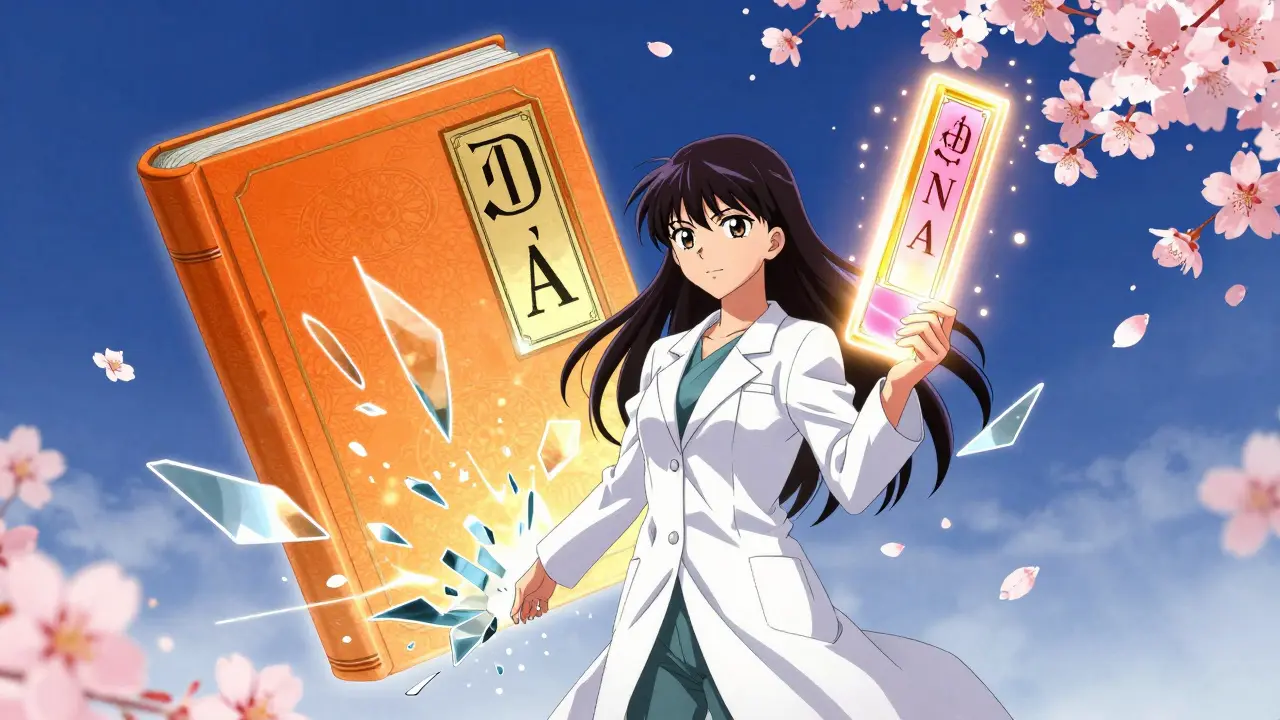
When a brand-name drug’s patent is about to expire, the race to get the first generic version onto the market isn’t just about speed-it’s a high-stakes legal battle. At the heart of this race is something called Paragraph IV certification, a little-known but powerful tool built into U.S. drug law that lets generic manufacturers challenge patents before they expire. This isn’t a loophole. It’s a carefully designed part of the Hatch-Waxman Act a 1984 U.S. law that balances drug innovation with affordable access by creating a legal pathway for generic drugs to enter the market, signed into law by President Ronald Reagan. The goal? Let generics compete fairly without letting brand companies lock up the market forever with endless patents.
What Exactly Is Paragraph IV?
Every drug approved by the FDA gets listed in the Orange Book the FDA’s official directory of approved drugs and their associated patents. This book lists every patent tied to a brand-name drug-whether it’s for the active ingredient, how it’s made, or how it’s taken. Generic companies don’t have to repeat all the safety tests brand-name makers did. Instead, they file an Abbreviated New Drug Application a streamlined application for generic drugs that relies on the brand’s safety data, or ANDA. But here’s the twist: if a generic company believes one or more of those patents are invalid or won’t be broken by their version, they file a Paragraph IV certification.
This isn’t just a checkbox. It’s a legal bomb. By filing Paragraph IV, the generic company is saying, in writing, that they plan to make and sell a drug that the brand company claims is protected by patent-and they’re willing to go to court to prove it. Under the law, this act alone counts as patent infringement, even before the generic drug is made or sold. That’s what triggers the whole legal process.
The 45-Day Clock and the 30-Month Stay
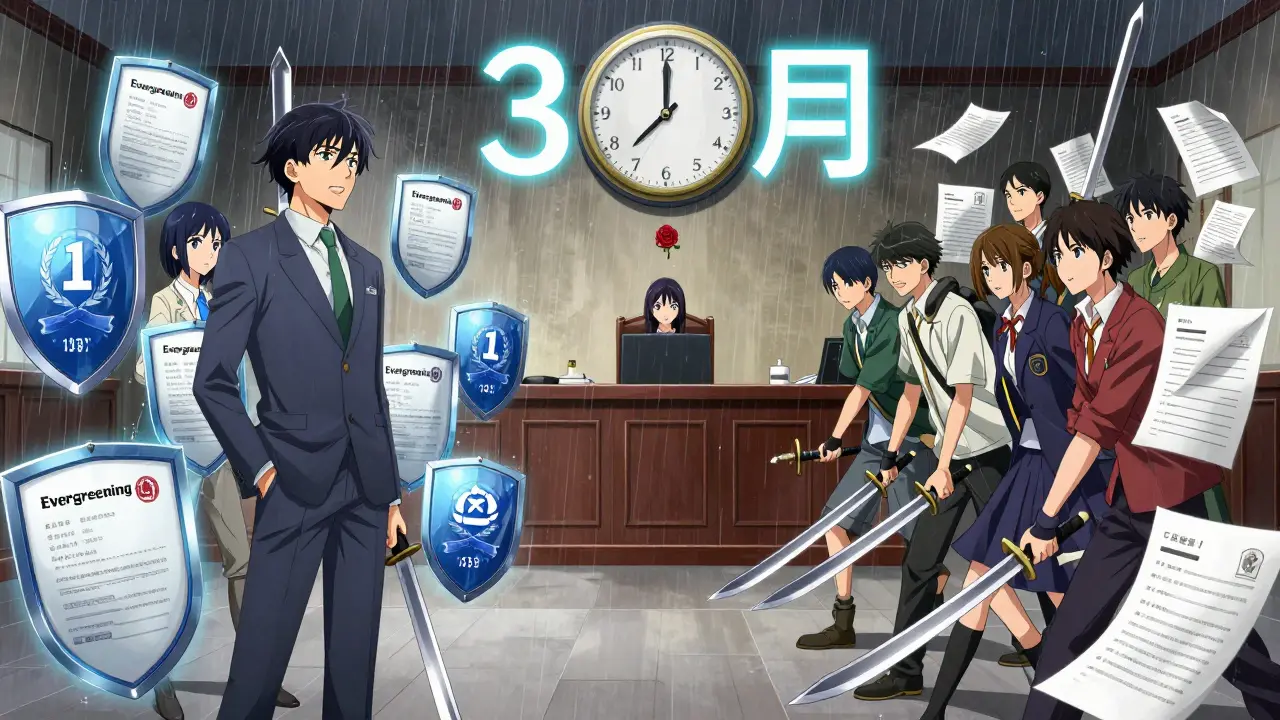
Once the brand company gets the Paragraph IV notice, they have exactly 45 days to sue. If they do, the FDA can’t approve the generic drug for 30 months-or until the court rules, whichever comes first. This 30-month clock is the biggest leverage point in the whole system. Brand companies use it to buy time. Generic companies use it to plan. And courts use it as a deadline.
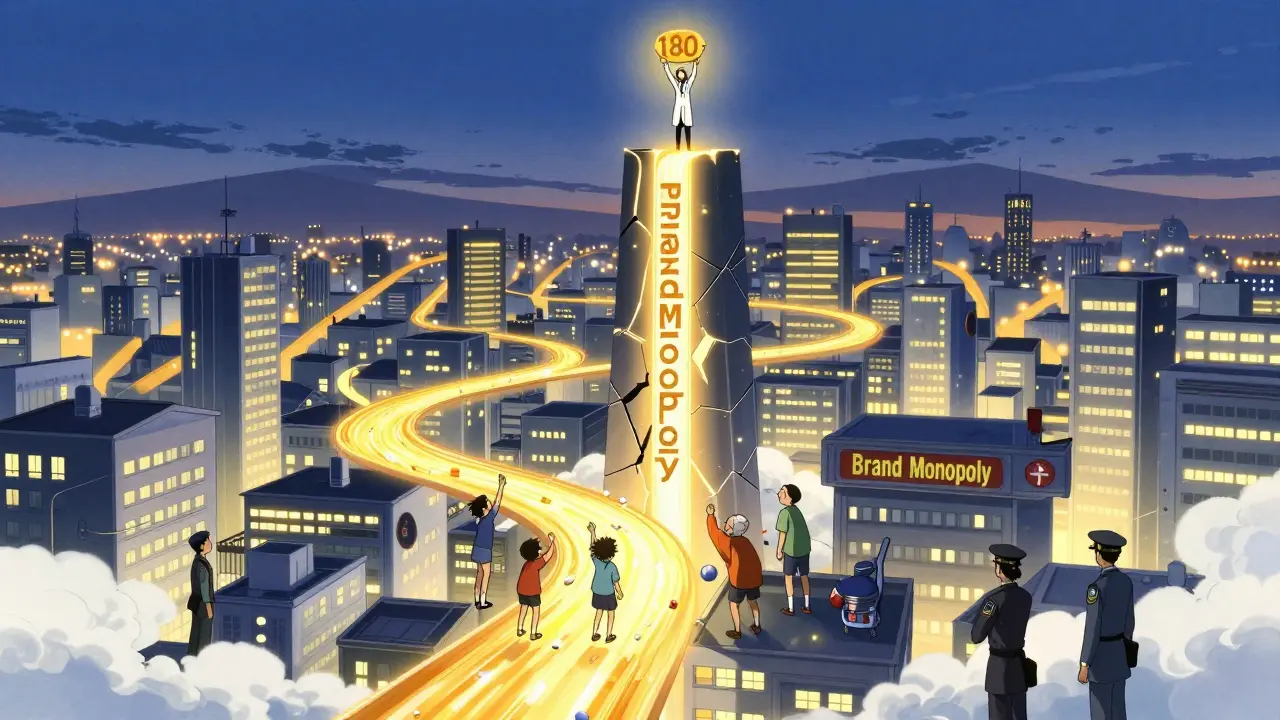
But here’s the catch: the 30 months don’t start when the notice is filed. They start when the brand company receives it. That means timing matters. File your Paragraph IV too early, and the brand might not even have all its patents listed yet. File too late, and you lose your shot at being first. The first company to file a valid Paragraph IV gets a huge reward: 180 days of exclusive market access as the only generic version. That’s not just a head start-it’s a monopoly on savings.
How Do They Win? Invalidity or Non-Infringement
Generic companies don’t win by arguing the drug is cheaper. They win by proving one of two things: the patent is invalid, or their product doesn’t actually infringe it.
Invalidity means the patent shouldn’t have been granted in the first place. Maybe the idea wasn’t new. Maybe it was obvious to anyone with a chemistry degree. Courts look at old research, previous patents, and whether the invention was truly inventive. Teva’s 2019 challenge to Pfizer’s Lyrica® patent succeeded because they showed the patent’s claims were too broad and based on already-known science.
Non-infringement is trickier. It means the generic drug is different enough that it doesn’t fall under the patent’s legal wording. This is where claim construction the legal process of interpreting the exact meaning of patent claims becomes everything. A single word in a patent claim-like “tablet” vs. “capsule”-can make the difference between winning and losing. Courts hold special hearings called Markman hearings just to decide what those words mean. If the court says the patent covers only a specific crystal form of a drug, and the generic uses a different form? No infringement. Case closed.
Why Do Most Cases Settle?
Only about 24% of Paragraph IV cases go to trial. The rest-76%-settle. And not always fairly. For years, brand companies paid generics to delay entry. These “pay-for-delay” deals meant the generic got cash, and the brand kept its monopoly. The Supreme Court shut this down in 2013 with FTC v. Actavis, ruling such deals could violate antitrust law. But settlements still happen. Often, the brand agrees to let the generic enter early in exchange for the generic not challenging other patents. Sometimes, the generic gets a licensing deal to sell the drug under the brand’s name. It’s not illegal, but it’s not always pro-competition.
Dr. Margaret Kyle’s research found that when generics win outright, prices drop by 79% within six months. But when they settle, prices stay higher longer. That’s why regulators are watching closely.
The Cost of Playing the Game
This isn’t a game for small players. Preparing a Paragraph IV challenge costs an average of $2.3 million before you even file. Legal fees, scientific analysis, patent reviews, expert witnesses-it adds up. If you lose, you could owe hundreds of millions in damages. Mylan paid $1.1 billion in 2017 after losing a case against Novartis over Gleevec®. That’s not a typo.
And the brand side isn’t cheap either. Average litigation costs hit $7.8 million per case, according to Winston & Strawn LLP. That’s why many brand companies file multiple patents on the same drug. In 1984, the average drug had 1.2 patents listed in the Orange Book. By 2020, that number jumped to 4.8. These “patent thickets” are designed to overwhelm generics with legal complexity.
Who Wins? The System, Eventually
Despite the cost and complexity, Paragraph IV works. Since 1984, it’s been responsible for bringing generic versions of over 280 brand-name drugs to market each year. In 2021 alone, these challenges unlocked $98.3 billion in potential generic sales. Between 2009 and 2019, generics entering through Paragraph IV saved U.S. consumers $1.68 trillion.
But the system is under strain. Brand companies are using every trick they can: filing patents on minor changes, delaying sample access, submitting citizen petitions to the FDA to block approvals. The FDA’s 2022 rule on citizen petitions and the 2023 CREATES Act were direct responses to these tactics. Still, the trend is clear: effective market exclusivity for brand drugs has stretched from 12.1 years in 1995 to 14.7 years in 2022.
And while the U.S. has Paragraph IV, Europe doesn’t. European generics often wait years longer to enter the market. That’s why the U.S. remains the most aggressive market for generic competition.
What’s Next?
The Inflation Reduction Act of 2022 lets Medicare negotiate drug prices. That’s changing how brand companies think about their patents. If they can’t charge high prices, they might care less about delaying generics. Or they might double down on patent thickets to protect margins.
Meanwhile, the FDA is pushing for clearer rules on what counts as a valid Paragraph IV challenge. And the FTC is now focused on reforming the system to stop patent evergreening. The Patent Trial and Appeal Board is seeing more coordinated cases-where a generic files both a Paragraph IV challenge and a post-grant review at the USPTO. It’s becoming a two-front war.
One thing’s certain: as long as there’s money in drug patents, there will be lawsuits. But Paragraph IV remains the most effective tool we have to break monopolies and get life-saving drugs to patients at a fraction of the cost. It’s messy. It’s expensive. But it works.
What triggers a Paragraph IV certification?
A Paragraph IV certification is triggered when a generic drug manufacturer files an Abbreviated New Drug Application (ANDA) and declares that one or more patents listed for the brand-name drug in the FDA’s Orange Book are invalid, unenforceable, or will not be infringed by the generic product. This certification is a legal act of patent infringement under U.S. law, which automatically starts the clock for potential litigation.
Why is the 180-day exclusivity period so important?
The 180-day exclusivity period is the biggest financial incentive for generic companies to take on expensive patent litigation. The first company to successfully file a Paragraph IV certification and win or settle gets exclusive rights to sell its generic version for six months. During that time, no other generic can enter the market, so the first filer captures 70-80% of the generic sales, often earning hundreds of millions in revenue before competitors arrive.
Can a brand company delay generic entry without going to court?
Yes. Brand companies often delay generics by filing multiple patents on minor changes-like new pill coatings or dosing schedules-called “evergreening.” They also use citizen petitions to the FDA to raise safety concerns, or refuse to provide samples needed for bioequivalence testing. The 2023 CREATES Act was passed to combat these tactics by forcing brand companies to supply samples under fair terms.
What’s the difference between Paragraph IV and a patent review at the USPTO?
Paragraph IV challenges happen in federal district court and focus on whether a generic product infringes a specific patent. The burden of proof is “preponderance of evidence,” which is easier to meet. Patent reviews at the USPTO (like Inter Partes Review) are administrative proceedings that assess patent validity only, with a higher burden of proof (“clear and convincing evidence”). Paragraph IV is more expensive but more directly tied to market entry, while USPTO reviews are cheaper but don’t automatically allow a generic to launch.
How often do Paragraph IV challenges succeed?
About 65% of Paragraph IV challenges result in generic approval, according to a 2021 study of over 1,700 cases. Success depends heavily on patent strength-weak patents on obvious inventions are more likely to be invalidated. But when brand companies use complex patent thickets or method-of-use patents, success rates drop sharply, as seen in challenges against Humira®.
Does Paragraph IV apply to biologics or biosimilars?
No. Paragraph IV only applies to small-molecule generic drugs approved under the Hatch-Waxman Act. Biosimilars-generic versions of biologic drugs-are governed by the Biologics Price Competition and Innovation Act (BPCIA), which has a different, more complex patent dispute process called the “patent dance.” Biosimilars get 12 months of exclusivity, not 180 days, and there’s no automatic 30-month stay.

There are 9 Comments
Chris & Kara Cutler
This is wild but so needed 💪 generics are the unsung heroes of affordable healthcare.
Lisa Rodriguez
I’ve seen this play out with my dad’s heart med-brand was $500 a month, generic dropped to $12 after Paragraph IV. No joke, it saved his life. The system’s messy but it works. More of this please.
Angel Fitzpatrick
Let’s be real-the pharma giants don’t care about innovation, they care about profit. Paragraph IV? More like a thorn in their side. They’ve spent billions on patent thickets, citizen petitions, and ‘sample denial’ schemes to keep prices sky-high. And now the FTC’s finally poking at it. But don’t be fooled-this is still a rigged game where the lawyers win and patients pay the piper. The 180-day monopoly? That’s just corporate greed in a different suit.
Jaden Green
It’s fascinating how a 1984 law designed to balance innovation and access has become a battleground of legal chess with billions on the line. The fact that a single word like ‘tablet’ versus ‘capsule’ can determine whether a drug enters the market or not reveals how absurdly granular patent law has become. And yet, the system still functions-barely. The 30-month stay is a legal fiction masquerading as a procedural safeguard, and the 180-day exclusivity window? A perverse incentive that sometimes delays competition more than it encourages it. We’re not fighting for cheaper drugs-we’re fighting against an entire infrastructure built to extract maximum rent from human suffering. The real tragedy isn’t the lawsuits-it’s that we’ve normalized this as the cost of doing business in American healthcare.
Donna Macaranas
My sister works at a community pharmacy and says the same generic hits the shelves every time one of these challenges wins. People cry when they see the price drop. It’s not just numbers-it’s dignity. Keep fighting for this stuff.
Rachel Liew
i read this and thought of my grandma who couldn’t afford her meds before generics. thank you for explaining this so clearly. even if it’s complicated, it matters. 🙏
Melissa Melville
So let me get this straight-big pharma spends millions to delay a $10 pill… and we call this capitalism? 😅
Nidhi Rajpara
Paragraph IV certification is a legally recognized act of patent infringement, as per 21 U.S.C. § 355(j)(2)(A)(vii)(IV), triggering a 30-month stay under 21 U.S.C. § 355(j)(5)(C)(i). The Hatch-Waxman Act’s statutory framework is predicated on the principle of balancing innovation incentives with public access, yet the proliferation of evergreening tactics-such as secondary formulation patents and method-of-use claims-substantially undermines its original intent. Recent empirical analyses (e.g., FDA 2022 Orange Book Data) indicate that 72% of Orange Book-listed patents for top-selling drugs are non-core, thereby artificially extending market exclusivity beyond statutory limits. Regulatory reform is not merely advisable-it is a public health imperative.
vivian papadatu
As someone who grew up in a country where generics take 5+ years to arrive, seeing how the U.S. system-flawed as it is-actually forces competition is eye-opening. Europe needs to stop pretending patents are sacred and start copying the good parts of Hatch-Waxman. People are dying waiting for affordable meds. This isn’t just law-it’s ethics.
Write a comment
Your email address will not be published. Required fields are marked *