
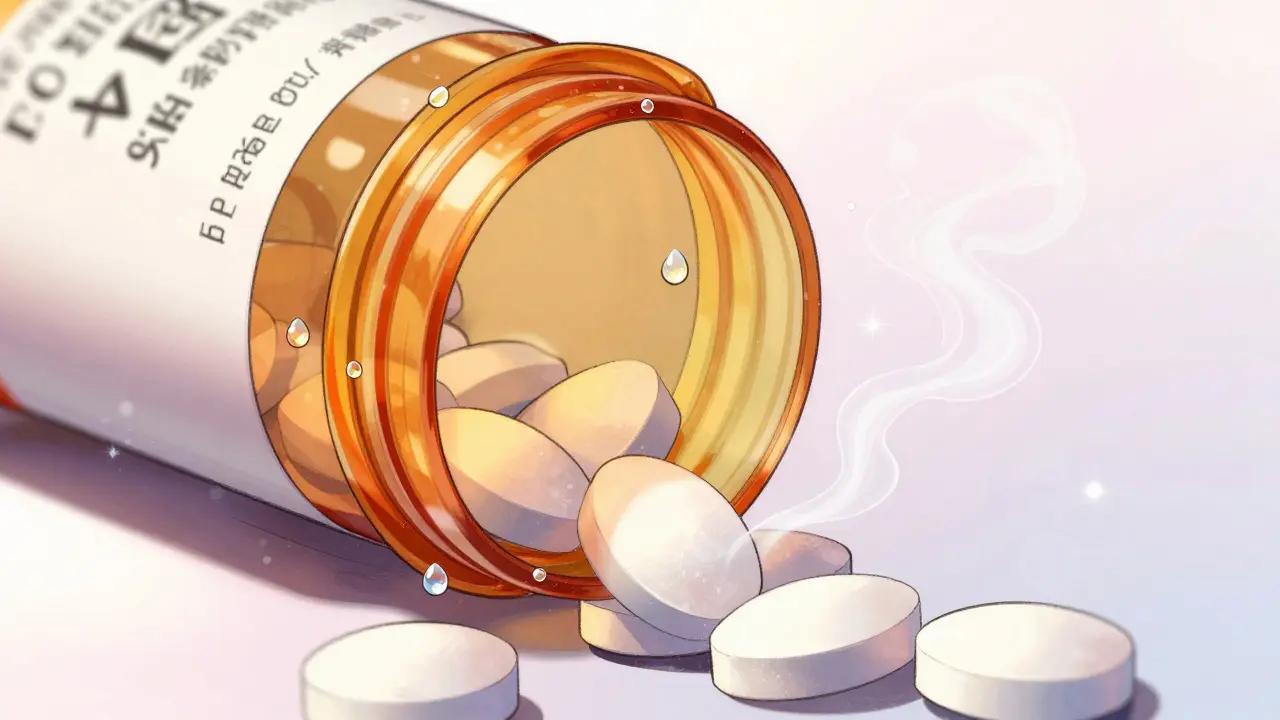
Ever opened a prescription bottle only to find your tablets have become soft, sticky, or developed a strange smell? You aren't alone. Moisture is one of the biggest enemies of medication. In the US, a staggering 67% of medication shortages in one reported year were tied to quality issues, many of which stem from humidity and water vapor getting into the pills. When water hits an active ingredient, it doesn't just make the pill "soggy"-it can actually trigger a chemical reaction called hydrolysis that renders the drug useless or, in some cases, toxic.
Take aspirin, for example. When it's exposed to moisture, it breaks down into salicylic acid and vinegar. Not only does this make the medicine less effective, but it can also cause irritation. Whether you're a patient managing a chronic condition or someone curious about how your meds are made, understanding how to block humidity is the key to making sure your treatment actually works.
The Hidden Danger: How Moisture Ruins Your Meds
Moisture damage happens in two main ways: liquid ingress (like a leak in a bottle) and vapor transmission (humidity in the air). The real danger is Drug Stability, which is the ability of a pharmaceutical product to maintain its physical, chemical, and microbiological properties over time.
When humidity seeps in, it causes oxidation and decomposition of the Active Pharmaceutical Ingredient or API, which is the specific chemical in the medication that treats the symptom or disease. For instance, Vitamin C is incredibly vulnerable; moisture accelerates its reaction with oxygen, causing it to degrade rapidly. If your pills change color, develop a scent, or crumble easily, the chemical structure has likely shifted, meaning you're no longer getting the dose prescribed by your doctor.
The First Line of Defense: Advanced Film Coatings
Before a pill even reaches your bottle, manufacturers apply a protective layer. Think of this as a raincoat for your medicine. While many tablets use a standard coating called HPMC (hydroxypropyl methylcellulose), it's often not enough for high-humidity environments.
A much better option is PVA-based coatings coatings made from polyvinyl alcohol that create a tighter, more impermeable barrier against water vapor. Research shows that PVA coatings, such as those found in the Opadry® amb II system, are about three times more effective at blocking moisture than traditional HPMC options. In actual testing with amoxicillin/clavulanic acid-a common antibiotic-uncoated tablets lost their effectiveness within 10 days of being exposed to air. Meanwhile, those with a PVA coating stayed stable. This proves that the coating is often more important than the bottle itself.
| Attribute | HPMC (Traditional) | PVA (Advanced) |
|---|---|---|
| Moisture Barrier Level | Moderate | High (3x better) |
| Protection Rate | Standard | 30-40% more effective |
| Common Use Case | General stability | Highly hygroscopic APIs |
| Cost | Lower | 15-20% higher |

Using Desiccants to Manage "Headspace"
Even the best coating can't protect a pill once it's sitting in a bottle that you open every day. Every time you unscrew the cap, you let in fresh, humid air. This is known as "headspace replacement." In a typical 500-pill bottle where you take two pills a day, you're replacing the air inside the bottle 250 times over the course of the treatment.
This is where Silica Gel a porous form of silicon dioxide that adsorbs water molecules from the air comes in. You've probably seen those small "Do Not Eat" packets in shoe boxes; the pharmaceutical version is much more refined. High-quality silica gel can adsorb up to 40% of its own weight in moisture. When sized correctly, these desiccants can keep moisture increases to as little as 0.3 percentage points over two years, even in challenging conditions.
A pro tip for manufacturers and patients: never throw away that little packet if it comes with your meds. It is actively fighting the humidity you introduce every time you open the lid.
Choosing the Right Packaging Materials
The container is your outer wall. Most pills come in HDPE High-Density Polyethylene, a durable plastic used for medicine bottles due to its strength and chemical resistance or Polypropylene (PP) containers. These are great for stopping liquid water from leaking in, but they aren't perfect. Water vapor can still slowly permeate through plastic over time.
For the most sensitive drugs, manufacturers use a "multi-layered strategy." This combines a PVA coating, an HDPE bottle, and a silica gel desiccant. When all three are used together, the risk of product failure drops almost to zero. If you have the choice, blister packs (especially aluminum foil-foil packs) generally offer better moisture protection than a single large bottle because each pill remains sealed until the moment you take it.
Practical Tips for Safe Storage at Home
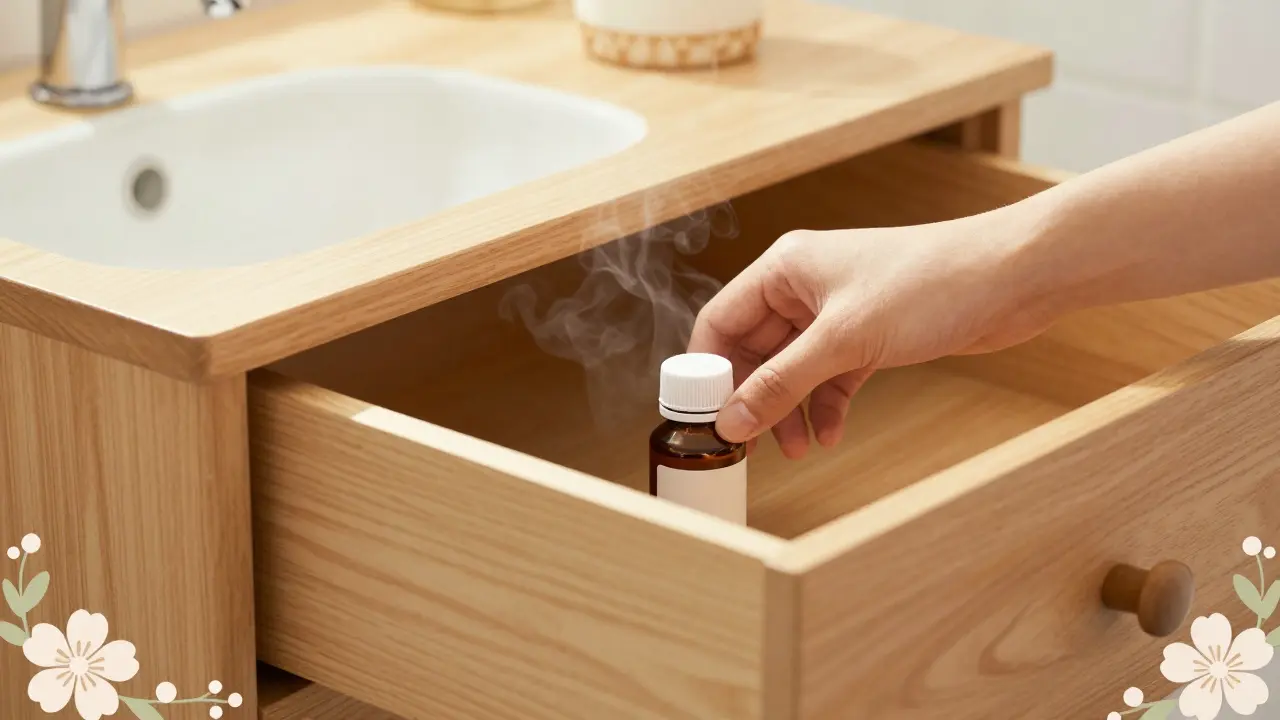
You can't change the coating of your pills, but you can control where you put them. Many people keep their medicine in the bathroom, which is the worst possible place. Between the shower steam and the sink, the bathroom is a humidity trap.
- Move them to a cool, dry place: A kitchen cabinet away from the stove or a bedroom dresser is ideal.
- Keep the cap tight: Only open the bottle immediately before taking your dose.
- Avoid pill organizers in humid areas: If you use a weekly pill sorter, remember that these are rarely airtight. If your medication is highly moisture-sensitive (like some antibiotics), keep them in the original bottle and only move a few days' worth into the sorter.
- Check for signs of damage: If your capsules feel sticky or your tablets have developed pits or spots, contact your pharmacist before taking them.
Future Innovations in Moisture Protection
The industry is moving toward even smarter solutions. We are seeing the rise of biodegradable desiccants to reduce plastic waste and "active moisture scavenging systems." These are next-generation technologies where the moisture-fighting ingredients are built directly into the tablet formulation itself. Imagine a pill that protects itself even if you leave the bottle open for an hour-that's the direction the science is heading.
Can I reuse a silica gel packet from another bottle?
No. Desiccants have a limited capacity; once they've absorbed all the moisture they can hold, they stop working. Adding an old packet to a new bottle won't provide the necessary protection and could introduce contaminants.
Is it safe to take a pill that looks slightly damp?
It is not recommended. Moisture can cause the active ingredients to break down into inactive or potentially irritating byproducts. If the physical appearance has changed, the chemical potency may have dropped. Consult your pharmacist for a replacement.
Why are some pills in blister packs instead of bottles?
Blister packs provide an individual seal for every single dose. This eliminates the "headspace" problem found in bottles, where every opening exposes the entire supply to humidity.
Does refrigeration help prevent moisture damage?
Not necessarily. While some meds require cold storage, refrigerators can actually be very humid. Unless the label specifically says "Refrigerate," a cool, dry cupboard is usually safer than a fridge to avoid condensation.
What is the difference between HPMC and PVA coatings?
HPMC is a standard coating that provides basic protection. PVA (polyvinyl alcohol) is a high-performance barrier that is significantly more effective at blocking water vapor, making it the gold standard for moisture-sensitive medications.



There are 3 Comments
Arthur Luke
The point about the bathroom being a humidity trap is spot on. I've seen so many people keep their meds right next to the shower, and it's honestly a recipe for disaster given how vapor transmission works.
Brigid Prosser
Absolute game-changer for anyone who's ever had their pills turn into a sticky mess. It's wild how we just toss those silica packets without a second thought when they're basically the only thing standing between your meds and total chemical chaos. Definitely a wake-up call to stop treating your medicine cabinet like a sauna!
dallia alaba
The distinction between HPMC and PVA coatings is a crucial detail here. For those of us working with highly hygroscopic APIs, the 3x effectiveness of PVA isn't just a marginal gain-it's the difference between a stable product and a failed batch. It is also worth noting that the interaction between the coating and the primary packaging creates a synergistic effect that significantly extends the shelf life beyond what either could achieve alone.
Write a comment
Your email address will not be published. Required fields are marked *