

When you're taking medication to treat a serious condition, the last thing you expect is to be stuck on the toilet all day. But for many people on chemotherapy, antibiotics, or immunotherapy, frequent loose stools aren't just annoying-they can be dangerous. Medication-induced diarrhea (MID) affects up to 80% of patients on certain cancer drugs and 30% of those on antibiotics. Left unchecked, it can lead to hospitalization, dehydration, or even life-threatening complications. The good news? Most cases can be managed effectively-if you know what to do and when to do it.
What Causes Medication-Induced Diarrhea?
Not all diarrhea is the same. MID happens when a drug disrupts the normal function of your digestive tract. The most common culprits are:- Chemotherapy drugs like irinotecan and 5-fluorouracil, which damage the lining of the intestines and increase fluid secretion.
- Antibiotics, especially broad-spectrum ones like clindamycin or ciprofloxacin, which wipe out good gut bacteria and allow harmful ones like Clostridioides difficile to take over.
- Immunotherapy treatments, which can trigger inflammation in the colon, leading to immune-mediated colitis.
- Other medications such as metformin, SSRIs, or magnesium-based antacids.
It’s not random. Certain drugs have well-documented risks. For example, irinotecan causes severe diarrhea in 10-25% of patients, and up to 70% of those on chemotherapy experience some level of diarrhea during treatment. The key is recognizing it early-not waiting until you’re dehydrated or in pain.
How Severe Is It? Grading the Symptoms
Doctors don’t just say “you have diarrhea.” They grade it. This helps decide how urgently to act:- Grade 1: 1-3 extra stools per day over your normal pattern. Mild, but don’t ignore it.
- Grade 2: 4-6 stools per day. This is when most people start feeling unwell. Time to act.
- Grade 3: 7 or more stools per day, incontinence, or needing hospitalization. Serious. Requires medical help.
- Grade 4: Life-threatening-severe dehydration, electrolyte imbalance, or sepsis. Emergency.
Most people don’t realize that even grade 1 diarrhea, if left untreated, can quickly spiral into grade 3. The window to stop it is narrow-often just 24 hours.
First-Line Treatment: Loperamide (Imodium)
The go-to drug for most cases of MID is loperamide. It works by slowing down gut movement, letting your body absorb more fluid. But it’s not as simple as popping one pill.Here’s the real protocol:
- As soon as you notice your first loose stool, take 4 mg of loperamide.
- Then take 2 mg after every subsequent loose stool.
- Don’t exceed 16 mg per day for most cases, but for irinotecan-induced diarrhea, you can go up to 24 mg under medical supervision.
Studies show this approach works. In clinical trials, 60-75% of patients with grade 2 chemotherapy-induced diarrhea stopped it within 24 hours using this method. But timing matters. If you wait more than 24 hours to start loperamide, your risk of severe diarrhea jumps 3.2 times.
One big mistake? Taking too much. Loperamide can cause dangerous heart rhythm problems if you exceed the max dose, especially if you’re also on other medications. Never take it for more than 48 hours without talking to your doctor.
When Loperamide Doesn’t Work: Octreotide
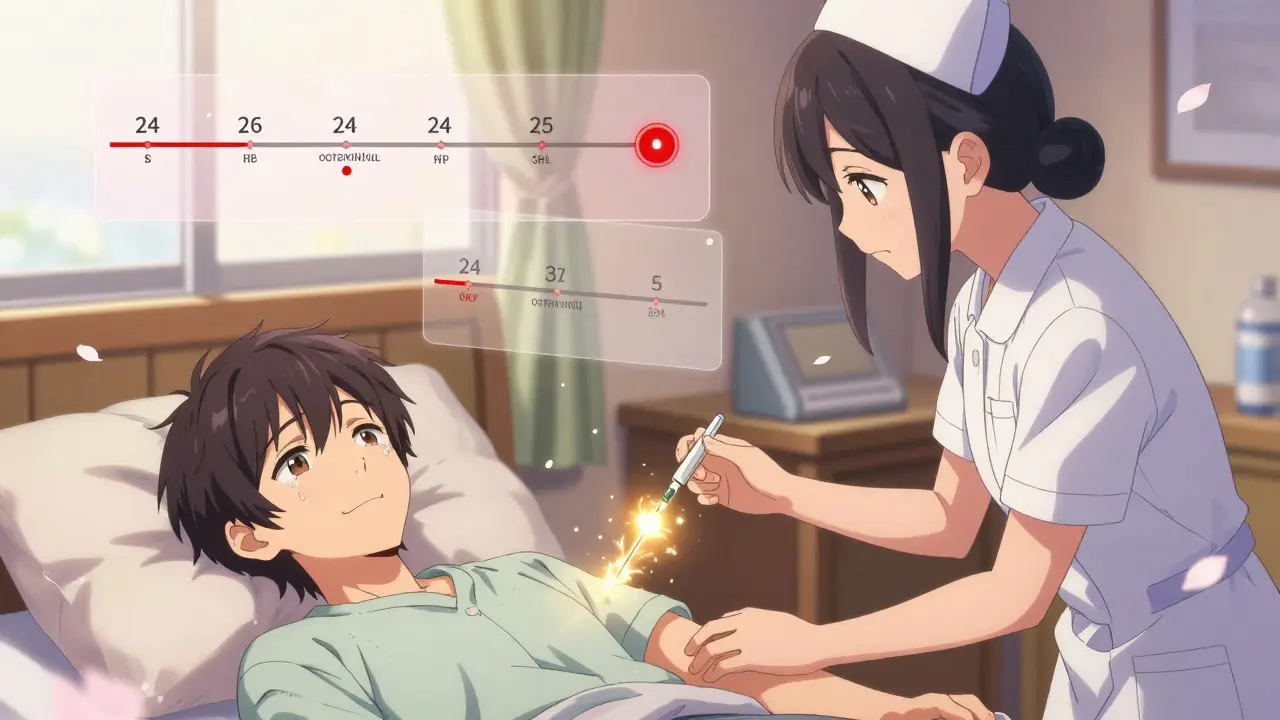
If diarrhea continues past 24 hours despite high-dose loperamide, or if it’s grade 3 or higher, you need something stronger: octreotide.Octreotide is a synthetic hormone that reduces fluid secretion in the gut. It’s given as a subcutaneous injection-a small shot under the skin, usually in the abdomen or thigh.
The standard dose is 100-150 micrograms every 8 hours. For severe cases, doctors may increase it to 200-300 micrograms or even use a continuous infusion. Response rates? Up to 95% for grade 3-4 diarrhea.
But here’s the catch: you can’t wait. Dr. Charles Fuchs from Yale Cancer Center says starting octreotide within 4 hours of severe diarrhea can reduce hospitalization rates by 35%. Delay it, and you’re more likely to end up in the ER.
Patients report injection pain-about 3 out of 4 doses sting. Pre-chilling the vial and using a fine needle helps. Some people pre-fill syringes to avoid fumbling during a flare-up.
What About Antibiotic-Associated Diarrhea?
If your diarrhea started after antibiotics, you can’t just treat it like regular MID. You might have Clostridioides difficile (C. diff), a dangerous infection.Here’s the critical rule: Do NOT use loperamide if you have fever, bloody stools, or diarrhea lasting more than 48 hours after antibiotics. Antimotility drugs can trap toxins in your colon and cause toxic megacolon-a life-threatening emergency.
Instead, you need antibiotics that target C. diff:
- Vancomycin (125 mg four times a day for 10 days): 97% cure rate.
- Fidaxomicin: More expensive but less likely to cause recurrence.
- Metronidazole: No longer first-line. Only used if vancomycin isn’t available.
Vancomycin costs about $1,200 per course. Metronidazole is $40. But cost shouldn’t drive the decision-failure to treat C. diff properly can cost you your life.
Non-Drug Strategies That Actually Work
Medication isn’t the whole story. What you eat and drink matters just as much.Hydration: Drink oral rehydration solutions (ORS) with the right balance: 75 mmol/L sodium, 75 mmol/L glucose, and 20 mmol/L potassium. You can buy pre-made packets (like Pedialyte or WHO formula) or mix your own. One packet per 200 mL water. Sip slowly, even if you’re nauseous.
Diet: Avoid dairy, fatty foods, spicy meals, caffeine, and alcohol. Stick to the BRAT diet-bananas, rice, applesauce, toast. Low-residue foods give your gut a break.
Probiotics: Not all probiotics help. Only two strains have strong evidence: Lactobacillus rhamnosus GG and Saccharomyces boulardii. These reduce antibiotic-associated diarrhea risk by about half. Avoid random probiotic blends-they often don’t contain the right strains.
Other options: Bismuth subsalicylate (Pepto-Bismol) can help mild inflammatory diarrhea, but avoid it if you’re allergic to aspirin or have kidney problems. Racecadotril, used in Europe, works as well as loperamide with fewer side effects-but it’s not available in the U.S.
What You Must Avoid
Some common advice is flat-out wrong-or dangerous:- Don’t delay treatment. Waiting 24 hours to start loperamide triples your risk of severe diarrhea.
- Don’t self-medicate with loperamide for more than 48 hours. Risk of ileus (bowel stoppage) jumps 15-fold.
- Don’t use antimotility drugs if you have fever or bloody stool. Could be C. diff. Test first.
- Don’t assume all diarrhea is the same. Chemo diarrhea ≠ antibiotic diarrhea ≠ immunotherapy colitis.

Real-Life Challenges: What Patients Say
Patients aren’t just statistics. They’re people managing this while juggling work, family, and treatment.On patient forums, common themes emerge:
- “I couldn’t keep up with the 2-hour dosing schedule. I’d fall asleep and miss doses.”
- “The injection hurt so bad I almost quit. My nurse showed me how to numb the area first.”
- “I didn’t realize I needed to call my oncologist after 4 loose stools. I waited too long.”
Tools like the Oncology Nursing Society’s Diarrhea Management Toolkit include visual charts and step-by-step guides. In one trial, using these tools reduced treatment errors by 45%.
When to Call Your Doctor
You don’t have to handle this alone. Call your healthcare provider if:- Diarrhea lasts more than 24 hours despite loperamide.
- You have 7 or more stools in 24 hours.
- You have fever above 38.5°C, bloody stools, or abdominal pain.
- You feel dizzy, have dry mouth, or urinate less than once every 8 hours.
- You’re on immunotherapy and have diarrhea with cramping.
Some clinics now use automated alerts: if you log 4+ loose stools in a day via a patient app, your nurse gets a notification. Early intervention saves lives.
The Future: What’s Coming Next
Medicine is catching up. In 2023, the FDA approved onercept, a new drug that reduces severe chemotherapy diarrhea by 63%. In 2024, ASCO updated guidelines to recommend neomycin prophylaxis for high-risk patients on irinotecan-cutting diarrhea rates from 65% to 32%.Looking ahead, personalized approaches are emerging:
- UGT1A1 gene testing can predict who’s likely to get severe diarrhea from irinotecan.
- SER-109, a microbiome therapy, cuts C. diff recurrence from 40% to under 13%.
These aren’t sci-fi. They’re here. And they’re changing outcomes.
Final Takeaway: Act Fast, Stay Informed
Medication-induced diarrhea isn’t something you should tolerate. It’s a signal-and a treatable one. Whether you’re on chemo, antibiotics, or immunotherapy, knowing the right steps can keep you out of the hospital and on track with your treatment.Start loperamide at the first loose stool. Hydrate. Avoid triggers. Know when to escalate. And never, ever ignore warning signs. Your body is telling you something. Listen.
Can I take loperamide every day for medication-induced diarrhea?
No. Loperamide should only be used for short-term relief. Taking it for more than 48 hours increases the risk of ileus (bowel stoppage) by 15 times. It’s meant to be a bridge-not a long-term fix. If diarrhea persists beyond two days, you need medical evaluation, not more loperamide.
Is octreotide painful to inject?
Yes, many people report discomfort at the injection site. The pain is usually brief but sharp. To reduce it, let the vial sit at room temperature for 30 minutes before use, clean the area with alcohol, and use a fine-gauge needle (25-27 gauge). Some patients pre-fill syringes and rotate injection sites to avoid irritation. Talk to your nurse-they can show you techniques to make it easier.
Should I stop my chemotherapy if I have diarrhea?
Not automatically. Most chemotherapy can continue if diarrhea is managed properly. Stopping treatment without control can be more harmful than continuing with support. Your oncology team will adjust your dose or schedule based on severity, not stop entirely. Always report diarrhea early so they can help you stay on track.
Can probiotics prevent medication-induced diarrhea?
Only specific strains have proven benefit: Lactobacillus rhamnosus GG and Saccharomyces boulardii. These reduce the risk of antibiotic-associated diarrhea by about 50%. Other probiotics-like those in yogurt or generic supplements-have no strong evidence. Don’t waste money on unproven products. Look for capsules with these exact strains and at least 10 billion CFUs per dose.
What should I do if I have diarrhea after starting a new antibiotic?
If you develop diarrhea within 48 hours of starting an antibiotic and have fever, bloody stool, or abdominal pain, do not take loperamide. These are red flags for Clostridioides difficile infection. Call your doctor immediately. You’ll need a stool test and likely a course of vancomycin. Self-treating with anti-diarrheals can be dangerous.
Are there foods I should avoid during medication-induced diarrhea?
Yes. Avoid dairy (lactose worsens it), fatty or fried foods, spicy dishes, caffeine, alcohol, and high-fiber foods like raw vegetables or whole grains. Stick to low-residue options: white rice, bananas, applesauce, toast, boiled potatoes, and clear broths. Eat small, frequent meals. Hydration with oral rehydration solution is more important than eating.
How do I know if my diarrhea is from chemo or an infection?
Chemotherapy diarrhea is usually watery, without fever or blood. Infection (like C. diff) often comes with fever, cramping, blood in stool, or recent antibiotic use. If you have fever above 38.5°C or bloody stools, your doctor will order a stool test before prescribing loperamide. Never assume the cause-testing is essential.



There are 15 Comments
James Roberts
Danielle Gerrish
Liam Crean
madison winter
Jeremy Williams
Ellen Spiers
Marie Crick
Chris Beeley
Arshdeep Singh
Amrit N
Courtney Hain
Robert Shiu
Greg Scott
Caleb Sciannella
James Roberts
Write a comment
Your email address will not be published. Required fields are marked *