
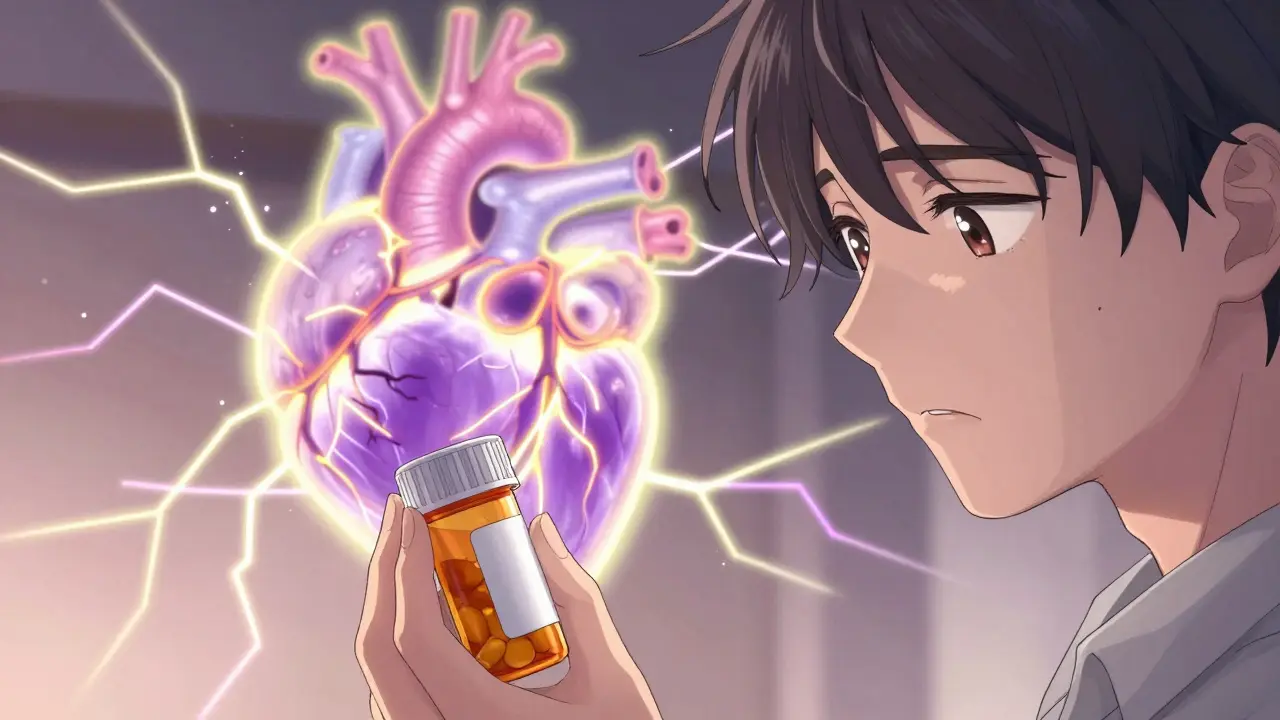
Hyperkalemia Risk & Level Assessment
1. Check Your Serum Level
Normal (3.5)
Severe (6.5+)
2. Identify Risk Factors
Select all that apply to see your specific risk profile:
RAASi Medications
Medication
ACE inhibitors (Lisinopril) or ARBs (Losartan).
K-Sparing Diuretics
Medication
Spironolactone, Amiloride, Eplerenone.
Chronic Kidney Disease (CKD)
Condition
Reduced ability for kidneys to flush potassium.
High Potassium Diet
Lifestyle
Frequent intake of bananas, spinach, or salt substitutes.
Clinical Summary
Medical Disclaimer: This tool is for educational purposes only. If your level is > 5.5 mEq/L, contact your provider immediately. If experiencing chest pain, go to the ER.
Key Takeaways
- Severe hyperkalemia usually occurs when serum potassium exceeds 6.5 mEq/L.
- Common heart and kidney medications (RAASi) can trigger dangerous potassium spikes.
- The most immediate risk is a lethal heart arrhythmia or sudden cardiac arrest.
- Treatment ranges from emergency IV calcium to long-term potassium binders.
- Monitoring is critical because you can have dangerously high levels without feeling any symptoms.
The Danger of the "Silent" Potassium Spike
The scariest thing about high potassium is that it often doesn't announce itself. You might feel completely fine while your heart's electrical stability is crumbling. In mild cases, you might notice slight muscle weakness or a tingling sensation, but by the time you feel "sick," you could be in the danger zone. This is why doctors rely so heavily on blood tests and ECGs.
The risk is not evenly spread. While only about 2-3% of the general population deals with this, the numbers jump to 10-20% for people taking specific cardiovascular drugs. If you have Chronic Kidney Disease (CKD), the risk is even higher because your kidneys-the primary organs responsible for flushing out excess potassium-simply aren't working at full capacity.
Medications That Trigger High Potassium
Many of the drugs that cause hyperkalemia are actually "gold standard" treatments for heart failure and hypertension. The conflict arises because these drugs tell the body to keep potassium while flushing out sodium. This is a great way to lower blood pressure, but it's a risky way to manage electrolytes.
The main culprits are RAASi is an umbrella term for Renin-Angiotensin-Aldosterone System inhibitors, which include ACE inhibitors and ARBs . If you see names like lisinopril or losartan on your prescription, you're using these. Then there are the Potassium-Sparing Diuretics, such as spironolactone or amiloride, which explicitly prevent the kidneys from excreting potassium.
A dangerous combination occurs when these drugs are mixed. For example, taking spironolactone alongside an ACE inhibitor and a certain antibiotic called co-trimoxazole can increase the risk of sudden death by 5.5 times. It's a perfect storm where the drug, the antibiotic, and potentially failing kidneys all push potassium levels upward simultaneously.
| Drug Class | Common Examples | Primary Action |
|---|---|---|
| ACE Inhibitors | Lisinopril, Enalapril | Blocks Angiotensin II production |
| ARBs | Losartan, Valsartan | Blocks Angiotensin II receptors |
| Mineralocorticoid Antagonists | Spironolactone, Eplerenone | Blocks aldosterone effects |
| Potassium-Sparing Diuretics | Amiloride, Triamterene | Blocks sodium/potassium exchange |
How High Potassium Attacks the Heart
To understand the risk, you have to think of the heart as a battery. For a muscle to contract, electricity needs to flow across the cell membrane. This flow is managed by a delicate balance of sodium and potassium. When there is too much potassium outside the cell, the "battery" can't reset properly. This slows down the electrical signal and makes the heart muscle hypersensitive.
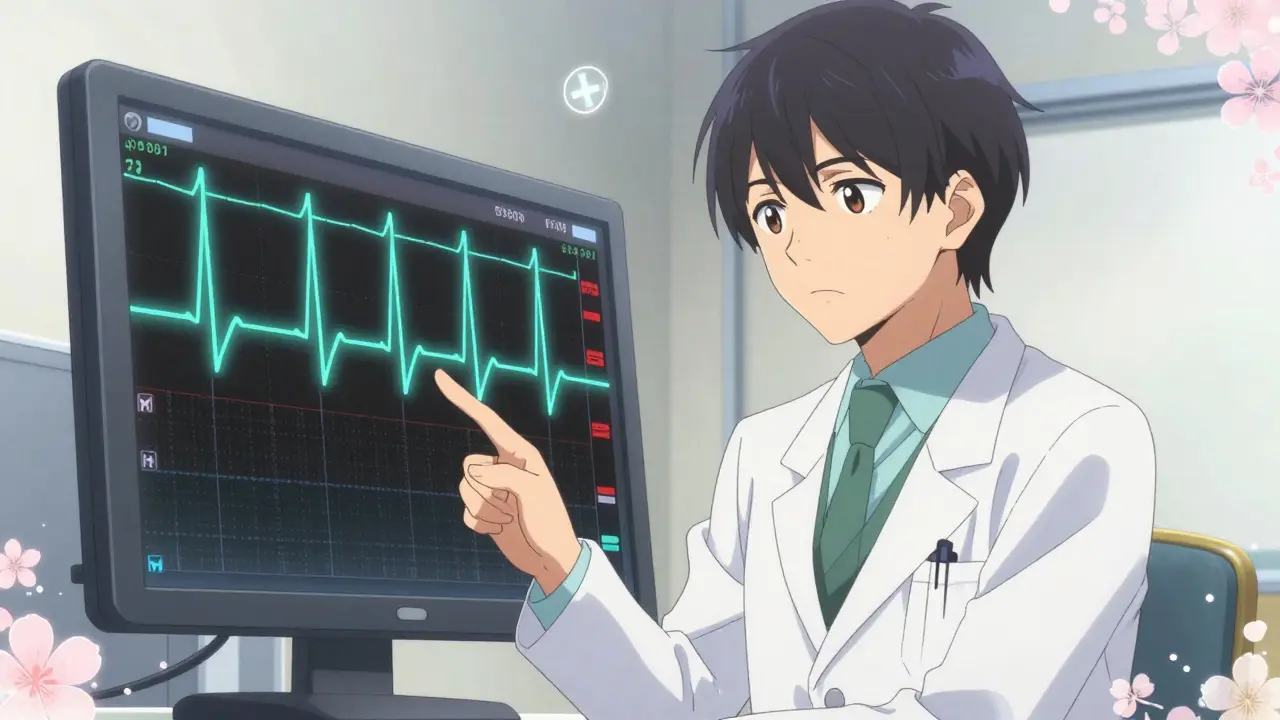
Doctors spot this using an ECG. As potassium levels climb, the ECG shows a specific progression of warnings. First, you'll see "peaked T-waves"-the T-wave looks like a sharp tent. If the levels keep rising, the PR interval lengthens, and the QRS complex begins to widen. In the most extreme cases, the heartbeat transforms into a "sine wave," which is a precursor to ventricular fibrillation-essentially, the heart just quivers and stops pumping blood.
Emergency Treatment: Stopping the Clock
When someone arrives at the ER with severe hyperkalemia (usually above 6.5 mEq/L) and ECG changes, the goal isn't actually to lower the potassium immediately-it's to stop the heart from stopping. This is where Calcium Gluconate is an intravenous medication used to stabilize the cardiac membrane comes in. It doesn't remove a single milliequivalent of potassium from the blood, but it "shields" the heart, making it less likely to trigger a fatal arrhythmia. It works in about 2 to 3 minutes.
Once the heart is stabilized, the medical team moves to "shifting" the potassium. They use Insulin combined with glucose to trick the body into pushing potassium out of the blood and back into the cells. Albuterol nebulizers can do something similar. These are temporary fixes; they don't get the potassium out of the body, they just hide it in the cells for a while.
Long-Term Management and the Role of Binders
For a long time, the only solution for a patient whose blood pressure meds caused high potassium was to lower the dose or stop the medication entirely. This was a tragedy because those meds often save lives by preventing heart failure. Thankfully, new medications called "potassium binders" have changed the game.
Modern binders like Patiromer (Veltassa) and Sodium Zirconium Cyclosilicate (Lokelma) act like sponges in the digestive tract. They bind to potassium in the gut and carry it out of the body through stool, preventing it from ever entering the bloodstream. This allows patients to stay on their life-saving RAASi therapies while keeping their potassium levels in a safe range.
However, these aren't without side effects. Because they change how things move through the gut, constipation is a common issue, affecting about 15-20% of users. Despite this, the trade-off is worth it-clinical data shows that about 86% of patients can maintain their target drug doses when using these binders compared to only 66% without them.

Practical Steps for Patients and Caregivers
If you are taking any of the medications mentioned above, you shouldn't panic, but you should be proactive. Managing dangerous hyperkalemia is about balance and vigilance.
- Watch your diet: While a banana is healthy, people with high potassium risks may need to limit high-potassium foods (like spinach, avocados, and potatoes) to 2,000-3,000 mg daily.
- Avoid "hidden" potassium: Be careful with "low-sodium' salt substitutes, as these often replace sodium with potassium chloride, which can send levels skyrocketing.
- Consistent testing: Depending on your stability, your doctor will want to check your serum potassium every 1 to 4 weeks. Don't skip these labs.
- Hydration: Dehydration can make kidney function dip, which in turn makes potassium climb. Drink water, but follow your doctor's fluid restrictions if you have heart failure.
What is considered a "dangerous" potassium level?
Generally, any level above 5.0-5.5 mEq/L is considered high (hyperkalemia). However, levels above 6.5 mEq/L are viewed as severe and potentially life-threatening, requiring aggressive medical treatment to prevent cardiac arrest.
Can I just stop taking my blood pressure meds if my potassium is high?
No. You should never stop these medications without consulting your doctor. RAASi drugs provide critical protection for your heart and kidneys. Your doctor may instead prescribe a potassium binder or adjust your dose to keep the benefits while managing the risk.
Why does calcium gluconate help if it doesn't lower potassium?
Calcium gluconate works by stabilizing the electrical charge of the heart cell membranes. It essentially "insulates" the heart against the destabilizing effects of high potassium, preventing lethal arrhythmias while other treatments work to actually remove the potassium from the body.
What are the first signs of hyperkalemia on an ECG?
The earliest and most common sign is "peaked T-waves," where the T-wave appears tall and narrow. As levels increase, you may see a widening of the QRS complex and a prolonged PR interval, eventually leading to a sine wave pattern.
Are potassium binders safe for long-term use?
Yes, medications like patiromer and sodium zirconium cyclosilicate are designed for chronic management. While they can cause gastrointestinal issues like constipation or diarrhea, they are generally safe and highly effective at allowing patients to continue essential cardiovascular therapies.
Next Steps and Troubleshooting
If you're a patient and your lab results show a potassium level over 5.5 mEq/L, your first step is to call your provider immediately. Do not wait for your next scheduled appointment. If you are also experiencing chest pain, severe shortness of breath, or extreme muscle weakness, head to the emergency room.
For those managing this long-term, keep a log of your medications and a list of high-potassium foods you consume. This helps your doctor determine if your spikes are caused by your prescriptions or your diet. If you find that your current binder is causing severe constipation, ask your doctor about dose adjustments or complementary fiber strategies, as maintaining the binder is often more important than the mild side effect.




There are 9 Comments
Rauf Ronald
This is such a crucial breakdown of the RAASi paradox! It's honestly amazing how those potassium binders like Lokelma have changed the game for CKD patients, allowing them to keep the heart-protective benefits of ACE inhibitors without the constant fear of an emergency room trip. For anyone managing this, definitely keep a close eye on those 'low-sodium' salt substitutes because they are basically potassium bombs in disguise. Keep staying proactive with your labs and stay strong everyone!
Brady Davis
Oh great, so the meds meant to save my heart are actually just preparing it for a dramatic final curtain call. Fantastic. 🙄
Danielle Kelley
Wake up people!!! You really think it's a coincidence that the 'gold standard' drugs have these lethal side effects? They just want us dependent on more drugs like these expensive 'binders' to fix the problems the first drugs caused! It's a cycle of profit and control and they're just laughing at us while our hearts 'quiver'!
Daniel Trezub
Actually, it's a bit simplistic to just blame the drugs. The real issue is often the failure of the primary care system to actually teach patients about dietary potassium. Like, most people don't even know that spinach is high in potassium. Also, while the post mentions binders, some of the older resins were absolutely miserable to take, but hey, whatever works for the current batch of pharmaceuticals, I guess.
Sarabjeet Singh
Good info here. Just keep moving forward and stay on top of the check-ups.
Victoria Gregory
It's so wild how the body is just this delicate balance of minerals... like a tiny universe inside us!! 🌌 It really makes you think about how connected everything is and how one little shift can change everything... just keep breathing and trusting the process!!! ✨🙏
Dhriti Chhabra
The detailed explanation regarding the stabilization of the cardiac membrane via calcium gluconate is most illuminating. It is imperative that patients adhere to the prescribed monitoring schedules to ensure their safety while benefiting from cardiovascular therapies.
Michael Flückiger
Just keep pushing through it!!! Every single lab test is a victory in managing your health!!! You've got this!!! Stay hydrated and keep fighting for those better numbers!!!
Jamar Taylor
Believe in yourself and your care team. It takes a lot of discipline to manage diet and medication simultaneously, but the payoff is a longer, healthier life. Just take it one day at a time, keep your logs organized, and remember that you are in control of your journey. You can absolutely handle this, just keep staying consistent with those appointments and you'll see the progress. It's all about the long game and staying positive while you navigate the treatment. You're doing the hard work now so you can enjoy the future. Keep your head up and keep going. Your health is worth the effort. Just keep stepping forward and you'll get through the tough parts. You are stronger than a potassium spike. Just keep focusing on the goal. You've got this under control.
Write a comment
Your email address will not be published. Required fields are marked *