
Yeast Infection Risk Calculator
Antibiotics disrupt the natural balance of bacteria in your body, increasing your risk of yeast infections. This tool estimates your personal risk based on key factors. Only 30% of people develop yeast infections after antibiotics, but your individual risk varies.
Answer the questions below to get your personalized risk assessment. Based on your results, we'll provide targeted prevention strategies from the article.
Your Risk Factors
High blood sugar creates a feeding ground for yeast
Extra estrogen accelerates yeast growth
Traps moisture and heat, doubling yeast growth
Removes 70-90% of protective bacteria
Weakens immune system's ability to control yeast
Increases sugar in urine, feeding yeast
Your Personalized Risk Assessment
0
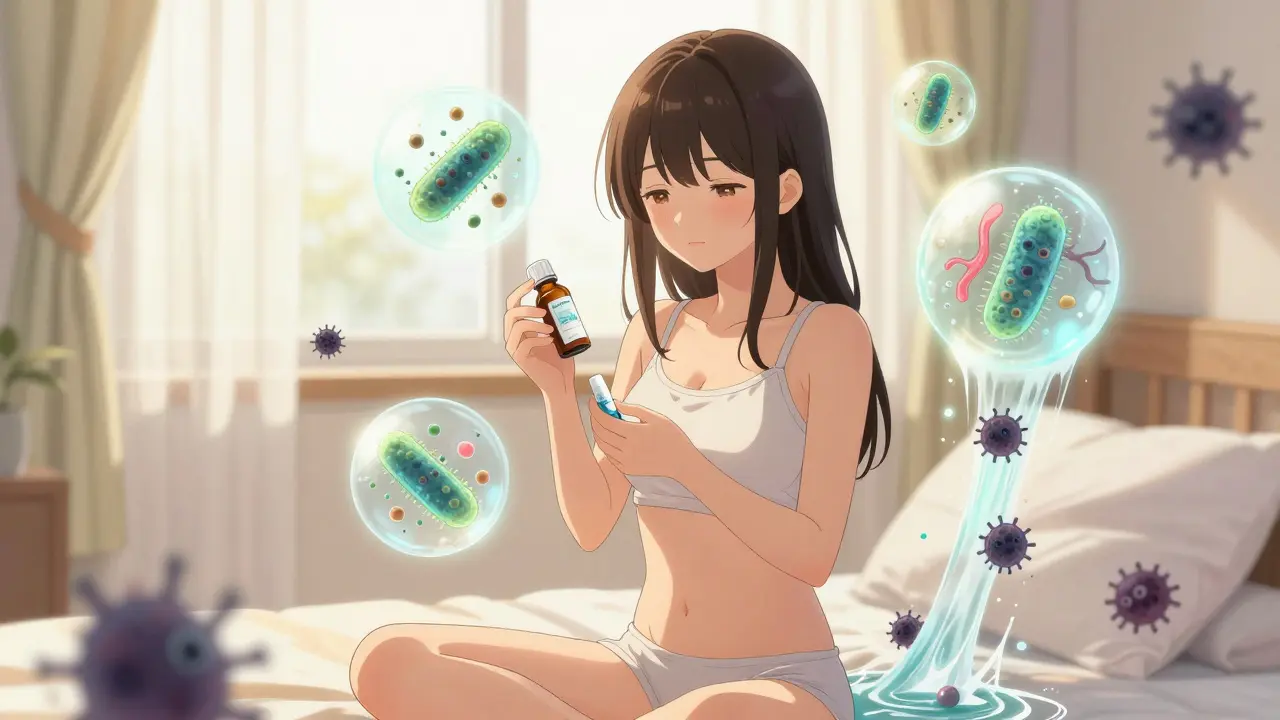
When you take antibiotics to fight a bacterial infection, you might not realize you're also wiping out the good bacteria that keep yeast in check. This imbalance can lead to a yeast infection - a common, uncomfortable, and often misunderstood side effect. If you've ever felt intense itching, noticed thick white discharge, or experienced burning during urination after finishing a course of antibiotics, you're not alone. Up to 30% of people with vaginas develop a yeast infection after taking antibiotics, and for many, it's the first time they've ever had one.
Why Antibiotics Cause Yeast Infections
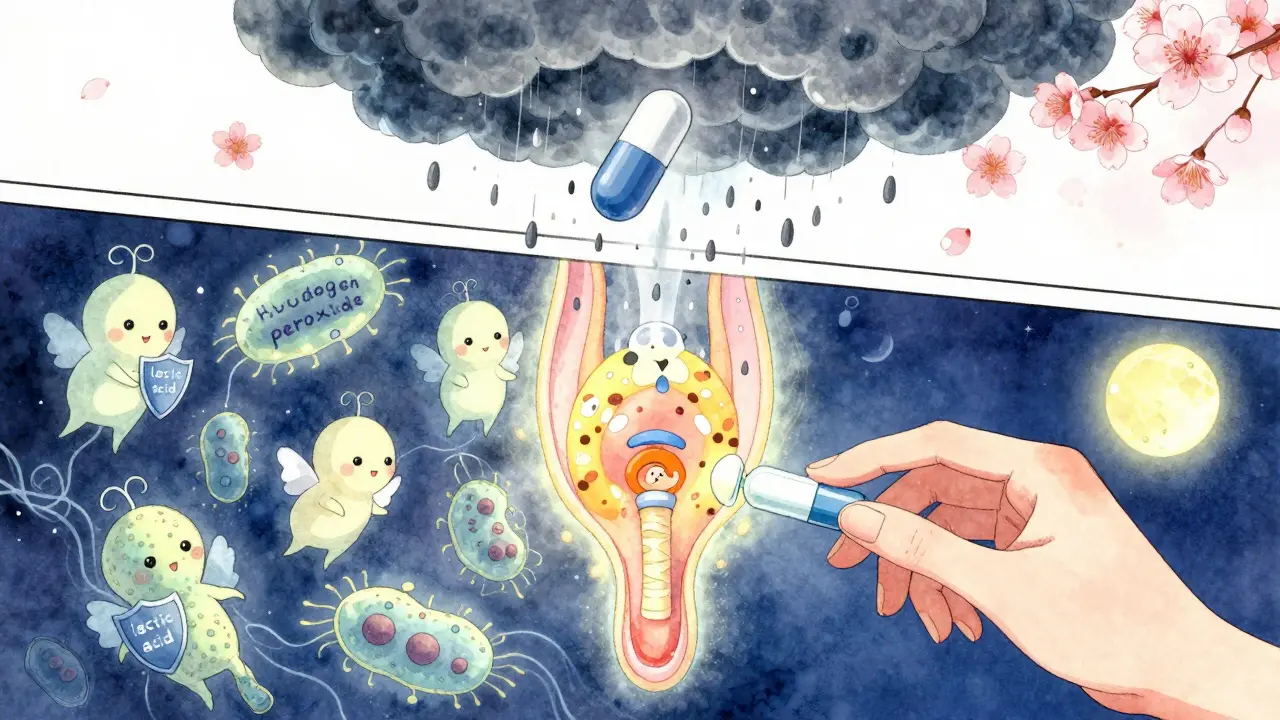
Your vagina naturally hosts a community of bacteria, mostly Lactobacillus, that keep things balanced. These good bacteria produce lactic acid and hydrogen peroxide, which maintain a slightly acidic environment (pH 3.8-4.5) that stops Candida - the fungus that causes yeast infections - from taking over. But broad-spectrum antibiotics like amoxicillin, tetracycline, and ciprofloxacin don't just kill bad bacteria. They wipe out these protective Lactobacillus too. Without them, Candida multiplies unchecked.
It’s not just about the type of antibiotic. The longer you're on them, the higher your risk. A seven-day course of antibiotics increases your chances by nearly 50% compared to not taking any. Even a single dose can be enough to trigger symptoms in people who are already prone to yeast infections.
Who’s Most at Risk?
Not everyone who takes antibiotics gets a yeast infection. But some people are far more likely to. If you have uncontrolled diabetes - especially with blood sugar over 180 mg/dL - your body is flooding your system with glucose. Yeast thrives on sugar. Studies show that high blood sugar increases vaginal glucose levels by 20-30%, creating a perfect feeding ground for Candida.
Other risk factors include:
- Using hormonal birth control or estrogen therapy - extra estrogen makes yeast grow faster
- Wearing tight, synthetic underwear - it traps heat and moisture, turning your vaginal area into a warm, damp incubator
- Douching - it strips away protective bacteria and raises pH, making yeast more likely to take over
- Taking corticosteroids or having a weakened immune system - like with HIV and CD4 counts below 200
- Using SGLT2 inhibitor diabetes drugs like Jardiance - they cause excess sugar in urine, which can feed yeast
And here’s the thing: even if you're healthy, taking antibiotics can still throw your system off. It’s not a sign of poor hygiene or a lifestyle issue. It’s a biological side effect.

How to Prevent It Before It Starts
The best way to handle an antibiotic-induced yeast infection? Stop it before it begins. You don’t have to wait until you’re itching to act.
Start antifungals on day one. Over-the-counter creams like clotrimazole (Gyne-Lotrimin) or miconazole (Monistat) are safe and effective. Use the 7-day treatment, not the one-day version. Clinical trials show that starting these on the same day as your antibiotic reduces infection risk by 60-70%. Apply it as directed - usually once daily for 7 days.
Take the right probiotics. Not all probiotics work. Look for strains that actually help: Lactobacillus rhamnosus GR-1 and Lactobacillus reuteri RC-14. These are the ones backed by research. Take 10 billion CFU daily, starting the same day as your antibiotic. Take them at least two hours before or after your antibiotic pill - that way, the live cultures don’t get wiped out right away. Products like Fem-Dophilus or Culturelle Women’s Healthy Balance contain these strains.
Change your clothing. Cotton underwear isn’t just a comfort thing - it’s a medical tool. Synthetic fabrics trap moisture and raise the temperature in your vaginal area by 2-4°C. That’s enough to double yeast growth. Wear 100% cotton, and avoid tight leggings or pantyhose. Change out of wet swimsuits or workout clothes immediately.
Ditch the douches and scented products. Douching removes 70-90% of your protective bacteria. Scented tampons, pads, and sprays throw off your pH by 1.5-2.0 units - enough to trigger an overgrowth. Stick to unscented, plain products. Water is enough for cleaning.
Eat smart. While cutting sugar won’t prevent every infection, it helps. Avoid white bread, pastries, candy, and sugary drinks. These spike your blood sugar and feed yeast. Focus on vegetables, lean proteins, healthy fats, and whole grains. Some people find that eating plain yogurt with live cultures (at least 1 billion CFU per serving) helps - but don’t rely on it alone. The probiotic strains in yogurt are different from the ones proven to protect the vagina.
What to Do If You Already Have Symptoms
If you’re already itching or have thick, cottage cheese-like discharge, you don’t need to suffer through it. Most yeast infections respond well to treatment.
For mild cases, OTC antifungals work great. Clotrimazole cream, miconazole suppositories, or tioconazole ointment (Vagistat-1) all have success rates of 80-90%. Use the full 7-day course - even if symptoms disappear after two days. Stopping early can let the yeast come back stronger.
If it’s your third or fourth infection this year, or if the OTC stuff didn’t work, see a doctor. You might need prescription fluconazole (Diflucan). A single 150mg pill often clears it up. For stubborn cases, your provider might prescribe three doses - one every 72 hours.
But here’s the catch: fluconazole isn’t safe during pregnancy. If you’re pregnant, especially in the second or third trimester, fluconazole can increase the risk of birth defects. In those cases, doctors use boric acid suppositories - 600mg inserted nightly for 14 days. It’s effective against non-albicans strains that don’t respond to regular antifungals.
What Doesn’t Work
Some people think more antibiotics will help. They won’t. Antibiotics kill bacteria - not fungi. Taking more just makes the problem worse by killing even more good bacteria.
Home remedies like tea tree oil, garlic, or vinegar baths? No scientific backing. Some can even irritate sensitive skin. Stick to clinically tested methods.
And don’t self-diagnose. About 64% of people who think they have a yeast infection actually have bacterial vaginosis or a different infection. They look similar - itching, discharge, burning - but need completely different treatment. If you’re unsure, get checked. A simple swab test at your doctor’s office can confirm it.
Long-Term Prevention and What’s Coming
Recurrent yeast infections (four or more a year) aren’t normal. They signal something deeper - maybe ongoing antibiotic use, undiagnosed diabetes, or a microbiome that hasn’t recovered. Talk to your provider about whether you need a longer-term strategy.
Researchers are working on new solutions. Vaginal microbiome transplants - where healthy bacteria from a donor are introduced - are in early trials. pH-regulating tampons are being developed to maintain balance during menstruation. But progress is slow. Vaginal health research gets only 2.5% of the NIH’s budget, even though over 1.4 billion people worldwide experience yeast infections.
For now, the best defense is simple: protect your good bacteria. Use antibiotics only when necessary. Talk to your doctor about narrow-spectrum options (like nitrofurantoin for UTIs) that spare more of your natural flora. Start prevention measures on day one. And don’t be afraid to ask for help - your comfort matters.
Can you get a yeast infection from taking antibiotics even if you’ve never had one before?
Yes. Many people experience their first yeast infection after taking antibiotics, even if they’ve never had one before. Antibiotics disrupt the balance of good bacteria in the vagina, which allows yeast to overgrow. It’s not about past history - it’s about the biological effect of the medication.
Is it safe to use antifungal creams while on antibiotics?
Yes. Over-the-counter antifungal creams like clotrimazole and miconazole are safe to use alongside antibiotics. In fact, starting them on the same day as your antibiotic can cut your risk of infection by up to 70%. Just follow the full 7-day course as directed.
Do probiotics really help prevent yeast infections after antibiotics?
Yes - but only certain strains. Look for supplements containing Lactobacillus rhamnosus GR-1 and Lactobacillus reuteri RC-14. These have been shown in clinical studies to reduce yeast infections by about 50% when taken daily during antibiotic treatment. Generic probiotics or yogurt with live cultures may help, but they’re not as reliably effective.
Why does my doctor say not to douche?
Douching removes up to 90% of the protective Lactobacillus bacteria in your vagina. It also raises your vaginal pH from the healthy 3.8-4.5 range to 6.0-7.0 - a level where yeast thrives. It doesn’t prevent infections - it causes them. Your body cleans itself naturally. Water is all you need.
Can men get yeast infections from antibiotics too?
Yes, though less commonly. Men can develop penile yeast infections - especially if they have diabetes, are uncircumcised, or have sexual contact with a partner who has an active infection. Symptoms include redness, itching, and a white discharge under the foreskin. Treatment is similar: antifungal creams and avoiding irritants.
How long does it take for the vaginal microbiome to recover after antibiotics?
It can take weeks to months for your natural bacteria to fully return. Some studies show Lactobacillus levels don’t bounce back for up to 30 days after a single course of antibiotics. That’s why proactive prevention - like using probiotics and antifungals during treatment - is so important. Waiting until symptoms appear means you’re already behind.


There are 15 Comments
Aisling Maguire
Yikes, I had no idea antibiotics could wreck my vaginal microbiome like that. I just thought it was bad luck when I got that yeast infection after my sinus infection. Started using Monistat on day one after reading this - no more recurring nightmares. Cotton underwear is now my religion. Also, probiotics? Non-negotiable. I take Fem-Dophilus like it’s my morning coffee.
bill cook
I don’t trust any of this. I’ve been on antibiotics like 12 times and never had a yeast infection. This whole thing feels like big pharma scaring women into buying creams and supplements.
Byron Duvall
Yeah right, and I’m sure the CDC isn’t hiding the fact that all these ‘yeast infection’ stats are just a cover for glyphosate poisoning from GMO corn syrup. They want you to buy antifungals so you don’t ask why your food is full of poison. Also, douching? That’s how they keep us docile. Don’t fall for it.
Katherine Farmer
How quaint. You all seem to treat this like it’s a minor inconvenience. Let me remind you - yeast infections are a symptom of systemic imbalance. If you’re relying on OTC creams and probiotics from Walmart, you’re treating the symptom, not the root. Have you considered your cortisol levels? Your gut-brain axis? Your emotional repression? No? Then you’re just scratching the surface. This isn’t a medical issue - it’s a spiritual one.
Full Scale Webmaster
Oh sweet mercy, I’ve been here. Three yeast infections in six months after a course of amoxicillin. I tried everything - yogurt, garlic, tea tree oil baths (don’t), vinegar rinses (worse), even praying to the Virgin Mary. Nothing worked until I started taking L. rhamnosus GR-1 and L. reuteri RC-14 on day one. Six months later, zero recurrences. I’m not even joking - it’s like my vagina finally got a promotion. Also, ditch the lycra. I started wearing loose cotton shorts to bed. It’s weirdly life-changing. And no, I don’t regret it. My partner noticed. He said I ‘smelled like a human again.’
Brandie Bradshaw
It’s not just about antibiotics. It’s about the entire medical-industrial complex pathologizing natural biological variation. The fact that we’re encouraged to medicate preemptively - rather than question why antibiotics are overprescribed in the first place - reveals a deeper dysfunction. Why are we not demanding narrower-spectrum antibiotics? Why isn’t there public funding for microbiome research? Why is the NIH spending 97.5% of its budget elsewhere? This isn’t prevention - it’s damage control for a broken system. And yes, I’ve read the studies. All of them.
Jimmy Quilty
Probiotics dont work i tried em. Also douching is fine if you do it right. My aunt did it every week and never had a problem. Also why are we using latin names for bacteria like we’re in med school? Lactobacillus? Just say good bacteria. Also I think the whole yeast thing is overblown. I had one once and it went away in 2 days. Stop being dramatic.
Miranda Anderson
I’ve had recurrent yeast infections for years - and honestly, this post changed my life. I used to think it was my fault. Like I was dirty or eating too much sugar. But learning about the microbiome? It’s like someone turned on a light in a dark room. I started taking the right probiotics, switched to cotton underwear, stopped douching, and now I’m down to maybe one a year - and even that’s rare. I didn’t know my body was this smart. It’s not about perfection. It’s about listening. And honestly? I’m so glad someone wrote this. Thank you.
Gigi Valdez
The scientific literature on Lactobacillus rhamnosus GR-1 and Lactobacillus reuteri RC-14 is robust and peer-reviewed. The efficacy of prophylactic antifungal use during antibiotic treatment has been demonstrated in randomized controlled trials with low risk of bias. Furthermore, the association between elevated vaginal glucose levels and Candida overgrowth is well-documented in endocrinology and microbiology journals. While lifestyle modifications such as clothing choice are ancillary, they are not negligible. I commend the author for a comprehensive, evidence-based overview.
Sneha Mahapatra
Thank you for writing this. 🙏 I’ve had three yeast infections since my last antibiotic - and I felt so alone. No one talks about this. I’m from India, and here, it’s still taboo. I cried when I read the part about ‘it’s not your hygiene.’ I started the probiotics today. And yes, I’m wearing cotton. And no, I’m not douching. I feel… seen. Thank you.
Sumit Mohan Saxena
While the general recommendations provided are aligned with current clinical guidelines, it is imperative to emphasize that individualized risk stratification is necessary. For instance, patients with type 2 diabetes mellitus and HbA1c > 7.5% are at significantly elevated risk, and glycemic control must precede or accompany prophylactic interventions. Furthermore, the use of SGLT2 inhibitors necessitates concurrent monitoring of urinary glucose levels, as these compounds directly contribute to a pro-fungal urinary environment. Prophylactic antifungals should be considered only after exclusion of bacterial vaginosis and Trichomonas vaginalis via nucleic acid amplification testing. Misdiagnosis remains a leading cause of therapeutic failure.
Brandon Vasquez
This is helpful. Thank you.
Vikas Meshram
Anyone who takes antibiotics without consulting a doctor first deserves what they get. I’ve been a doctor for 22 years and I’ve never seen a yeast infection that wasn’t caused by poor hygiene or sugar addiction. Stop blaming science. Stop blaming antibiotics. Take responsibility. Also, yogurt doesn’t help. That’s a myth. Only prescription antifungals work. And if you’re using probiotics, you’re probably also drinking kombucha and hugging trees. Get real.
Ben Estella
Yeast infections are a liberal plot. They want you to think your body is broken so you’ll buy their pills. In my day, we didn’t have probiotics. We had soap and prayer. And we didn’t get infections. You’re weak. You’re soft. You’re letting Big Pharma turn your vagina into a cash register. Also, cotton underwear? That’s a socialist agenda. Wear wool. It’s patriotic.
Angel Wolfe
They’re lying. Antibiotics don’t cause yeast infections. It’s the 5G towers. They’re lowering your vaginal pH. I’ve got a friend who works at the CDC and he says they’ve been hiding this since 2018. The government is using yeast infections to track women’s reproductive health. That’s why they push probiotics - it’s a Trojan horse for microchips. I’ve been using borax baths since I found out. It’s working. Also, don’t trust the FDA. They’re owned by Pfizer. And if you’re pregnant? Forget it. They’re trying to sterilize you with fluconazole. I’ve got three kids. I know what I’m talking about.
Write a comment
Your email address will not be published. Required fields are marked *