
Antibiotic Need Assessment Tool
Antibiotic Stewardship Assessment
This tool helps you understand if your symptoms are likely caused by a virus (where antibiotics won't help) based on CDC guidelines. Remember: Antibiotics don't work on viruses and unnecessary use increases risks like C. difficile infection.
Your Assessment
Likely Viral
Antibiotics not recommended
Important Note: This tool is for educational purposes only. Always consult your healthcare provider for medical advice. Antibiotics should only be taken when prescribed by a doctor.
Every year, millions of people take antibiotics without needing them. It’s not because they’re reckless-it’s because it’s easy to assume a cough or a sinus pressure means bacteria are to blame. But most colds, flu, and sore throats are viral. And when you take an antibiotic for a virus, you’re not helping yourself-you’re putting yourself at risk for serious side effects you didn’t even know were possible.
What Antibiotic Stewardship Really Means
Antibiotic stewardship isn’t a buzzword. It’s a proven system to make sure antibiotics are used only when they’re truly needed, in the right dose, for the right amount of time. The CDC defines it simply: the right drug, at the right time, for the right bug, for the right duration. That’s it. No jargon. No fluff. This isn’t about limiting access to antibiotics. It’s about stopping the overuse that’s making them less effective-and more dangerous. When antibiotics are used too often or too broadly, they don’t just kill the bad bacteria. They wipe out the good ones too. And that’s where the real harm begins.How Inappropriate Use Leads to Side Effects
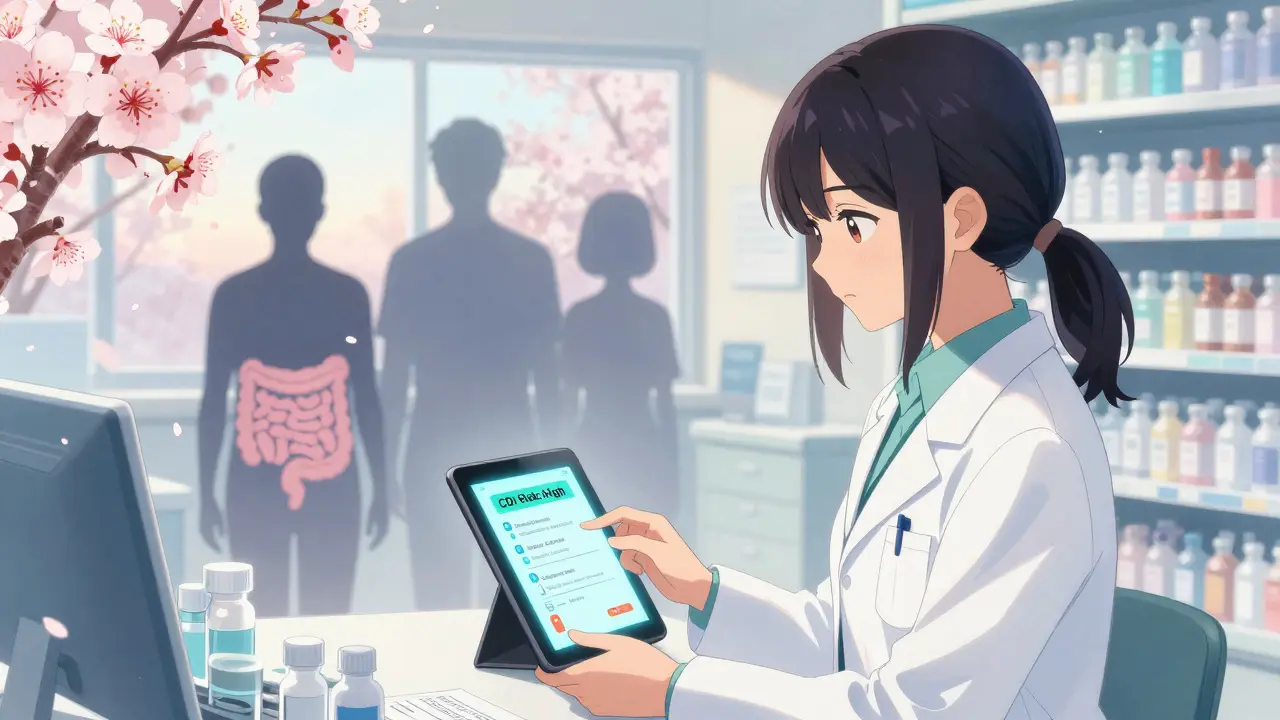
Your gut is full of trillions of helpful bacteria. They help digest food, train your immune system, and keep harmful microbes in check. Antibiotics don’t care about that. They sweep through like a bulldozer. And when they do, they create openings. One of the most dangerous outcomes is Clostridioides difficile infection, or CDI. This isn’t just a bad stomach bug. It causes severe, life-threatening diarrhea and colitis. Studies show that people who get unnecessary antibiotics are 7 to 10 times more likely to develop CDI than those who don’t. In hospitals, CDI leads to longer stays, higher costs, and sometimes death. But it doesn’t stop there. Antibiotics can cause allergic reactions, kidney damage, nerve problems, and even yeast infections. In older adults, they’re linked to increased confusion and falls. And the more antibiotics you take, the higher your risk becomes.How Stewardship Programs Work in Practice
Hospitals with strong stewardship programs don’t just hand out prescriptions. They pause. They ask questions. They use tools. Here’s how it works in real life:- A patient comes in with pneumonia. Instead of immediately starting a broad-spectrum antibiotic, the team checks a blood test called procalcitonin. If it’s low, it suggests a viral cause-and antibiotics are held off.
- A pharmacist reviews every antibiotic order daily. If a patient’s infection is improving, they recommend switching from IV to oral, or stopping altogether after 5 days instead of 10.
- Doctors get real-time alerts in the electronic system: “This patient was treated for a UTI last month. Consider alternatives before prescribing again.”
Why Outpatient Care Is the New Frontier
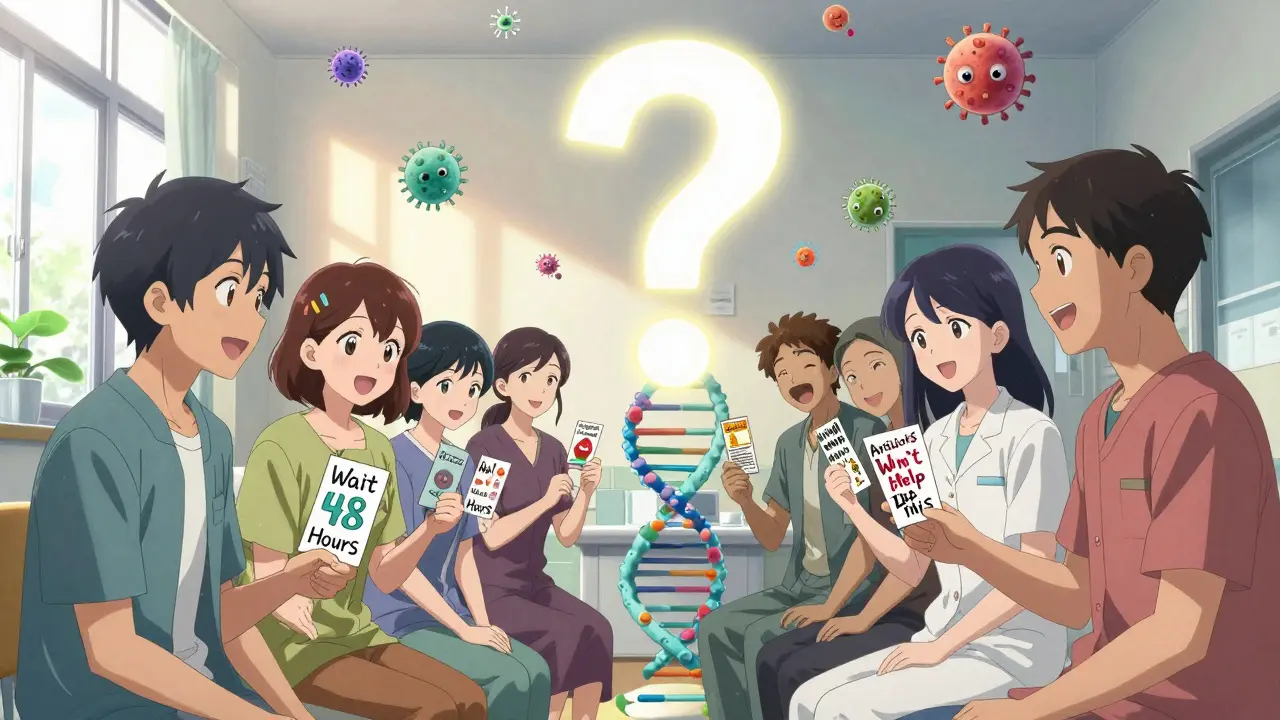
Most people think stewardship only happens in hospitals. But here’s the truth: 47 million unnecessary antibiotic prescriptions are written every year in U.S. doctor’s offices and emergency rooms. That’s more than one per second. In outpatient settings, the pressure is different. Patients expect a pill. Doctors want to please. Time is short. But stewardship works here too. Successful outpatient programs use three simple tools:- Delayed prescriptions: Give a script, but tell the patient to wait 48 hours. Most viral infections clear on their own.
- Education materials: A handout that says, “This sore throat is likely viral. Antibiotics won’t help. Here’s what will.”
- Peer comparison data: Tell doctors how their prescribing rate compares to others in their clinic. People change when they see they’re outliers.
The Hidden Cost of Doing Nothing
The biggest myth about antibiotic stewardship is that it’s expensive. It’s not. The real cost is in what happens when you don’t do it. The CDC estimates that at least 30% of outpatient antibiotic prescriptions and 20% of hospital ones are unnecessary. That’s not just wasted medicine-it’s wasted safety. Every unnecessary dose increases the chance of resistance, side effects, and future infections that can’t be treated. And the numbers are terrifying. In the U.S. alone, antibiotic resistance causes 35,000 deaths each year. Globally, without action, that number could hit 10 million by 2050. That’s more than cancer. Stewardship isn’t just good medicine. It’s survival medicine.What’s Holding Back Wider Adoption?
You’d think hospitals would be rushing to adopt stewardship. And many are. As of 2023, 88% of U.S. hospitals with over 200 beds have formal programs. But in nursing homes and small clinics? Only 48% do. Why? Two big reasons:- Resources: Effective programs need at least one infectious disease doctor and one clinical pharmacist working full-time. That’s expensive for small practices.
- Fear: Doctors worry about missing something. “What if I stop the antibiotic and the patient gets worse?” That fear leads to overprescribing-even when guidelines say otherwise.
What You Can Do-Even If You’re Not a Doctor
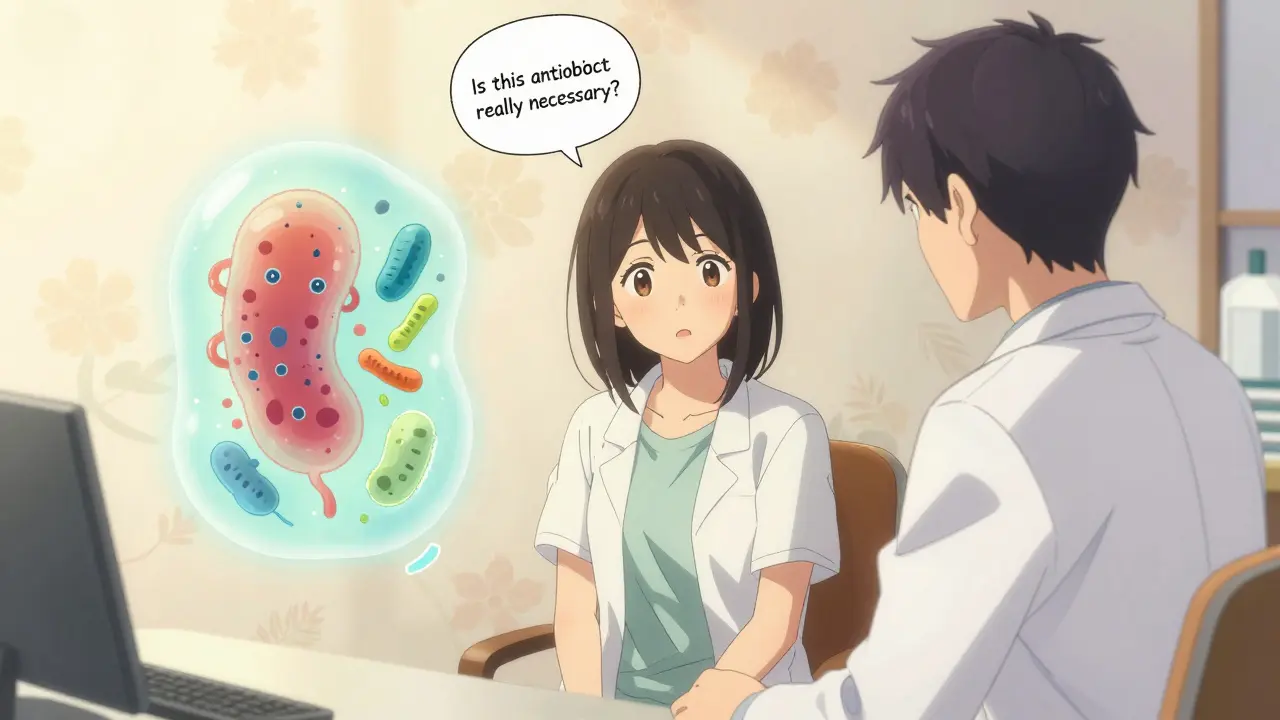
You don’t need a medical degree to be part of the solution.- Ask: “Is this antibiotic really necessary? What if I wait a few days?”
- Don’t pressure: Don’t demand antibiotics for a cold or earache. Say, “I trust your judgment.”
- Finish the course-only if prescribed: If you’re given antibiotics, take them exactly as directed. But if you’re not sure why you were prescribed them, ask.
- Never share: Never take leftover antibiotics from someone else. That’s how resistance spreads.
The Future Is Smarter, Not Stronger
The next big leap in stewardship isn’t a new drug. It’s better data. Rapid diagnostic tests are getting faster and cheaper. In 2022, a molecular test for pneumonia cut antibiotic use by 2.1 days on average-without increasing complications. That’s huge. Artificial intelligence is being trained to spot when antibiotics are likely unnecessary. One system in Australia reduced inappropriate prescribing by 37% in just one year by analyzing symptoms, lab results, and patient history in real time. The goal isn’t to eliminate antibiotics. It’s to use them wisely-so they still work when we really need them.Antibiotic stewardship isn’t about restriction. It’s about responsibility. It’s about protecting your gut, your immune system, and the next generation’s ability to survive a simple infection. Every time we choose the right path, we’re not just treating one person-we’re defending medicine itself.
Are antibiotics always necessary for infections?
No. Many common infections like colds, flu, most sore throats, and bronchitis are caused by viruses, not bacteria. Antibiotics don’t work on viruses. Taking them in these cases doesn’t help you recover faster and only increases your risk of side effects like diarrhea or yeast infections.
Can antibiotic stewardship really prevent serious side effects?
Yes. Studies show that hospitals with strong stewardship programs reduce Clostridioides difficile infections by 25-30% and cut adverse drug events by over 20%. These programs help avoid unnecessary antibiotics, which directly lowers the risk of gut damage, allergic reactions, and organ toxicity.
Why do doctors sometimes prescribe antibiotics when they’re not needed?
Pressure from patients, time constraints, diagnostic uncertainty, and fear of missing a bacterial infection all play a role. In emergency rooms or busy clinics, it’s easier to prescribe than to explain why antibiotics won’t help. Stewardship programs help by giving doctors better tools, faster tests, and support to make confident, evidence-based decisions.
What’s the biggest danger of overusing antibiotics?
The biggest danger is antimicrobial resistance. When antibiotics are overused, bacteria evolve to survive them. This means common infections like pneumonia, UTIs, and even minor cuts can become untreatable. The CDC calls this an urgent public health threat, with 35,000 U.S. deaths annually linked to resistant infections.
Can I help with antibiotic stewardship as a patient?
Absolutely. Ask your doctor if the antibiotic is truly needed. Don’t pressure them for a prescription. Never take leftover antibiotics from someone else. Finish your full course only if prescribed-and never share your meds. Your choices directly impact your health and the effectiveness of antibiotics for everyone.



There are 13 Comments
Joseph Cooksey
Let me tell you something, folks-antibiotics aren’t candy. They’re surgical strikes on your microbiome, and every time you pop one for a sniffle, you’re basically throwing a Molotov cocktail into your gut flora. I’ve seen patients come in with C. diff after a simple sinus ‘infection’ they got prescribed amoxicillin for. No, buddy, that’s not a cold-it’s your immune system doing its job. You want to feel better? Rest. Hydrate. Let your body do what it’s been doing for 200,000 years. Antibiotics don’t speed up recovery from viruses-they just make you a walking Petri dish for resistant superbugs. And don’t even get me started on the yeast infections. I’ve had women in their 50s tell me they haven’t had a normal period since their third round of azithromycin for a ‘strep throat’ that was just post-nasal drip. We’re not treating illness anymore. We’re breeding monsters.
Nathan King
It is imperative to underscore the clinical and epidemiological significance of antimicrobial stewardship as a cornerstone of modern public health infrastructure. The empirical administration of broad-spectrum antibiotics in the absence of confirmatory diagnostic data constitutes a systemic failure in evidence-based practice. The CDC’s directive-right drug, right time, right bug, right duration-is not merely a guideline; it is a paradigm shift in therapeutic philosophy. Furthermore, the documented reduction in adverse drug events-21.5% across 28 institutions-demonstrates not only efficacy, but economic prudence. The cost of inaction, measured in mortality, prolonged hospitalization, and the erosion of therapeutic efficacy, far exceeds the fiscal outlay required to implement stewardship protocols. It is not a question of resources, but of prioritization.
Antwonette Robinson
Oh wow, a whole article about antibiotics being overused? Shocking. Next you’ll tell me water is wet and the sun rises in the east. I mean, I guess it’s nice someone finally wrote a 2,000-word essay to confirm what my 8th-grade biology teacher said in 2003. But hey, at least now we have a PDF to send to our grandma when she demands amoxicillin for her ‘bronchitis’ that’s clearly just allergies and bad air conditioning. 🙄
Ed Mackey
man i just had a doc give me amox for a sore throat last week and i was like ‘wait… is this really needed?’ and he just shrugged and said ‘eh, better safe than sorry.’ i took it but felt guilty the whole time. i think we’ve all been trained to think pills = cure, even when it’s just a virus. i’m tryna do better tho. also, i spelled ‘amoxicillin’ wrong in my notes. oops.
caroline hernandez
Antibiotic stewardship is a critical component of precision medicine and patient-centered care. The integration of biomarkers like procalcitonin, coupled with pharmacist-led interventions and real-time clinical decision support, represents a paradigm shift from reactive prescribing to proactive, data-driven therapeutics. In outpatient settings, delayed prescribing is not merely a behavioral nudge-it’s a structured, evidence-based intervention that reduces utilization by up to 30% without compromising clinical outcomes. We must scale these models beyond academic medical centers and into community clinics, leveraging telehealth and AI-assisted diagnostics to close the equity gap in stewardship access. This isn’t optional-it’s the future of sustainable healthcare.
Justin Fauth
They want us to just ‘wait and see’ while our kids are coughing their lungs out? What is this, Sweden? In America, we don’t sit around waiting for viruses to run their course-we FIX them. Antibiotics are American medicine. You don’t let a bug win. If you’re not prescribing, you’re letting the enemy win. And who’s the enemy? Big Pharma? The CDC? The WHO? They’re all in bed together trying to make us weak. I’ve been taking amoxicillin since I was 5. I’m 47. Still going strong. You wanna live? Take the pill. Not some ‘delayed script’ nonsense.
Meenal Khurana
My brother got C. diff after a simple tooth extraction. Antibiotics. He was in the hospital for weeks. Never again. I always ask now. Simple.
Joy Johnston
I’ve worked in urgent care for 12 years, and I can tell you-patients who are given a clear, empathetic explanation about why antibiotics aren’t needed are almost always grateful. We hand out one-page sheets that say: ‘This is viral. Rest. Fluids. Tylenol. If it gets worse in 3 days, come back.’ We’ve cut our antibiotic prescriptions by 40%. No one’s worse off. In fact, fewer people come back with complications. It’s not about saying no. It’s about saying: ‘I care enough to not hurt you.’
Shelby Price
so i just googled ‘antibiotics for sore throat’ and it said ‘only if strep’… but i didn’t get tested. i just took the leftover ones from last year. 🤔 maybe i’m part of the problem? oops. 😅
Jesse Naidoo
why do doctors even exist if they’re not gonna give me the magic pill? i’m tired. i have a meeting. i just want to feel better. you think i want to be sick? i’ve been coughing for 7 days. i’m not asking for a lecture. i’m asking for a prescription. and now you’re telling me i’m the problem? wow. thanks. i feel seen. 😔
Sherman Lee
They’re hiding the truth. Antibiotics are being withheld because the government wants us dependent on ‘natural immunity’ so they can push the next phase of the vaccine agenda. You think C. diff is just a side effect? Nah. It’s a controlled burn. They want your gut ruined so you’ll buy probiotics from Big Pharma’s subsidiaries. And don’t get me started on the ‘procalcitonin test’-that’s just a fancy way to delay treatment while they track your biometrics. I’ve seen it. I know what’s really going on. 🕵️♂️💊💀
Lorena Druetta
I want to thank you for writing this. My mom passed away from a resistant infection after years of antibiotics for UTIs. I didn’t know any of this. I thought she was just unlucky. Now I know it wasn’t luck-it was systemic. I’m telling everyone I know. Please keep speaking up. We need more people like you.
Zachary French
THIS IS THE MOST IMPORTANT THING YOU’LL READ THIS YEAR. I’M NOT KIDDING. I’VE BEEN READING ABOUT ANTIBIOTIC RESISTANCE SINCE 2018 AND LET ME TELL YOU-WE’RE ON THE BRINK. THE CDC DATA ISN’T ENOUGH. THE STATISTICS AREN’T ENOUGH. WHAT’S ENOUGH? IS IT WHEN YOUR KID CAN’T GET TREATED FOR A SIMPLE EAR INFECTION BECAUSE EVERYTHING’S RESISTANT? WHAT IF THE NEXT TIME YOU GET A CUT, IT KILLS YOU BECAUSE THE ANTIBIOTICS DON’T WORK? I’M NOT SCARING YOU. I’M TELLING YOU THE TRUTH. AND IF YOU’RE STILL TAKING ANTIBIOTICS FOR A COLD? YOU’RE NOT JUST IRRESPONSIBLE. YOU’RE A TIME BOMB. AND WE’RE ALL IN THE SAME ROOM. 🚨💔
Write a comment
Your email address will not be published. Required fields are marked *