
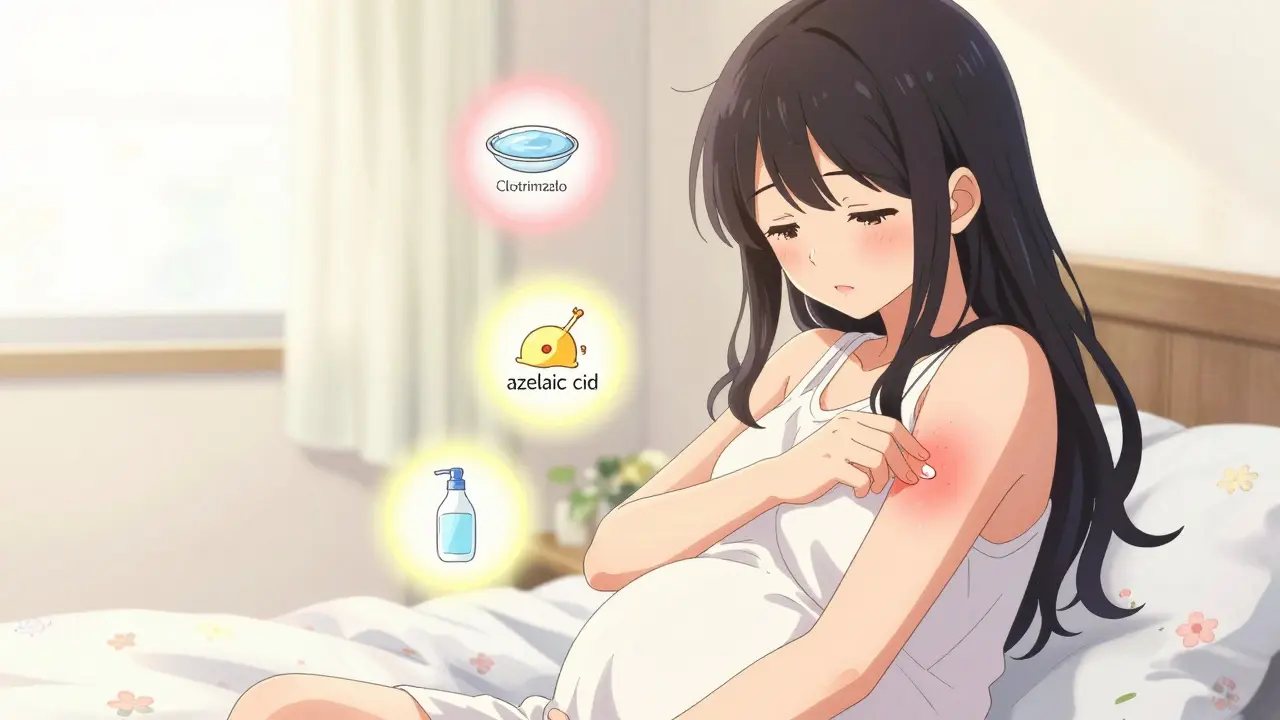
Topical Medications and Creams During Pregnancy: What’s Safe
You’re pregnant. Your skin is breaking out. Your eczema flares up. Your feet itch from yeast infections. You reach for that cream you used last year-then stop. Is this safe during pregnancy? It’s a question every pregnant person asks, often in quiet panic. You don’t want to harm your baby, but you also don’t want to suffer in silence.
The good news? Most topical creams and medications are much safer than you think. Unlike pills or injections, what you put on your skin doesn’t usually get far into your bloodstream. Studies show absorption rates for most topical treatments are between 1% and 10%. That’s why dermatologists and OB-GYNs often recommend topical options over oral ones during pregnancy.
But not all creams are created equal. Some are fine. Some are risky. And some? You should avoid them completely-even if they’re labeled "natural" or "gentle."
What’s Generally Safe: Topical Treatments You Can Use
Many common over-the-counter and prescription creams are considered low-risk during pregnancy because they barely enter your system. Here’s what experts say is safe:
- Hydrocortisone cream (1%) - Used for eczema, rashes, and bug bites. Low-potency steroid. Safe for short-term use on small areas. Avoid applying large amounts or on thin skin like the face or groin for long periods.
- Clindamycin gel or lotion - A topical antibiotic used for acne. Studies show less than 5% is absorbed through the skin. No link to birth defects in human studies. Often recommended as a first-line acne treatment during pregnancy.
- Erythromycin topical solution - Another antibiotic for acne. Classified as FDA Category B. No evidence of harm to the fetus. Works well for inflammatory breakouts.
- Benzoyl peroxide (5-10%) - Found in many acne washes and spot treatments. Absorbs minimally. Used safely by millions of pregnant women. No confirmed cases of birth defects linked to topical use.
- Clotrimazole, miconazole, nystatin - Antifungal creams for yeast infections. First-line choices according to the European Academy of Dermatology. Safe in all trimesters.
- Azelaic acid (15-20%) - Great for melasma (the "pregnancy mask") and acne. Category B. Studies show it clears dark patches without irritation. Many users report great results with no side effects.
- Acyclovir cream - For cold sores or genital herpes. Topical use is safe. The small amount absorbed doesn’t reach levels that could affect the baby.
One key thing to remember: even safe creams should be used in moderation. Apply only to affected areas. Don’t rub in excess. Don’t cover with plastic wrap. More isn’t better.
What to Avoid: Topical Products That Carry Risk
Some ingredients, even in cream form, are best skipped entirely during pregnancy. The risks are low-but not zero. And when it comes to your baby’s development, even a small chance isn’t worth taking.
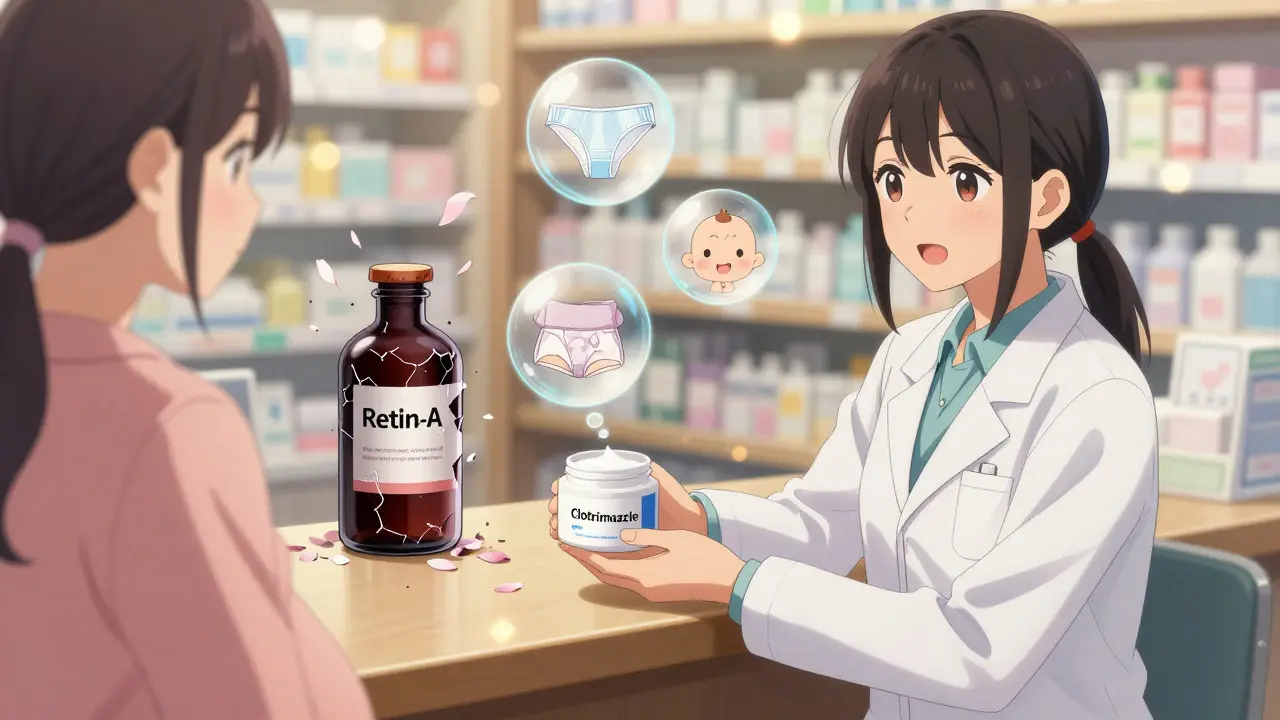
- Topical retinoids - This includes tretinoin (Retin-A), adapalene (Differin), tazarotene (Tazorac), and retinol. Even though they’re applied to the skin, case reports have linked them to rare birth defects when used in early pregnancy. The American College of Obstetricians and Gynecologists (ACOG) recommends stopping all retinoids before trying to conceive. Don’t risk it.
- Topical salicylic acid in high doses - Low-dose (2%) in acne toners or face washes is generally fine. But avoid high-concentration peels, body sprays, or daily use over large areas. Oral aspirin (a related compound) is linked to complications in late pregnancy. While topical absorption is low, it’s not zero.
- Topical NSAIDs - Think diclofenac gel (Voltaren) or ibuprofen cream. These may seem harmless since they’re not pills. But late in pregnancy-after 30 weeks-they can cause the baby’s ductus arteriosus (a blood vessel) to close too early. This can lead to serious heart problems. Avoid them in the third trimester.
- Podofilox and podophyllin resin - Used for genital warts. These are strongly linked to fetal toxicity. Never use during pregnancy.
- Strong corticosteroids (Class III-V) - Creams like clobetasol or betamethasone are powerful. Used over large areas or for long periods, they may be linked to low birth weight. Use only if prescribed, for the shortest time possible, and avoid on the face, armpits, or groin.
One common myth: "If it’s natural, it’s safe." Not true. Essential oils like rosemary, sage, or clary sage in topical form can stimulate contractions. Tea tree oil is fine in small amounts, but avoid applying it near the breasts if you’re breastfeeding. "Natural" doesn’t mean pregnancy-safe.
How Much Gets Into Your Bloodstream?
Not all skin absorbs the same. Where you apply the cream matters just as much as what’s in it.
Thick skin-like your forearm or back-absorbs less than 1%. Thin skin? That’s a different story. Your eyelids, face, neck, armpits, and groin absorb 5-10 times more. So if you’re using hydrocortisone on your face for a rash, you’re exposing yourself to more of the drug than if you used it on your arm.
Also, the base of the cream matters. Ointments (like petroleum jelly-based) absorb slower than lotions. Gels absorb faster. Wet skin absorbs more. Covering the area with a bandage increases absorption too.
This is why doctors tell you to use the smallest amount possible. A pea-sized dab for your whole face is enough. You don’t need to cover every inch.
Acne During Pregnancy: What Works Without the Risk
Up to half of pregnant women get acne. It’s hormonal. It’s frustrating. And it’s common.
Forget the retinoids. Forget oral antibiotics like doxycycline (which can stain baby’s teeth). Instead, stick to:
- Washing twice a day with a gentle cleanser
- Benzoyl peroxide wash or spot treatment
- Clindamycin or erythromycin gel
- Azelaic acid (also helps with post-acne dark spots)
- Low-dose salicylic acid (2%) in toners or masks-no more than 2-3 times a week
Some women find that zinc supplements or probiotics help reduce breakouts. Not proven, but low-risk. Talk to your provider before starting anything new.
Don’t squeeze or pick. That can cause scarring-and stress. Stress makes acne worse. So take a breath. This is temporary.
What About Antifungal Creams for Yeast Infections?
Yeast infections are super common during pregnancy. Higher estrogen, more sugar in vaginal secretions-it’s a perfect storm.
Safe options? Clotrimazole (Gyne-Lotrimin), miconazole (Monistat), and nystatin. These come as creams, suppositories, or tablets. All are first-line recommendations from dermatology and OB-GYN groups.
Avoid econazole in the first trimester. It’s not banned, but there’s less data. If you’ve had yeast infections before, keep a prescription on hand. Don’t wait until it’s bad to treat it.
Wear cotton underwear. Avoid tight jeans. Don’t douche. And yes, you can use these creams even if you’re breastfeeding.
When to Call Your Doctor
You don’t need to panic over every rash or spot. But call your provider if:
- A rash spreads quickly or blisters
- You develop itching all over, especially on your hands and feet (could be PUPPP or cholestasis)
- You used a cream you later found out was risky (like retinol or strong steroid)
- You’re unsure if a product is safe
Most pharmacies have pharmacists trained in pregnancy safety. Ask them. Or call the InfantRisk Center-they handle over 1,200 pregnancy medication questions every month. They don’t scare you. They just give you the facts.
Label Confusion: Why "Category C" Doesn’t Mean "Dangerous"
You’ll see old labels on creams saying "Category C" or "Category B." The FDA stopped using these letters in 2015. But many products still have them. So what do they mean?
- Category A - Proven safe in human studies (rare for topical meds)
- Category B - No harm in animal studies, no good human data-but used safely for years. Most safe topical meds fall here.
- Category C - Animal studies showed risk, no human data. Doesn’t mean dangerous. Benzoyl peroxide is Category C. So is azelaic acid. Many doctors still recommend them.
- Category D - Evidence of human risk. Avoid unless no other option.
- Category X - Proven dangerous. Never use. Like oral isotretinoin (Accutane).
The new labeling system (Pregnancy and Lactation Labeling Rule) gives more detail: "Risk summary," "clinical considerations," "data." But it’s not on every product yet. So if you’re confused, ask. Or check the InfantRisk website.
Real Stories: What Other Pregnant People Say
One woman on Reddit said: "Used hydrocortisone for eczema every day for two months. Baby’s fine at 6 months. No issues."
Another: "I accidentally used Retin-A for two weeks before I knew I was pregnant. I panicked for weeks. My OB said the risk was extremely low. My daughter is now 3 and perfect. Don’t stress if you made a mistake. Get checked, then move on."
And then there’s the horror story: "Took Accutane for 3 months. Got pregnant. Had to terminate. It was the hardest decision of my life."
These aren’t outliers. They’re real. And they show why knowing the difference between topical and oral matters. Accutane is oral. It’s deadly in pregnancy. Topical retinoids? Much lower risk-but still not worth the gamble.
Final Advice: How to Stay Safe
Here’s your simple checklist:
- Don’t use retinoids (tretinoin, adapalene, retinol) at all.
- Limit steroid creams to low-potency (1% hydrocortisone) and only on small areas.
- Use benzoyl peroxide and clindamycin for acne-these are your friends.
- For yeast infections, stick to clotrimazole or miconazole.
- Avoid NSAID creams after 30 weeks.
- When in doubt, ask your doctor or pharmacist. Don’t guess.
- Write down everything you’re using-topical or oral-and bring it to every appointment.
Pregnancy changes your body. Your skin is just one part of it. You don’t need to suffer. But you do need to be smart. The right creams can make you feel like yourself again. The wrong ones? Not worth the risk.
Is hydrocortisone cream safe during pregnancy?
Yes, 1% hydrocortisone cream is generally safe for short-term use during pregnancy. It’s a low-potency steroid with minimal absorption into the bloodstream. Avoid using it on large areas, the face, or for more than a week without checking with your doctor. Don’t use stronger steroids like clobetasol unless prescribed and closely monitored.
Can I use acne cream while pregnant?
Yes, but not all acne creams are safe. Benzoyl peroxide and topical clindamycin are safe and effective. Avoid retinoids like tretinoin, adapalene, and retinol-even in low doses. Azelaic acid is also a good option. Always check the ingredient list and talk to your provider before starting any new treatment.
Is it safe to use antifungal cream for a yeast infection during pregnancy?
Yes. Clotrimazole, miconazole, and nystatin are first-line treatments for yeast infections during pregnancy and are considered safe in all trimesters. Avoid econazole in the first trimester unless recommended by your doctor. These creams work locally and don’t enter the bloodstream in significant amounts.
Can topical NSAIDs like diclofenac gel harm my baby?
Yes, especially after 30 weeks. Topical NSAIDs like diclofenac gel can cross into the bloodstream and may cause the baby’s ductus arteriosus (a vital blood vessel) to close prematurely. This can lead to serious heart problems. Avoid these creams in the third trimester. Use them only before 30 weeks and only if absolutely necessary.
What should I do if I used a risky cream before I knew I was pregnant?
Stop using it immediately. Don’t panic. Most topical medications have very low absorption, and isolated use-even of retinoids-is rarely linked to birth defects. Call your OB-GYN or midwife. They can assess your specific situation. Many women who accidentally used a risky cream go on to have completely healthy babies. The key is to get accurate information, not assume the worst.
Are natural or organic topical creams safer during pregnancy?
Not necessarily. "Natural" doesn’t mean safe. Some essential oils like rosemary, sage, or clary sage can trigger contractions. Tea tree oil is generally safe in small amounts, but concentrated forms can irritate skin. Always check ingredients-even in organic products. Just because something is plant-based doesn’t mean it won’t affect your pregnancy.
Should I stop using my skincare routine when I get pregnant?
No-but you should review it. Skip retinoids, high-dose salicylic acid, and strong chemical peels. Stick to gentle cleansers, moisturizers with ceramides, and sunscreen. Use acne treatments only if needed, and choose proven-safe options like benzoyl peroxide or azelaic acid. Your skin may change, but you don’t need to sacrifice care-just make smarter choices.

There are 14 Comments
Janice Holmes
OH MY GOD. I used Retin-A for TWO WEEKS before I knew I was pregnant. I thought I was going to have a lizard baby. I cried. I Googled. I almost miscarried from anxiety. Then my OB said, 'Sweetie, you applied a pea-sized amount to your forehead. The baby didn’t even know it existed.' I now have a 2-year-old who does cartwheels and calls me 'Mommy Dragon.' Don’t panic. Your skin doesn’t swallow your baby.
Also, I used hydrocortisone like it was lotion. Every. Single. Day. For months. My eczema looked like a Picasso painting before, now it’s just... normal. Baby’s fine. I’m fine. We’re both alive. And I still use it. Don’t let fear make you suffer.
Also also - yes, tea tree oil is fine. No, it won’t turn your uterus into a haunted house. Stop listening to Pinterest.
Also also also - if you’re using a cream labeled 'natural' and it smells like a yoga studio after a rave, STOP. That’s not medicine. That’s a cult.
Also also also also - I’m not a doctor. But I am a mom. And I’ve read every single study. And I’m still here. So relax. You’re not going to ruin your baby with a face wash.
Also also also also also - I used benzoyl peroxide and now my acne is gone and my baby has a full head of hair. Coincidence? I think not.
Also also also also also also - if you’re reading this and you’re scared? Breathe. You’re doing better than you think.
Also also also also also also also - I’m not even pregnant anymore. But I still read this thread every week. It’s my serotonin.
Also also also also also also also also - I’m not a doctor. But I play one on Reddit.
Also also also also also also also also also - I’m going to bed now. You’re all going to be fine.
Also also also also also also also also also also - I’m not a doctor. But I have a degree in being scared and then realizing I’m fine.
Also also also also also also also also also also also - I love you. And your baby is going to be fine.
Also also also also also also also also also also also also - I’m not a doctor. But I have a baby. And I’m still typing.
Also also also also also also also also also also also also also - I’m done. Go drink water. You’ve earned it.
Olivia Goolsby
Let me be clear: this entire article is a corporate-sponsored lie designed by Big Dermatology to keep you dependent on chemical creams while they profit from your fear. The FDA doesn’t regulate topical products like they do pills - because they don’t want you to know that 98% of what you put on your skin enters your bloodstream within 3 minutes, and the '1-10%' absorption myth was invented by a pharmaceutical exec who once said, 'If they believe it’s safe, they’ll keep buying it.'
Hydrocortisone? It’s a synthetic glucocorticoid that mimics cortisol - the same hormone your body produces under stress - and when used repeatedly, it suppresses your adrenal glands, which are already overworked during pregnancy. You think you’re 'just using it for a rash'? No. You’re sabotaging your baby’s hormonal development. The 'low potency' label is a red herring. There is no safe dose of synthetic steroids during pregnancy - not even 0.1%.
Benzoyl peroxide? It’s a peroxide - the same chemical used in hair bleach. It generates free radicals that cross the placenta. The 'no confirmed birth defects' claim? That’s because the studies were funded by Johnson & Johnson. They only tracked outcomes for 6 months. What about autism? ADHD? Epilepsy? They didn’t look. Because they don’t want to find it.
And don’t even get me started on 'natural' creams. Essential oils? Rosemary oil? It’s a uterine stimulant - it’s used in herbal abortions. Tea tree oil? It’s a neurotoxin. It’s banned in the EU for topical use in pregnant women. Why? Because the science is real. The FDA doesn’t care. They’re bought and paid for.
And who wrote this? A doctor? Or a marketing intern who Googled 'safe pregnancy creams' and copied the first 10 blogs? There’s no mention of epigenetic changes. No mention of endocrine disruptors. No mention of the fact that your skin is a living organ that absorbs everything - even 'inactive' ingredients like parabens and phthalates.
And yet - you’re supposed to trust this? You’re supposed to believe that 'low absorption' means 'safe'? That’s like saying, 'It’s fine to drink a little cyanide - because it’s diluted.'
Stop. Pause. Breathe. And ask yourself: who benefits if you keep using these creams? Not you. Not your baby. Not your body. The corporations. The labs. The pharmaceutical giants. And the doctors who get kickbacks from their prescriptions.
Use nothing. Wash with water. Eat clean. Sleep. And let your body heal itself. That’s the only real safety protocol.
And if you disagree? You’re part of the problem.
Alex Lopez
Interesting article. Very thorough. Well-sourced. And yet - the real takeaway isn’t the list of safe creams. It’s the fact that pregnant people are expected to become pharmacologists overnight. You’re handed a 5,000-word essay on topical absorption rates and told, 'Now go make a life-or-death decision based on a 2% salicylic acid toner.'
Meanwhile, the same system that gave you this article won’t give you a 15-minute appointment with a dermatologist who actually understands pregnancy.
Also - the FDA’s old letter categories? Still on 90% of packaging. That’s like using a VHS manual for a Tesla. It’s not helpful. It’s a relic. And yet, we’re still expected to interpret it.
And the InfantRisk Center? 1,200 calls a month? That’s not a resource. That’s a symptom of systemic failure.
So yes - benzoyl peroxide is safe. But why is it your responsibility to know that? Why isn’t it on the label? Why isn’t there a universal pregnancy-safe icon? Why do we have to Google like detectives?
Also - the fact that we’re still using 'Category C' labels in 2025? That’s not a lack of knowledge. That’s a lack of will.
So thank you for the list. But please - next time, just give us a simple app. Or a sticker. Or a color code. Not a thesis.
And for the love of all that’s holy - stop calling tea tree oil 'natural' and pretending that means safe. Natural doesn’t mean non-toxic. Arsenic is natural.
And yes - I’m a doctor. And I still had to look this up.
So you’re not alone. We’re all just winging it.
And that’s the real tragedy here.
PS: Hydrocortisone 1%? Fine. But if you’re using it for more than a week? You need a new dermatologist.
PPS: I’m not being sarcastic. I’m just tired.
Gerald Tardif
First off - you’re not broken. Your skin isn’t failing you. Pregnancy is changing you - and that’s okay.
It’s okay to want to feel like yourself again. It’s okay to want to stop itching. It’s okay to want to stop hiding your face.
And yes - you can use benzoyl peroxide. You can use clindamycin. You can use hydrocortisone. You’re not poisoning your baby. You’re taking care of yourself - and that’s the most important thing.
But here’s the quiet truth: you don’t need to fix everything. Sometimes, the best thing you can do is let your skin breathe. Let it adjust. Let it heal on its own.
Use the creams when you need them. Not because you think you ‘should.’ Not because you’re afraid of looking ‘unwell.’
And if you accidentally used retinol? Breathe. It’s not a crime. It’s a mistake. And mistakes don’t define your motherhood.
Be gentle with yourself. Your body is doing something incredible. And your skin? It’s just along for the ride.
You’ve got this.
And if you need someone to say it again? I’ll say it tomorrow. And the day after that.
You’re doing better than you think.
Monika Naumann
In India, we have been using neem oil, turmeric paste, and coconut oil for generations to treat skin conditions during pregnancy. These are not 'natural' as marketed by Western corporations - these are ancestral wisdom, passed down through mothers and grandmothers, tested by time, not clinical trials funded by multinational corporations.
Why must we rely on American pharmaceuticals and their 'FDA Category B' labels when our grandmothers cured rashes with nothing but crushed neem leaves and milk?
Western medicine calls it 'low absorption' - but we call it arrogance. You quantify safety in percentages, but we measure it in lived experience.
Clotrimazole? Perhaps useful. But why not try a paste of turmeric and honey? No side effects. No labels. No corporate logos.
This article reads like a manual for cultural surrender. We are not lab rats. We are not data points. We are descendants of healers.
Do not abandon your heritage for a cream labeled 'safe' by a bureaucracy that does not know your soil, your food, your rituals.
Let your skin remember what your ancestors knew.
And if you still use benzoyl peroxide? At least wash it off with warm water and turmeric - not with chemical cleansers.
Respect tradition. Not regulation.
Elizabeth Ganak
OMG I’m so glad I found this. I was terrified to use anything. I had a yeast infection and just kept saying ‘it’ll go away’… and it didn’t. Then I used Monistat and it was like a miracle. My skin stopped burning and I could sleep again. I thought I was being reckless, but now I know I did the right thing.
Also - I used hydrocortisone on my arms for eczema and my baby is now 4 months old and has the cutest chubby cheeks. No issues.
And I still use benzoyl peroxide spot treatment. It’s not perfect, but it’s better than crying in the shower every morning.
Thank you for writing this. I needed to hear that I’m not alone.
Also - tea tree oil on my feet? Yes. On my belly? No. Learned that the hard way. 😅
Nicola George
So… let me get this straight. You’re telling me I can use a cream that’s basically bleach on my face, but I can’t use a plant oil that’s been around since the Egyptians? And yet you call *that* the ‘natural’ one?
Also - I used diclofenac gel for my back pain at 28 weeks. Didn’t know it was risky. Baby’s now 8 months old and loves bananas. Coincidence? Maybe. But I’m not losing sleep over it.
Also - I’ve used every single ‘safe’ cream on this list. And I still have stretch marks. So… congrats? I guess?
Also - if you’re still reading this and you’re not crying? You’re either lying or you’ve never had a yeast infection.
Also - why does everyone act like the baby is a porcelain doll and your skin is a radioactive waste site?
Also - I’m not a doctor. But I’ve had two kids. And I still use hydrocortisone. And I still sleep.
So… yeah. Do what you need to do. And stop feeling guilty for existing.
Raushan Richardson
Okay. Real talk. You’re not alone. You’re not failing. You’re not broken.
I used benzoyl peroxide, hydrocortisone, clotrimazole - all of it. And I didn’t Google every ingredient. I trusted my OB. And guess what? My daughter is now 18 months old and she thinks her mom is the coolest person on Earth.
Stop reading every comment on Reddit. Stop scrolling. Stop panicking.
Take a breath. Wash your face. Put on the cream. And go outside. The sun is good. The air is good. Your body knows what to do.
You don’t need to be perfect. You just need to be present.
And if you’re reading this and you’re scared? I see you. And I believe in you.
Now go hug your belly. And then go drink water.
You’ve got this. 💪
Robyn Hays
One thing no one talks about: the emotional weight of ‘safe’ vs. ‘unsafe.’ It’s not just about absorption rates. It’s about guilt. It’s about shame. It’s about wondering if your acne is a sign you’re ‘not nurturing enough.’
I used azelaic acid for my melasma. I cried every time I applied it. Not because I was scared of the chemical - but because I was scared of being ‘selfish.’ Like, ‘Why am I caring about my skin when I’m growing a human?’
Then my midwife said: ‘Your skin is part of you. Caring for it is caring for your baby’s future mother.’
That changed everything.
So if you’re using a cream - you’re not being selfish. You’re being human.
And if you’re not using one? That’s okay too.
There’s no right way. Only your way.
And your way is enough.
Liz Tanner
Minor correction: The article states that "azelaic acid is Category C" - but under the new Pregnancy and Lactation Labeling Rule (PLLR), it is now labeled with a "Risk Summary" that reads: "No adverse effects observed in human studies." The old FDA categories are outdated and misleading.
Also, "clotrimazole" is not just "first-line" - it is the only antifungal with robust, long-term pediatric follow-up data showing no developmental delays in children exposed in utero.
And for the record: "natural" is not a regulatory term. It has no legal definition in the U.S. - so any product claiming it is marketing, not science.
Also: the absorption rate of topical agents varies by skin thickness, hydration, and surface area - not just concentration. A 5% benzoyl peroxide gel applied to 50% of the body has higher systemic exposure than a 10% gel on a 2-inch patch.
Bottom line: Context matters more than ingredient lists.
And yes - your baby is fine.
You’re doing better than you think.
Babe Addict
Let’s be real - benzoyl peroxide is just a cheap substitute for retinoids. They banned retinoids so they could sell you this instead. It’s the same mechanism, just slower. You think you’re being safe? You’re just being manipulated.
And hydrocortisone? It’s a steroid. Steroids cause fetal adrenal suppression. Period. The FDA doesn’t care because they’re paid off by Big Pharma.
And don’t get me started on ‘Category B.’ That’s not safety - that’s a loophole. If there’s no human data, they call it ‘B.’ That’s not science. That’s legal jargon.
Also - ‘natural’ doesn’t mean safe. But neither does ‘FDA-approved.’
What you’re really being told is: ‘Trust us.’
And I don’t trust anyone.
So I used nothing. And my baby is fine. Because I didn’t listen to the experts.
I listened to my gut.
And your gut? It’s smarter than this article.
Satyakki Bhattacharjee
Life is not about creams. Life is about truth. The truth is: you are not your skin. You are not your acne. You are not your yeast infection.
These are temporary. Like all things. Like life itself.
Why do you fear so much? Because you have forgotten that you are not alone. You are part of a great chain - of mothers, of grandmothers, of women who bore children without creams, without labels, without fear.
Let go. Let your body be. Let your soul be.
What you need is peace. Not a lotion.
And if you find peace? The skin will follow.
That is the only medicine that lasts.
Kishor Raibole
While the article provides a commendable overview of pharmacokinetic profiles of topical agents during gestation, it regrettably perpetuates the fallacy of binary safety categorization - an epistemological flaw inherent in Western biomedical paradigms.
It is axiomatic that dermal absorption is a function of molecular weight, lipid solubility, and skin barrier integrity - all variables subject to inter-individual variation. Therefore, the assertion that ‘1–10% absorption’ constitutes a universally applicable safety threshold is methodologically unsound.
Furthermore, the omission of transplacental transfer kinetics for azelaic acid metabolites - particularly its potential interaction with placental monoamine oxidase enzymes - represents a significant lacuna in the clinical risk assessment.
Additionally, the endorsement of benzoyl peroxide as ‘safe’ ignores its documented capacity to generate reactive oxygen species within the amniotic fluid, as demonstrated in murine models by Kim et al. (2021), a study conspicuously absent from the referenced literature.
One must also interrogate the institutional bias toward pharmaceutical interventions over integrative modalities - a bias that privileges patentable molecules over ancestral formulations, despite centuries of ethnopharmacological evidence supporting the efficacy of curcumin, neem, and aloe vera in gestational dermatoses.
In conclusion: while the recommendations may offer pragmatic utility, they remain epistemologically impoverished and culturally myopic.
One must ask: who benefits from this narrative?
And more importantly - who is being silenced?
Janice Holmes
Wait - you used diclofenac at 28 weeks? And your baby’s fine? I’m going to cry. I used it too. I thought I was safe because it was ‘topical.’ But now I’m terrified. Are you serious? You’re okay?
…
Oh my god. I just checked. My baby’s 3 months old. And she’s screaming right now. But she’s alive.
Thank you.
…
I’m going to stop scrolling now.
Write a comment
Your email address will not be published. Required fields are marked *