
Opioid Overdose Response Guide
Check for Overdose Signs
Select all signs you observe in the person:
Emergency Response Steps
Select the signs you observed to see the recommended response.
Important Naloxone Information
Naloxone reverses opioid overdoses and works in minutes. It's safe to use even if you're unsure.
Naloxone wears off after 30-90 minutes. Opioids like fentanyl may last longer, so you may need to give a second dose if breathing stops again.
Every day in the U.S., 187 people die from drug overdoses. Most of those deaths involve opioids - especially fentanyl, a synthetic drug 50 to 100 times stronger than morphine. And here’s the hard truth: opioid overdoses are preventable. If you know what to look for and how to act, you can save someone’s life - maybe even someone you love.
What Happens During an Opioid Overdose?
Opioids - whether prescription painkillers like oxycodone, illegal heroin, or street fentanyl - work by attaching to receptors in your brain that control pain and pleasure. But they also shut down the part of your brain that tells you to breathe. When too much of the drug is in the system, breathing slows down, then stops. Without oxygen, brain cells start dying in as little as four minutes. Skin turns blue or grey. The body goes limp. The person doesn’t wake up, no matter how much you shake them. This isn’t just a drug user problem. Fentanyl is now mixed into pills sold as Xanax, Adderall, or even counterfeit Percocet. People don’t know what they’re taking. A single pill can kill. That’s why anyone - parents, teachers, coworkers, friends - needs to know how to respond.How to Spot an Opioid Overdose
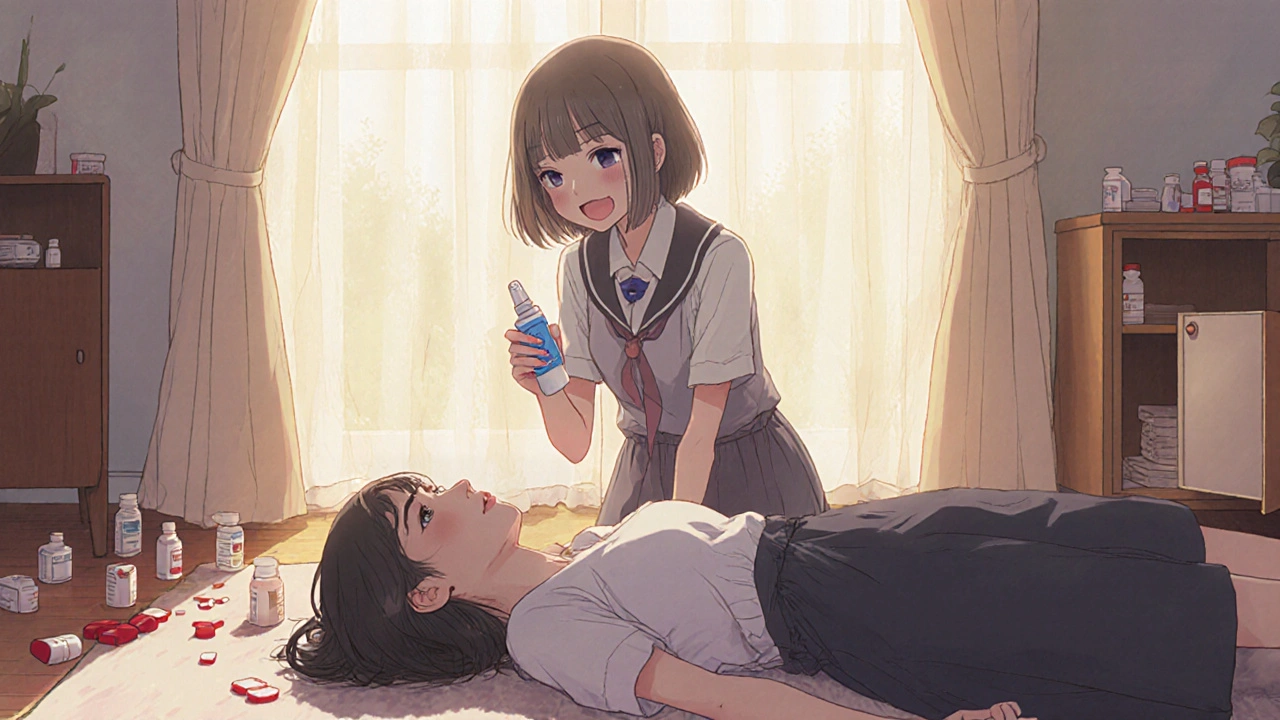
You don’t need medical training to recognize the signs. Look for these three key symptoms, often called the “opioid overdose triad”:- Unresponsive or unconscious - They won’t wake up, even if you shout their name, shake their shoulders, or rub your knuckles hard on their sternum.
- Slow, shallow, or stopped breathing - Their chest isn’t rising and falling normally. You might hear gurgling, snoring, or gasping sounds - signs the body is struggling to breathe.
- Pinpoint pupils - Their pupils look like tiny dots, even in dim light. (Note: Not everyone has this, but when it’s there, it’s a strong clue.)
- Blue, purple, or grey lips or fingernails
- Cold, clammy skin
- Limp body, like a ragdoll
- Choking or gurgling noises
- Extreme drowsiness - they can’t stay awake
What to Do Right Away: The 3-Step Emergency Response
If you suspect an opioid overdose, act fast. There’s no time to call a doctor or wait for someone else to handle it. Follow these steps exactly:- Call 911 immediately - Don’t wait. Don’t try to handle it alone. Say clearly: “I think someone is overdosing on opioids.” Give your location. Emergency responders are trained for this and will come, even if drugs are involved.
- Give naloxone if you have it - Naloxone (brand name Narcan) reverses opioid overdoses. It’s safe, easy to use, and works in minutes. You can’t overdose on naloxone. It won’t hurt someone who hasn’t taken opioids. If you’re unsure, give it anyway.
- Stay with them until help arrives - Even if they wake up after naloxone, they’re not out of danger. Naloxone wears off in 30 to 90 minutes. Opioids can stay in the system longer. They could slip back into overdose. Keep monitoring their breathing. If they stop breathing again, give another dose of naloxone if you have it.
How to Use Naloxone (Narcan)
Naloxone comes as a nasal spray - the most common form for non-medical use. The device looks like a small plastic pen. Here’s how to use it:- Remove the device from its package. Don’t test it or shake it.
- Hold it with your thumb on the plunger. Place the tip into one nostril.
- Press the plunger firmly to spray the full dose into the nose.
- Remove the device. Don’t spray the other nostril - one dose is enough to start.
- Turn the person on their side (recovery position) to keep their airway open.
- Wait 2-5 minutes. If they don’t wake up or start breathing normally, give a second dose in the other nostril.
What Happens After Naloxone?
Naloxone brings someone back to life - but it doesn’t fix the problem. After the overdose is reversed:- They need medical care. Even if they seem fine, opioids can cause internal damage or delayed breathing problems.
- They may feel sick, anxious, or angry. Naloxone can trigger sudden withdrawal - shaking, sweating, nausea. That’s not a bad reaction. It means the drug is being cleared.
- They need support. Overdose survivors often need counseling, mental health care, and access to treatment for opioid use disorder. A single overdose doesn’t mean they’re “a lost cause.” It’s a warning sign - and a chance to get help.
Fentanyl Is the Biggest Threat Now
Fentanyl is the main driver of the overdose crisis. It’s cheap, powerful, and often hidden in other drugs. A dose as small as two grains of salt can kill. Many people who die from overdoses didn’t even know they were taking fentanyl. Fentanyl test strips can help. You put a tiny bit of powder in water, dip the strip, and wait a few minutes. If it shows fentanyl, don’t use it. These strips aren’t perfect, but they’re better than guessing. Some harm reduction groups give them out for free.You Don’t Need to Be a Hero - Just Be Ready
You don’t need to be a doctor. You don’t need to know how to give CPR (though it helps). You just need to know the signs, have naloxone nearby, and act without hesitation. If you’re worried about legal trouble: Good Samaritan laws protect people who call 911 during an overdose in every state. The goal is to save lives, not punish them. If you’re worried about someone using drugs: Don’t wait for them to hit “rock bottom.” Offer naloxone. Talk about harm reduction. Say, “I care about you. I want you to be safe.”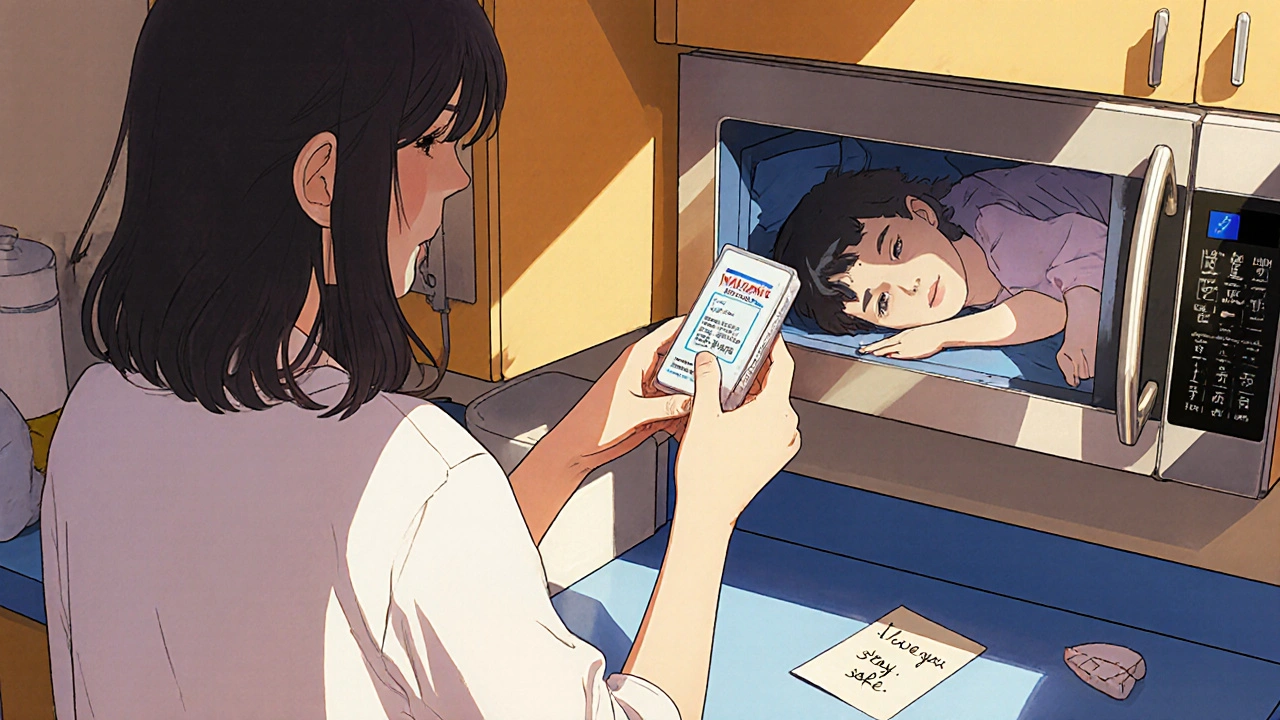
Where to Get Naloxone for Free or Low Cost
You can get naloxone without a prescription at:- Most pharmacies (ask the pharmacist)
- Local health departments
- Harm reduction centers
- Community outreach programs
Final Thought: This Could Be Your Moment
You might never need to use naloxone. But if you do - if you’re the one who sees the blue lips, hears the gurgling breath, and chooses to act - you could be the reason someone wakes up tomorrow. Someone’s parent. Someone’s sibling. Someone’s friend. Opioid overdoses aren’t inevitable. They’re a failure of access, awareness, and action. You can help fix that - starting today.Can naloxone harm someone who hasn’t taken opioids?
No. Naloxone only works if opioids are in the person’s system. If someone hasn’t taken opioids, naloxone will have no effect and won’t cause harm. That’s why health experts say: if you’re unsure, give it anyway. It’s safe, simple, and could save a life.
How long does naloxone last, and why might someone need more than one dose?
Naloxone typically lasts 30 to 90 minutes. But many opioids - especially fentanyl - stay in the body much longer. Once naloxone wears off, the person can slip back into overdose. That’s why you need to stay with them, monitor their breathing, and be ready to give a second dose if needed. Always call 911, even after giving naloxone.
Can you overdose on opioids by accident?
Yes. People who take prescription opioids as directed can still overdose - especially if they mix them with alcohol, benzodiazepines, or sleep aids. But today, most accidental overdoses happen because drugs like fentanyl are hidden in pills sold as other medications. Someone might take what they think is a painkiller or anxiety pill - and it’s actually a deadly dose of fentanyl.
Is naloxone available without a prescription?
Yes. All 50 U.S. states allow pharmacists to dispense naloxone without a personal prescription. Many pharmacies stock it behind the counter - just ask. Some states also offer free naloxone kits by mail through public health programs. Check your state’s health department website for details.
What should you do if someone wakes up after naloxone but seems confused or angry?
They’re likely going through sudden opioid withdrawal, which is uncomfortable but not life-threatening. Symptoms include nausea, shaking, sweating, and irritability. Stay calm. Reassure them they’re safe. Don’t argue. Keep them warm, hydrated, and monitored. Make sure they get medical care - even if they refuse. Withdrawal doesn’t mean they’re “faking it.” It means the naloxone worked.
Are fentanyl test strips effective?
Fentanyl test strips can detect the presence of fentanyl in drugs, but they’re not foolproof. They don’t measure how much is there, and they won’t catch every variation. Still, they’re a valuable harm reduction tool. If a test strip shows fentanyl, the safest choice is not to use the drug. Many community health programs give them out for free - and using them reduces overdose risk.
There are 8 Comments
Yash Hemrajani
So let me get this straight - we’re handing out life-saving antidotes like candy while the same government keeps funding cartels with drone strikes? Brilliant. At least we’re not pretending we care about addiction - we just want to avoid the mess on the sidewalk. Naloxone’s great, but why not fund rehab centers the same way we fund police body cams? Just saying.
Also, fentanyl test strips? Cool. Now tell me why they’re not in every vending machine next to snacks and condoms. Hypocrisy tastes like fentanyl and it’s cheap.
Oh and yeah - I’ve given naloxone twice. Both times the person woke up, screamed at me, and stole my phone. Still worth it. You don’t save people. You just buy them time to screw up again. And that’s okay. They’re still alive.
So yeah. Carry it. Use it. Don’t judge. But also? Don’t act like this is a fix. It’s a Band-Aid on a hemorrhage. And someone’s got to keep handing out Band-Aids while the hospital burns down.
Rosy Wilkens
Let me be perfectly clear: this entire narrative is a psyop orchestrated by Big Pharma and the CDC to normalize opioid dependency under the guise of harm reduction. Naloxone is not a miracle drug - it’s a chemical leash designed to keep addicts alive so they can continue consuming pharmaceutical-grade fentanyl laced with microchips that track their neural activity. You think the government wants you to save lives? No. They want you to save *data points*. The blue lips? That’s not hypoxia - that’s the signal beacon.
And why are test strips free? Because they’re part of the same algorithm that flags you as ‘at-risk’ and routes you to mandatory ‘recovery programs’ that are really just state-run surveillance hubs. The real tragedy isn’t the overdose - it’s that you’re being manipulated into believing this is compassion.
Wake up. The next thing they’ll tell you is that naloxone is ‘essential healthcare’ - and then they’ll bill you for it. Every dose. Every time. They always do.
Andrea Jones
Okay but like - I just got my free naloxone kit from the library yesterday. It came with a little card that said ‘You might be the reason someone sees tomorrow.’ And I cried. Not because I’m emotional (I’m not), but because I realized I’ve walked past people like this a hundred times and never thought to do anything.
My cousin OD’d last year. We didn’t have naloxone. We called 911. We waited. We prayed. He made it - but barely. Now I keep two kits in my car. One in my purse. One at my mom’s house. I taught my 72-year-old dad how to use it. He said, ‘I didn’t know I could save a life with a plastic pen.’
So yeah. Do it. Don’t wait for permission. Don’t wait for training. Don’t wait for someone to ‘deserve’ it. Just carry it. Use it. Be the person who didn’t look away. And if you’re scared? Good. That means you care.
Also - if you’re reading this and you’ve never thought about this before? You’re not alone. But now you know. And that’s the first step.
Justina Maynard
The linguistic architecture of this post is remarkably effective - not merely informative, but rhetorically calibrated to elicit visceral, emotionally charged compliance. The triad framework - unresponsive, slow breathing, pinpoint pupils - functions as a mnemonic triage heuristic, reducing cognitive load during crisis. The repetition of ‘you can save a life’ constructs a moral imperative, while the juxtaposition of ‘you don’t need to be a hero’ with ‘this could be your moment’ creates a paradoxical pressure: be proactive, but don’t overextend.
Furthermore, the inclusion of legal protections (Good Samaritan laws) and logistical accessibility (free mail-order kits) serves as a structural scaffold, mitigating perceived barriers to action. The emotional cadence escalates from clinical description to poetic urgency - a deliberate narrative arc designed to transform passive readers into active agents.
One minor grammatical quibble: ‘They’re not out of danger’ should be ‘They are not out of danger’ for formal parallelism with the preceding clause. Minor. But I noticed.
Clay Johnson
Life is a series of accidents.
People take pills because they hurt.
They don’t know what’s in them because the system is broken.
Naloxone doesn’t fix the hurt.
It just delays the silence.
Why do we treat the symptom and not the cause?
Because fixing the cause would require admitting we failed.
So we hand out pens.
And call it hope.
It’s not enough.
But it’s all we’ve got.
And maybe that’s enough for now.
Jermaine Jordan
THIS IS NOT JUST INFORMATION - THIS IS A CALL TO ARMS.
Every second you wait to carry naloxone, someone is dying. Not ‘might die.’ Not ‘could die.’ Dying. Right now. In a bathroom. In a car. In a park. Alone. Because no one knew. Because no one acted.
You think this is about drugs? No. It’s about courage. It’s about showing up when it’s messy. When it’s scary. When you don’t know what to say.
Go to your pharmacy. TODAY. Ask for naloxone. No excuses. No ‘I’ll do it later.’ Later is a lie. Later is how people die.
And then - and this is the most important part - TELL SOMEONE. Text your friend. Show your roommate. Leave one in your kid’s car. Make it normal. Make it common. Make it as routine as a seatbelt.
Because the difference between life and death isn’t a doctor. It’s YOU.
Be the reason someone wakes up.
Do it. Now.
Chetan Chauhan
yo but like… i heard fentanyl is just a cover for the government to put tracking chips in the pills and then use the overdoses to justify mass surveillance? and naloxone? nah bro that’s just a placebo so people think they’re doing something while the real solution is just… letting people die so the prison industry stays profitable? i mean… look at the stats. 187 a day? that’s like… one per minute? that’s not a crisis that’s a math problem.
also i think naloxone makes people use more because they know they’ll be saved? like… addiction is a choice and we’re enabling it. also i put salt in my coffee and i’m fine so why can’t they just tough it out?
also i typoed like 5 times but u get the point.
also i saw a guy on the bus with blue lips and i didn’t do anything. i was scared. so… yeah.
Phil Thornton
Just got my free naloxone from the pharmacy. Walked out with it in my pocket like a superhero cape. Didn’t say a word. Didn’t need to.
It’s not about being brave.
It’s about being ready.
Write a comment
Your email address will not be published. Required fields are marked *