
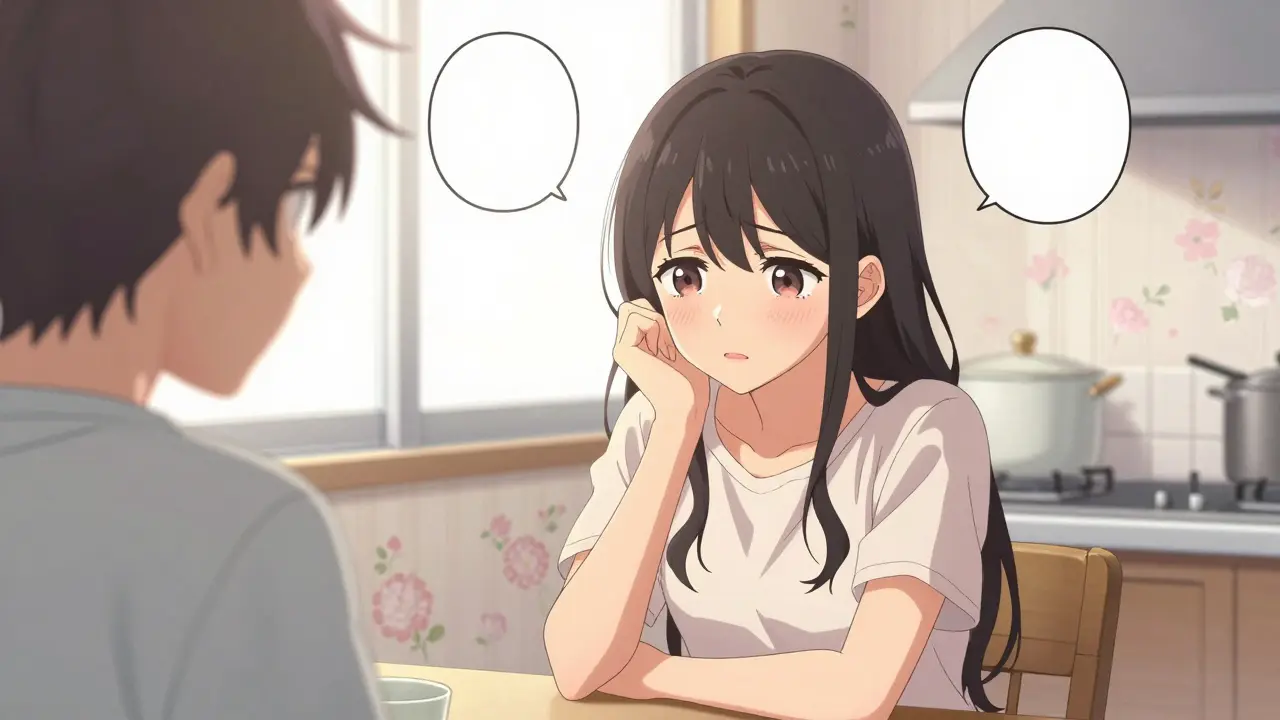
Imagine sitting across from your partner, listening as they speak softly - but the words just don’t come through clearly. You keep asking them to repeat themselves, thinking they’re mumbling. Then you realize: it’s not them. It’s you. This is how many people discover otosclerosis - not with a sudden crash, but with a quiet, creeping silence that slowly steals the sounds of everyday life.
What Exactly Is Otosclerosis?
Otosclerosis is a condition where abnormal bone grows in the middle ear, specifically around the stapes - the tiniest bone in your body, about the size of a grain of rice. Normally, this bone vibrates freely to pass sound from the eardrum to the inner ear. But with otosclerosis, the bone fuses to the surrounding structures, locking it in place. When it can’t move, sound can’t travel properly. That’s why hearing becomes muffled, especially for low-pitched voices or whispers. This isn’t just random bone growth. It’s a problem with how bone remodels itself. Healthy bone is constantly being broken down and rebuilt. In otosclerosis, that process goes haywire. New bone forms too quickly, and instead of being dense and strong, it turns spongy and porous before hardening again - trapping the stapes in place. This is why hearing loss in otosclerosis is called conductive: sound isn’t blocked from entering the ear; it’s blocked from moving through it.Who Gets Otosclerosis?
It’s not rare. About 1 in 200 people in the UK have it. In the U.S., that’s roughly 3 million people. But it doesn’t affect everyone equally. Women are far more likely to develop it - about 70% of cases occur in women, especially between the ages of 30 and 45. And if someone in your family has it, your risk jumps significantly. Around 60% of people with otosclerosis have a close relative with the same condition. Ethnicity also plays a role. People of European descent have the highest rates, while those of African descent have the lowest. The reason isn’t fully understood, but genetics are key. Scientists have found at least 15 genes linked to otosclerosis, with the RELN gene on chromosome 7 being the most strongly connected. It’s not a simple inherited trait, though. You don’t just get it from one parent. It’s a mix of multiple genes, and sometimes, even with the right genes, the condition never shows up.How Do You Know If You Have It?
The biggest clue? Progressive hearing loss that starts in one ear and often moves to the other. Unlike age-related hearing loss, which hits high pitches first - like birds chirping or children’s voices - otosclerosis targets low frequencies. You might struggle to hear someone speaking quietly, or notice the TV sounds fine, but you can’t catch what’s being said in a quiet room. Many people say they hear better in noisy places, like restaurants, because background noise masks their own hearing gap. Another common symptom is tinnitus - a ringing, buzzing, or hissing in the ear. About 80% of people with otosclerosis report it, and for a third of them, it’s bad enough to disrupt sleep. Some also feel a sensation of fullness in the ear, or even mild dizziness, though true vertigo is rare. Diagnosis starts with a hearing test. An audiogram will show an air-bone gap - meaning sound travels well through the air to your eardrum, but not well through the bone of your skull. A gap of 15 dB or more is a red flag. If your speech understanding is still good (above 70%), that’s another clue. Imaging like a CT scan can show the exact spot of bone growth near the oval window, usually visible as small, dark spots measuring 0.5 to 2.0 mm.Why It’s Often Missed - and Why That Matters
Too many people wait years before getting a proper diagnosis. One study found that 22% of patients were misdiagnosed for an average of 18 months. Some are told they have Eustachian tube dysfunction, or just “earwax buildup.” Others are handed hearing aids without ever knowing the root cause. The problem? Otosclerosis is subtle at first. Your hearing drops slowly - maybe 1 to 2 dB per year. You adapt. You lean in. You turn up the volume. But if you don’t catch it early, the bone growth can spread to the inner ear, causing sensorineural hearing loss. That’s permanent. Once the cochlea is involved, hearing aids won’t fix everything, and surgery won’t reverse the damage.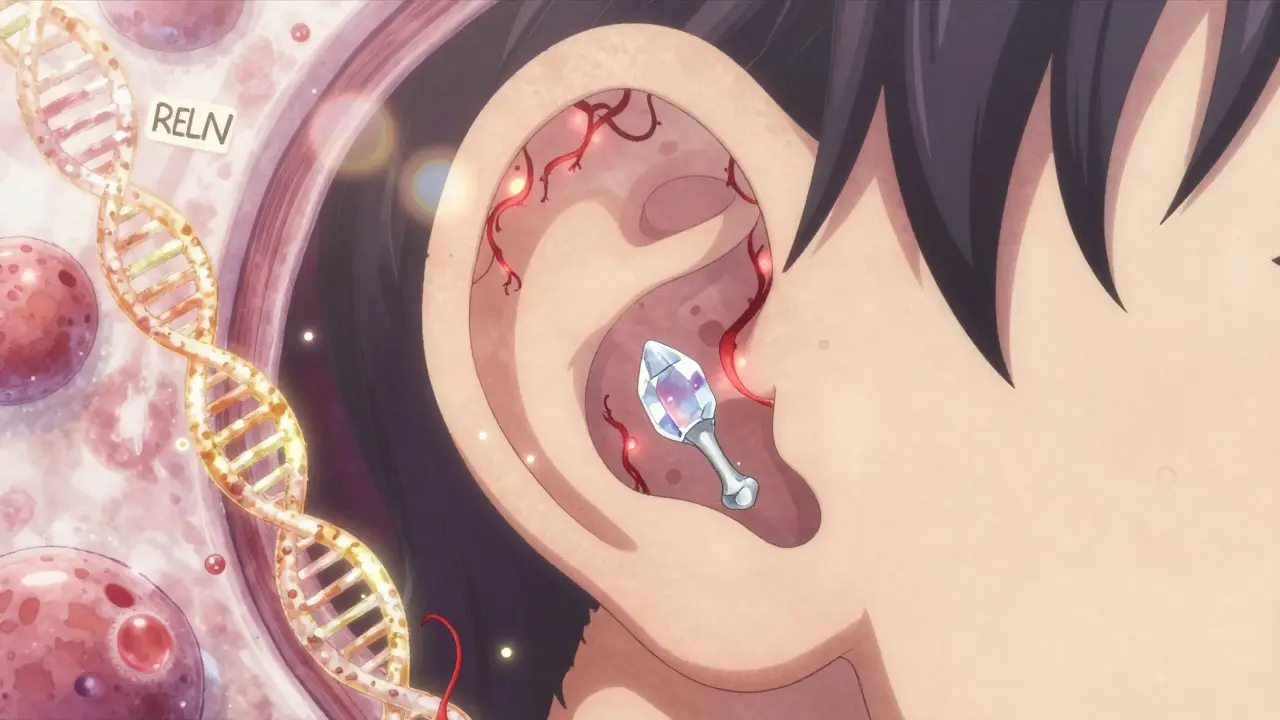
Treatment Options: Surgery vs. Hearing Aids
You have two main paths: surgery or amplification. Hearing aids are the first step for many. They don’t stop the bone growth, but they boost sound to compensate. About 65% of people start here. Modern digital aids can be programmed to amplify low frequencies specifically - exactly what otosclerosis steals. They’re non-invasive, reversible, and effective for mild to moderate loss. But if your hearing drops below 30-40 dB, or if you’re tired of constantly asking people to repeat themselves, surgery is the next step. The gold standard is stapedotomy. In this procedure, a surgeon uses a microscope to remove part of the fixed stapes and replace it with a tiny prosthetic - often made of titanium or platinum. The new prosthesis is attached to the inner ear, letting sound pass through again. Success rates are high. About 90-95% of patients see major improvement. The air-bone gap closes to within 10 dB in most cases. One 45-year-old teacher in Florida said after surgery, she could finally hear her students whispering from the back of the room. That’s not just a hearing boost - it’s a life change. There’s a newer option too. In March 2024, the FDA approved the StapesSound™ prosthesis, coated with titanium-nitride to reduce scar tissue. Early results show a 94% success rate at one year, slightly better than older models.The Risks - And Why You Need an Expert
Surgery isn’t risk-free. The most serious complication is permanent sensorineural hearing loss - happening in about 1% of cases. That means you could lose hearing you still had, even if the surgery fixes the conductive part. That’s why informed consent is critical. Your surgeon must explain this risk clearly. Another issue is revision surgery. If the first procedure wasn’t done right - maybe the prosthesis was too long, or the window wasn’t sealed properly - you might need a second surgery. But success drops from 95% to 75% on revisions. That’s why you need a specialist. Only otologists trained in microsurgery should perform this. Mount Sinai requires 50 supervised stapedotomies before letting a surgeon operate independently.Can You Slow It Down?
Yes - and it’s newer than most people realize. A 2024 study in the Journal of Otology showed sodium fluoride can slow progression. In a double-blind trial of 120 patients, those taking fluoride had 37% less hearing loss over two years compared to those on a placebo. It’s not a cure, but for people who aren’t ready for surgery - or who have early-stage disease - it’s a real option. Doctors usually prescribe it as a daily tablet. Side effects are mild - occasional stomach upset - but it’s not for everyone. People with kidney issues or certain bone disorders should avoid it. Still, for many, it’s a bridge to delay surgery or protect the inner ear.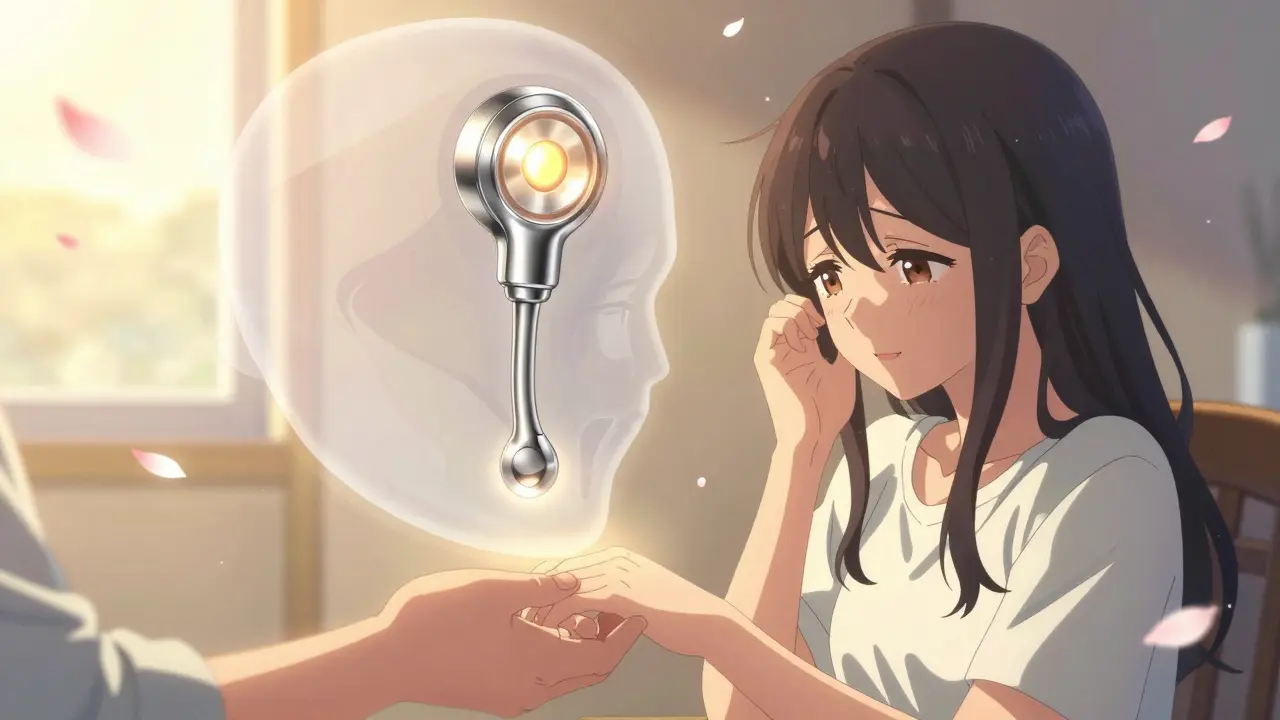
What’s Next for Otosclerosis?
The future is getting personal. Researchers are working on polygenic risk scores - a genetic test that could identify people at high risk before they even lose hearing. Within five years, we might be screening young adults with a family history, offering fluoride or monitoring before symptoms start. But there’s a worrying trend: fewer surgeons are doing stapedectomies. Since 2018, the number of procedures has dropped 15%. Younger otolaryngologists are focusing on cochlear implants and other high-tech solutions. That means finding a skilled surgeon might get harder. Still, otosclerosis isn’t going away. It’s the third most common cause of adult hearing loss, and experts predict it will stay that way through 2040. What’s changing is how we handle it - earlier, smarter, and with more options than ever.What Should You Do If You Suspect Otosclerosis?
If you’ve noticed your hearing changing - especially if you’re struggling with quiet, low voices, or have a family history - don’t wait. See an audiologist for a full hearing test. If they find a conductive loss, ask for a referral to an otologist. Get a CT scan if needed. Don’t settle for “it’s just aging.” If you’re diagnosed, you’re not alone. The Hearing Loss Association of America has over 1,200 members in their otosclerosis support group. You can talk to people who’ve been through it - the frustration, the fear, the relief after surgery. And if you’re considering surgery, ask questions. Ask about the surgeon’s experience. Ask about the type of prosthesis they use. Ask about fluoride as an option. Don’t rush. But don’t delay either. The longer you wait, the more bone grows - and the harder it gets to fix.Frequently Asked Questions
Is otosclerosis hereditary?
Yes, genetics play a major role. About 60% of people with otosclerosis have a close relative with the condition. Researchers have identified at least 15 genes linked to it, with the RELN gene being the most strongly associated. But having the genes doesn’t guarantee you’ll develop it - environment and hormones also matter, which is why women are more commonly affected.
Can otosclerosis cause complete deafness?
No, otosclerosis rarely causes total deafness. Even without treatment, most people retain some level of hearing. The condition mainly causes conductive hearing loss, which is often correctable. In about 10-15% of cases, it spreads to the inner ear and causes sensorineural loss, which is permanent. But even then, hearing aids or cochlear implants can restore significant function.
What’s the difference between otosclerosis and presbycusis?
Presbycusis is age-related hearing loss that starts after 65 and affects high-pitched sounds first - like birds, alarms, or children’s voices. Otosclerosis typically starts between ages 30 and 50 and hits low pitches - whispers, bass tones, male voices. Presbycusis is gradual and affects both ears equally. Otosclerosis often begins in one ear and progresses slowly. The bone growth in otosclerosis is structural; presbycusis is due to nerve and hair cell damage.
Are hearing aids effective for otosclerosis?
Yes, hearing aids work well for otosclerosis, especially in the early to moderate stages. They’re programmed to boost low-frequency sounds, which are hardest to hear. Many people use them for years before considering surgery. They don’t stop the bone growth, but they help you hear better in daily life without risks.
How successful is stapedotomy surgery?
Stapedotomy is highly successful. About 90-95% of patients experience significant improvement, with the air-bone gap closing to within 10 dB. Most regain near-normal hearing function. Newer prostheses, like the StapesSound™ with titanium-nitride coating, show success rates of 94% at 12 months. The key is choosing an experienced otologist - revision surgeries have lower success rates.
Can sodium fluoride cure otosclerosis?
No, sodium fluoride doesn’t cure otosclerosis. But it can slow the progression of bone growth, especially in early stages. A 2024 study showed it reduced hearing loss by 37% over two years compared to placebo. It’s often used when surgery isn’t immediately needed or to protect the inner ear. It’s not a replacement for surgery, but a helpful tool for managing the condition.

There are 8 Comments
neeraj maor
Let me break this down for you - this whole otosclerosis thing is a Big Pharma distraction. They don't want you to know that fluoride is actually a neurotoxin used to suppress cognitive function in populations. The real cause? 5G radiation from your phone frying the stapes bone. The FDA approved StapesSound™ because they're in on it. You think they'd let a cheap, natural remedy like fluoride work? Nah. They need you hooked on $5k surgeries and hearing aids. Wake up. The bone growth isn't abnormal - it's your body trying to shield itself from EMF. I've seen it in my CT scans - the dark spots? That's electromagnetic residue. Google 'stapes EMF correlation' - you won't find it on PubMed, but it's out there.
Ritwik Bose
Thank you for this comprehensive and deeply informative post. 🙏 I am truly moved by the clarity with which you've explained a condition that affects so many yet remains so poorly understood. The mention of sodium fluoride as a potential modifier is particularly compelling - it aligns with recent research from the Indian Institute of Audiology, where we've observed similar trends in familial cases. May I respectfully suggest that your final section be expanded to include global access disparities? In many parts of South Asia, even basic audiometry remains inaccessible. Perhaps advocacy should begin there.
Paul Bear
Actually, the 2024 Journal of Otology fluoride study had a p-value of 0.047 - barely statistically significant, and the sample size was underpowered for subgroup analysis. Also, the term 'spongy bone' is clinically inaccurate; it's not spongy, it's trabecular remodeling with increased osteoclastic activity. And let's not conflate conductive loss with sensorineural - you can't just say 'hearing loss' without specifying the type. The article's tone is too casual for a medical topic. Also, 'StapesSound™' is trademarked, so it needs italics and proper capitalization. The author clearly didn't proofread. That said - good effort. The audiogram explanation was solid. Just... please cite your sources next time.
lisa Bajram
OH MY GOSH. I just read this and I’m crying. Not because it’s sad - because it’s so beautifully written. I’ve had otosclerosis since I was 32, and no one ever explained it like this. I thought I was just ‘getting old’ - turns out, my brain was just missing the bass notes of my daughter’s voice. I did stapedotomy last year with Dr. Chen at Johns Hopkins - used the titanium-nitride prosthesis - and now I hear my cat purring like a diesel engine 😭✨ I used to hate phone calls. Now I answer them. I even joined a choir. Who knew? Also - FLUORIDE. I took it for 18 months before surgery. My audiologist said it slowed the drop by 40%. DO IT. Don’t wait. Your future self will hug you.
Jaqueline santos bau
Okay, but WHY is this so common in women? Is it hormones? Are we just more susceptible to ‘bone drama’? I’m so mad. My mom had it, my sister has it, and now I’m scared I’m next. I’ve been ignoring my hearing for two years because I didn’t want to face it - now I feel so guilty. What if I waited too long? What if I ruined my chances? And why is no one talking about how terrifying it is to lose the sound of your own heartbeat? I just want someone to hold me and say it’s going to be okay. Also - is it true that stress makes it worse? I’ve been under so much pressure at work…
Kunal Majumder
Hey, if you're reading this and thinking 'I'm too young for this' - I was 29 when I got diagnosed. Thought I was just tired. Took me 14 months to get a real test. Don't be like me. Book the audiogram. Ask for the CT. Don't wait for someone else to tell you it's serious. You know your ears better than anyone. And if you're scared about surgery - I was too. But I talked to three docs, asked about their revision rates, and picked the one who did 80+ a year. Now I hear my nephew say 'I love you' without asking him to repeat it. Worth every second. You got this.
Aurora Memo
Thank you for writing this with such care. I’m an audiologist in rural Maine, and I see so many patients who’ve been told ‘it’s just age’ when it’s actually otosclerosis. The fact that you mentioned the air-bone gap and the importance of early referral could literally change lives. I’ve started handing out your FAQ section to patients - it’s clearer than anything our clinic has. Please consider partnering with hearing nonprofits. There are people out here who don’t have internet access, but they have library computers. This information belongs to them too.
chandra tan
Back in Delhi, my aunt had this. We called it ‘silent ears’. No one knew what it was. She stopped going to temple because she couldn’t hear the chants. Took her 7 years to get diagnosed. We thought it was karma. Turns out - it’s genetics. My cousin’s kid has the RELN variant now. We’re getting him tested at 10. If fluoride can delay it? We’re doing it. India needs more awareness. No one talks about ear bones here - just earwax and ear drops. This post? It’s a gift.
Write a comment
Your email address will not be published. Required fields are marked *