
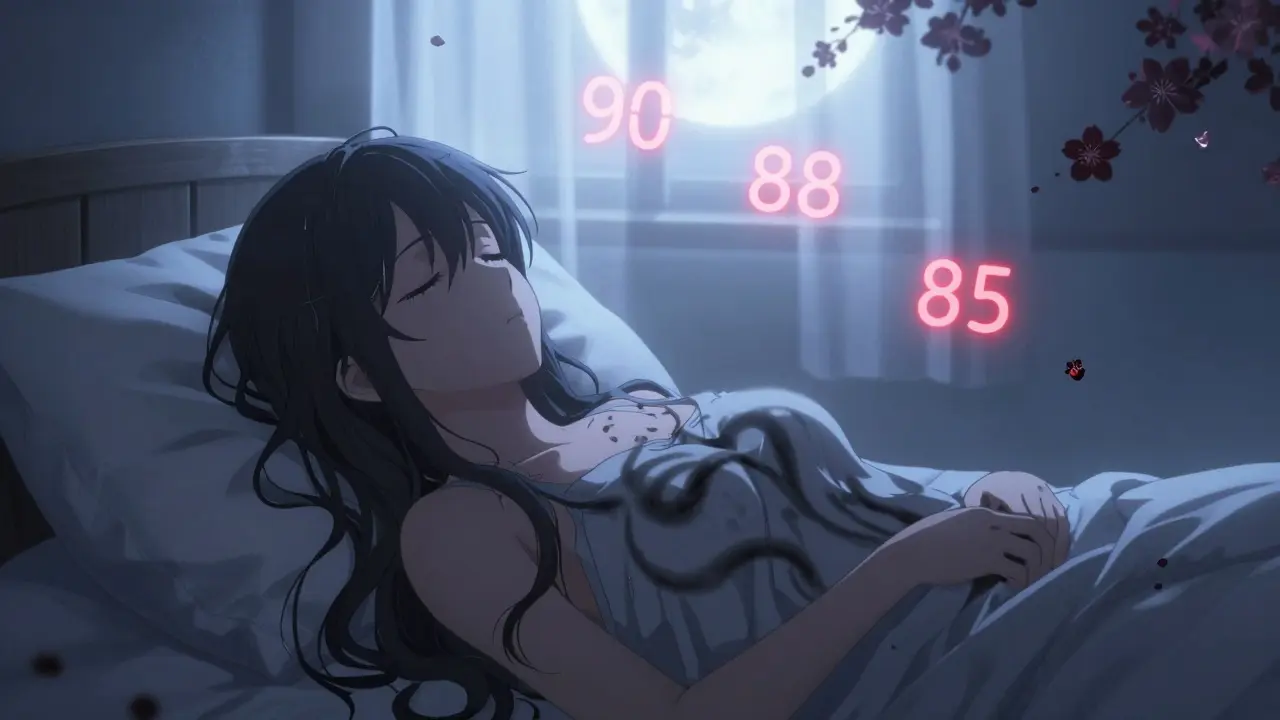
When opioids and benzodiazepines are taken together, the risk isn't just higher-it's exponentially deadlier. This isn't a theoretical concern. It's a daily reality in emergency rooms and homes across the country. The combination doesn't just add up; it multiplies. Two drugs, each dangerous on their own, become a silent killer when used together-slowing breathing until it stops, and leaving no time to react.
Why This Combination Is So Dangerous
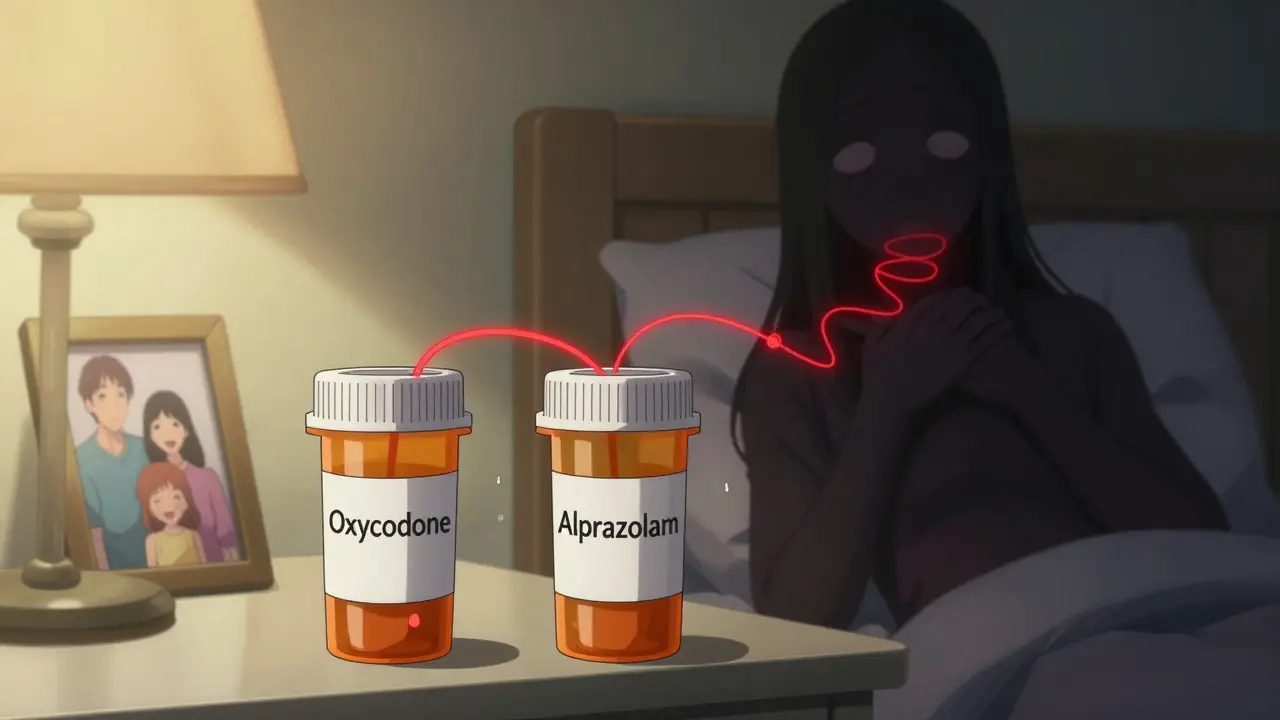
Both opioids and benzodiazepines depress the central nervous system. But they do it in different ways. Opioids, like oxycodone, fentanyl, or morphine, bind to mu-opioid receptors in the brainstem-the area that controls automatic breathing. Benzodiazepines, such as alprazolam, lorazepam, or diazepam, boost the effect of GABA, a calming neurotransmitter that also suppresses respiratory drive. When you take both, they don’t just work side by side. They team up. The result? A double hit on your ability to breathe.
Studies show that when these drugs are combined, oxygen levels in the blood drop far more than with either drug alone. One study found that 85% of people who took both drugs had oxygen saturation fall below 90%-a level that can lead to brain damage or death. Only 45% of those who took opioids alone saw that same drop. That’s not a small difference. It’s a life-or-death gap.
And it’s not just about the dose. Even people who’ve been on opioids for years-people who think they’ve built up tolerance-aren’t protected. Their bodies adapt to opioids, but not to benzodiazepines. A person who can handle 80 mg of oxycodone daily might still die from 1 mg of alprazolam when taken with that opioid. Tolerance doesn’t save you here.
The Numbers Don’t Lie
The CDC reports that in 2020, 16% of all opioid overdose deaths involved benzodiazepines. That’s not a footnote-it’s a pattern. In 1999, fewer than 1 in 100,000 people died from this combination. By 2017, that number jumped to nearly 9 per 100,000. Even though it’s dropped slightly since then, it’s still over 14 times higher than it was 20 years ago.
Patients taking both drugs are 10 times more likely to die from an overdose than those taking opioids alone. The FDA says this isn’t a rare edge case-it’s a widespread crisis. In 2021, a study of Medicare Part D beneficiaries found that 15% of long-term opioid users were also prescribed benzodiazepines. That’s 1 in 7 people. And 4.3% of those were on high-risk combinations: long-acting benzos with extended-release opioids. These are the prescriptions that kill.
How the Body Breaks Down Under This Combo
The danger isn’t just in the brain. These drugs also affect your airway. Both opioids and benzodiazepines relax the muscles in your throat. When you’re asleep-or even just drowsy-those muscles collapse. Your airway closes. You stop breathing. Your body doesn’t wake up. It doesn’t gasp. It just… stops.
And here’s the cruel twist: you might feel fine during the day. You might even think you’re handling it. But at night, when you’re lying down, your body’s defenses are down. That’s when the real danger hits. A 2023 study found that patients who appeared stable during daytime monitoring suddenly developed severe hypoxia during sleep. No warning. No symptoms. Just silence.
Some opioids, like fentanyl and methadone, are broken down by a liver enzyme called CYP3A4. Certain benzodiazepines, including alprazolam, block this enzyme. So if you take them together, your body can’t clear the opioid fast enough. The opioid builds up. The dose you’ve been taking for months suddenly becomes a lethal one. This isn’t a myth-it’s a documented pharmacokinetic trap.
Who’s at Risk-and Who’s Still Prescribing This
It’s not just people who misuse drugs. This is happening to people with chronic pain, anxiety, insomnia, PTSD. A cancer patient on morphine gets prescribed lorazepam for anxiety. A veteran with chronic back pain and PTSD gets both oxycodone and clonazepam. A grandmother on hydrocodone for arthritis gets diazepam for muscle spasms. These aren’t street drugs. These are prescriptions. And they’re still being written.
The American Geriatrics Society lists this combination as potentially inappropriate for older adults. Why? Because seniors are more sensitive to sedation. Their livers process drugs slower. Their lungs are weaker. A dose that’s safe for a 30-year-old can kill a 70-year-old. Yet, in 2022, nearly 1 in 5 older adults on opioids were also getting benzodiazepines.
The FDA has been clear since 2016-and strengthened its warning in 2019. They say: Only prescribe both together if no other option exists. Even then, start with the lowest possible dose. Monitor closely. But many providers still don’t know the risks. Or they assume the patient “knows what they’re doing.” That assumption kills.
Symptoms You Can’t Ignore
If someone is taking both drugs, watch for these signs:
- Extreme drowsiness-even after a full night’s sleep
- Slurred speech or confusion
- Slow, shallow, or irregular breathing
- Dizziness or inability to stand
- Unresponsiveness to voice or touch
These aren’t signs of being “high.” They’re signs of respiratory failure. If you see this, call emergency services immediately. Don’t wait. Don’t try to wake them up with coffee or cold water. They need oxygen, and they need it now.
What to Do If You or Someone You Know Is on Both
If you’re on both drugs, don’t panic-but don’t ignore it either. Never stop either medication suddenly. Benzodiazepine withdrawal can trigger seizures. Opioid withdrawal can be brutal: vomiting, shaking, intense anxiety, insomnia. Both require careful, supervised tapering.
Here’s what to do:
- Call your doctor. Tell them you’re taking both and ask if it’s necessary.
- Ask if there’s a safer alternative-for pain, try physical therapy or non-opioid meds. For anxiety, try CBT or SSRIs.
- If you must continue both, insist on the lowest possible doses and regular check-ins.
- Keep naloxone (Narcan) on hand. It won’t reverse benzodiazepine effects, but it can block the opioid part and buy time until help arrives.
- Make sure someone in your household knows the risks and how to respond.
The CDC and FDA both recommend that prescribers use electronic alerts in their systems to flag these combinations. Many hospitals have them. Many private clinics don’t. You can’t rely on the system to protect you. You have to protect yourself.
The Bottom Line
This isn’t about judgment. It’s about survival. Opioids and benzodiazepines are powerful tools. But when used together, they become a trap. The body doesn’t adapt. The risk doesn’t fade. The danger doesn’t go away.
If you’re prescribed both, ask: Is this really necessary? Is there another way? If you’re caring for someone on both, learn the signs. Keep naloxone nearby. Talk to your pharmacist. Know the emergency plan.
One dose too much. One night of sleep. One moment of unawareness. That’s all it takes. And once breathing stops, there’s no second chance.
Can you die from taking opioids and benzodiazepines together even if you’ve been on them for years?
Yes. Tolerance to opioids does not protect you from the respiratory effects of benzodiazepines. Even long-term users can die from a dose of a benzo that was previously safe. The combination overwhelms the brain’s breathing control center, and the body can’t compensate.
Is naloxone (Narcan) effective if someone overdoses on both drugs?
Naloxone can reverse the opioid part of the overdose, which may save a life. But it does not reverse the effects of benzodiazepines. The person may still be deeply sedated and at risk of breathing stopping again after naloxone wears off. Emergency medical care is always required.
Why do doctors still prescribe both if the risk is so high?
Some doctors are unaware of the full risk, or they’re responding to patient demand for quick relief. Others believe the patient is stable. But guidelines from the FDA, CDC, and American Geriatrics Society all say to avoid this combination. Prescribing it is becoming less common, but it still happens-especially in primary care and among older patients.
Are there any safe combinations of opioids and benzodiazepines?
There is no truly safe combination. Even in hospice or palliative care, where the goal is comfort, the risk remains. When used in these settings, it’s done with extreme caution, continuous monitoring, and only after all other options are exhausted. It’s never considered low-risk.
What should I do if I’m on both and want to stop one?
Never stop either one abruptly. Withdrawal from benzodiazepines can cause seizures. Opioid withdrawal is extremely uncomfortable and can lead to relapse. Work with a doctor to create a slow, supervised tapering plan-usually one medication at a time, with weeks or months between reductions.
Can alcohol make this interaction worse?
Yes. Alcohol is another central nervous system depressant. Combining it with opioids and benzodiazepines triples the risk of respiratory failure. Even one drink can push someone over the edge. The FDA explicitly warns against mixing these drugs with alcohol.
Are there safer alternatives to benzodiazepines for anxiety or insomnia?
Yes. For anxiety, SSRIs like sertraline or citalopram are often safer long-term options. For insomnia, non-addictive sleep aids like trazodone or cognitive behavioral therapy (CBT-I) are recommended. Physical therapy, mindfulness, and exercise can also reduce pain and anxiety without the risks of opioids or benzos.
There are 14 Comments
Dan Mayer
So let me get this straight-people are dying because doctors prescribed them meds? Wow. Never thought i'd see the day when being sick becomes a death sentence. I mean, if you're dumb enough to take two scary drugs together, maybe you deserve what you get. I've been on oxycodone for 7 years and never touched a benzo. Guess I'm just smarter than the average bear. 🤷♂️
Janelle Pearl
I lost my brother to this combo. He wasn't a junkie. He was a veteran with chronic pain and PTSD. His doctor just...kept prescribing both. No warnings. No follow-ups. Just scripts. I wish someone had told us how quiet it is when someone stops breathing. No struggle. No noise. Just...gone.
Don't judge. Just know this isn't theoretical. It's real. And it's happening to good people.
Ray Foret Jr.
Yikes. I had no idea this was such a big deal. My aunt takes Xanax and hydrocodone and says she's fine. I'm gonna send her this. Maybe she'll listen. 😅
Also-Narcan? I didn't even know that was a thing you could keep at home. Gonna get one. Better safe than sorry, right?
Thanks for the heads up. This is wild but so important.
Robert Bliss
Just wanna say thanks for laying this out so clearly. I work in a clinic and we get these prescriptions all the time. I didn't realize how much the liver enzyme thing plays into it. That’s scary.
Also, I’ve seen patients who seem fine during the day but crash at night. It’s like a silent timer. I’m gonna start asking more questions now. This info could save lives.
Leon Hallal
You think this is bad? Wait till you find out the government is hiding the real truth. They don't want you to know that these drugs are being pushed to keep people docile. Big Pharma + the FDA + your doctor are all in on it. You think they care about you? Nah. They want you sedated, quiet, and dependent. Wake up.
They’re not trying to help. They’re trying to control you.
Erica Santos
Oh, so now we're treating adults like children who can't handle two prescriptions? How quaint. You want us to believe that every single person on these meds is a ticking time bomb? What about the ones who've been stable for a decade? Are they just...lucky idiots?
And let's not forget-people don't get these prescriptions because they're stupid. They get them because their pain is real and their anxiety is crushing. You want to fix this? Fix the system. Not blame the patients.
George Vou
So...the CDC says this kills people? Funny. I remember when they said smoking was safe. And then they said coffee causes cancer. And now they say salt is murder. Who do we trust anymore?
My cousin takes both. He's 62. Healthy as a horse. Runs marathons. Maybe the numbers are rigged? Maybe it's all just fearmongering to sell more Narcan?
Also...why is this article so long? Did you get paid by the word?
Scott Easterling
Ugh. Another 'educational' post that reads like a textbook written by a doomsday cult. You think people don't know this? We do. We've been screaming it for years. But you want to know the real problem? It's not the drugs. It's the fact that 90% of prescribers are lazy, overworked, and don't even read the damn guidelines.
And don't even get me started on how pharmacies just fill scripts without question. It's a broken system. Stop blaming patients. Fix the damn system.
Neeti Rustagi
While the medical literature is compelling, I must emphasize the cultural context. In many Western healthcare systems, pharmacological solutions are prioritized over psychosocial interventions. This reflects a broader trend of medicalizing human suffering. Perhaps the deeper issue lies not in the pharmacological interaction, but in the absence of holistic care models that address root causes-such as trauma, isolation, and economic distress.
One must ask: Why are we prescribing sedatives to people who are suffering, rather than healing their suffering?
Samantha Fierro
This is one of the most important posts I’ve read this year. Thank you for being so thorough. I’m a nurse in a rural clinic, and I’ve seen too many patients on this combo. We don’t have specialists. We don’t have time. But we do have responsibility.
I’ve started carrying printed handouts to give out. One page. Simple. No jargon. Just: ‘This combo can stop your breathing. Here’s what to do.’
If one person reads this and calls their doctor-then it’s worth it.
Stephen Rudd
Oh please. You’re all acting like this is some new revelation. I’ve been on opioids and benzos for 12 years. I’ve never had an issue. I’m not a statistic. I’m a person. You’re treating me like a walking overdose waiting to happen. Maybe the real danger is the fear-mongering itself.
Also, why are you all so obsessed with telling people what to do? Let adults make their own choices. I’m not your child.
Mantooth Lehto
My mom died from this. She was 74. Took hydrocodone for arthritis. Diazepam for ‘nerves.’ Doctor said it was fine. She went to sleep one night and never woke up. No struggle. No scream. Just...gone.
I hate that people still think this is ‘just how it is.’ It’s not. It’s preventable. And if you’re still prescribing this combo-you’re part of the problem.
Melba Miller
Why is this even a thing? America is falling apart. People are on 12 different meds just to get through the day. We’re not sick-we’re broken. And they’re selling us pills instead of solutions.
They don’t care if we live or die. They just want our insurance. This isn’t medicine. It’s capitalism with a stethoscope.
Katy Shamitz
Ugh. Another ‘awareness’ post. Can we please stop making people feel guilty for taking meds they need? I have chronic pain AND anxiety. I’m not a villain. I’m not a statistic. I’m trying to survive. And now you want me to feel bad for taking two pills that help me get out of bed?
Instead of scaring people, maybe help them find better options. But don’t shame them. That’s not helpful. That’s cruel.
Write a comment
Your email address will not be published. Required fields are marked *