
Bisphosphonate & Calcium Timing Calculator
Why Timing Matters
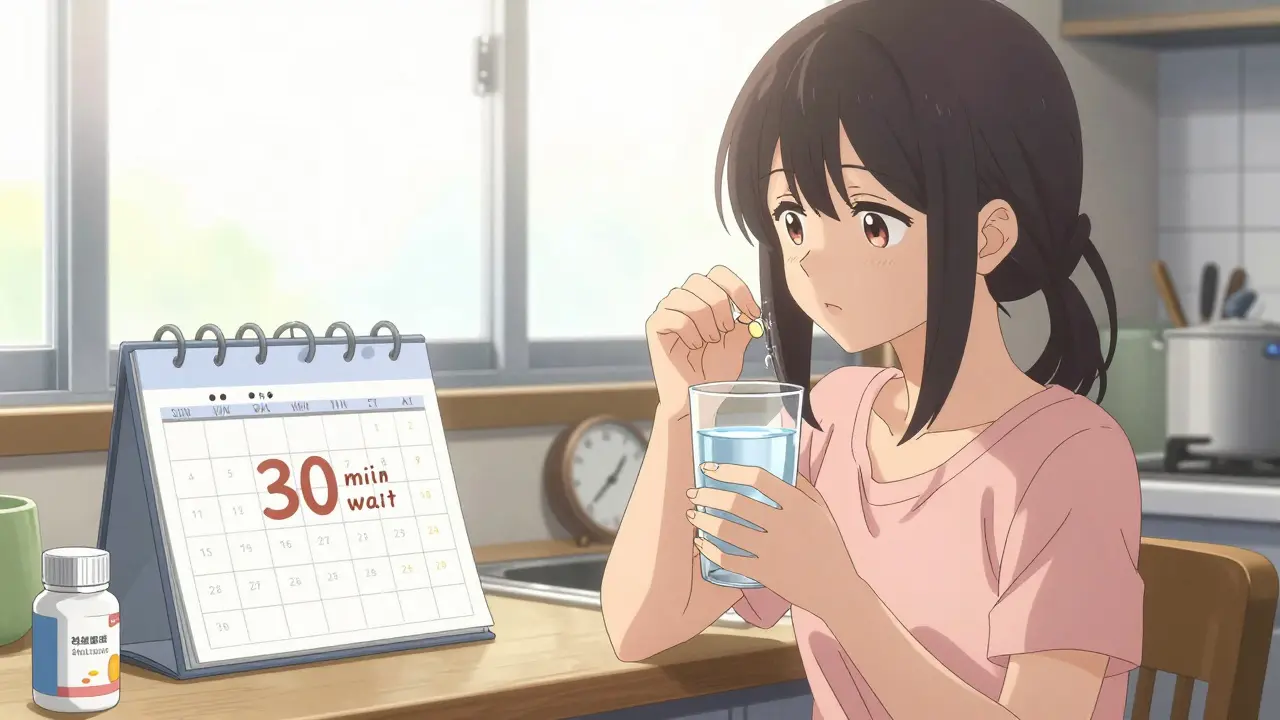
Taking bisphosphonates and calcium together reduces bisphosphonate effectiveness by up to 90%. Your medication must be taken on an empty stomach with water, at least 30-60 minutes before any other substances.
Enter Your Dosing Schedule
Set the time you take your bisphosphonate and calcium supplements to see if they're properly separated
Enter your dosing times above to see if they meet the recommended separation.
When you're managing osteoporosis, taking your medication correctly isn't just a suggestion - it's the difference between preventing a fracture and ending up in the hospital. One of the most common mistakes people make? Taking calcium supplements at the same time as their bisphosphonate. It sounds logical - calcium builds bone, and bisphosphonates protect it - so why not take them together? But here's the hard truth: bisphosphonate and calcium don't play well together when taken at the same time. In fact, doing so can cut the drug’s effectiveness by up to 90%.
How Bisphosphonates Actually Work
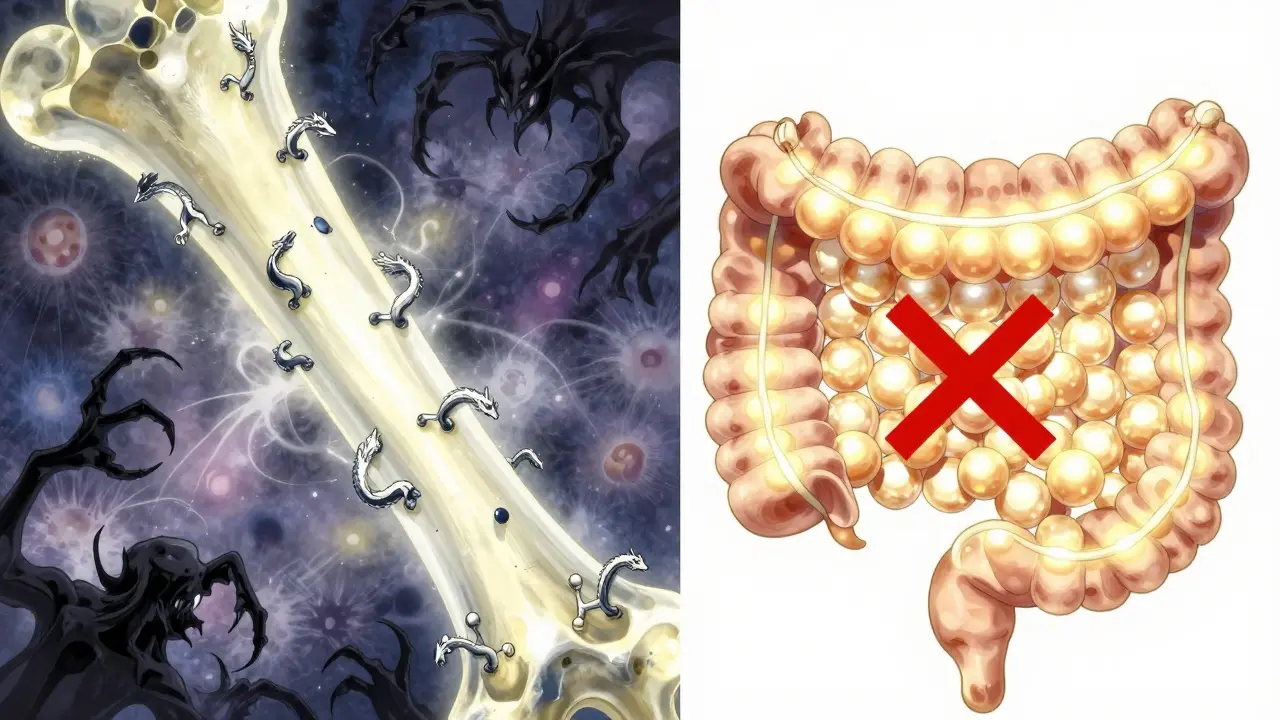
Bisphosphonates - drugs like alendronate, risedronate, ibandronate, and zoledronic acid - aren't just bone strengtheners. They're targeted inhibitors. These drugs stick to the surface of bone, especially where old bone is being broken down. That's where osteoclasts, the cells responsible for bone resorption, come in. Bisphosphonates sneak into these cells and disrupt their energy production. Specifically, they block an enzyme called farnesyl pyrophosphate synthase (FPPS), which is part of a metabolic pathway critical for osteoclast survival. Without it, the cells die off or detach from bone. The result? Bone loss slows down.
What's surprising is that the fracture reduction you see with these drugs doesn't match how much bone density they improve. Studies show a 40-50% drop in spine fractures and 20-25% fewer hip fractures, even though bone density might only increase by 5-8%. That gap points to something deeper: bisphosphonates may also improve bone quality by affecting osteocytes - the network of cells buried inside bone that sense stress and signal repair. In simple terms, they don’t just preserve bone mass - they make bone tougher.
Why Calcium Is Necessary - But Also a Problem
Calcium isn’t optional. Every major clinical trial on bisphosphonates - from the Fracture Intervention Trial to VERT - required participants to take 500-1,000 mg of supplemental calcium daily, in addition to dietary intake. Why? Because your body needs calcium to build bone. If you’re not getting enough, even the best medication can’t do its job. Vitamin D is equally important. Without it, your gut barely absorbs calcium, no matter how much you take.
But here’s the catch: calcium and bisphosphonates compete for absorption in your small intestine. When they meet in your stomach or gut, they form a tight, insoluble complex. Think of it like mixing salt and baking soda - they neutralize each other. That’s why, if you take calcium with your bisphosphonate, your body absorbs barely 1% of the drug. That’s not just a small drop - it’s the difference between treatment and no treatment.
The Right Way to Take Them
There’s one rule, and it’s non-negotiable: take bisphosphonates on an empty stomach, with plain water only, at least 30 to 60 minutes before anything else.
That means:
- No breakfast
- No coffee, tea, or juice
- No other pills - including calcium, iron, or antacids
- No lying down for at least 30 minutes after taking it
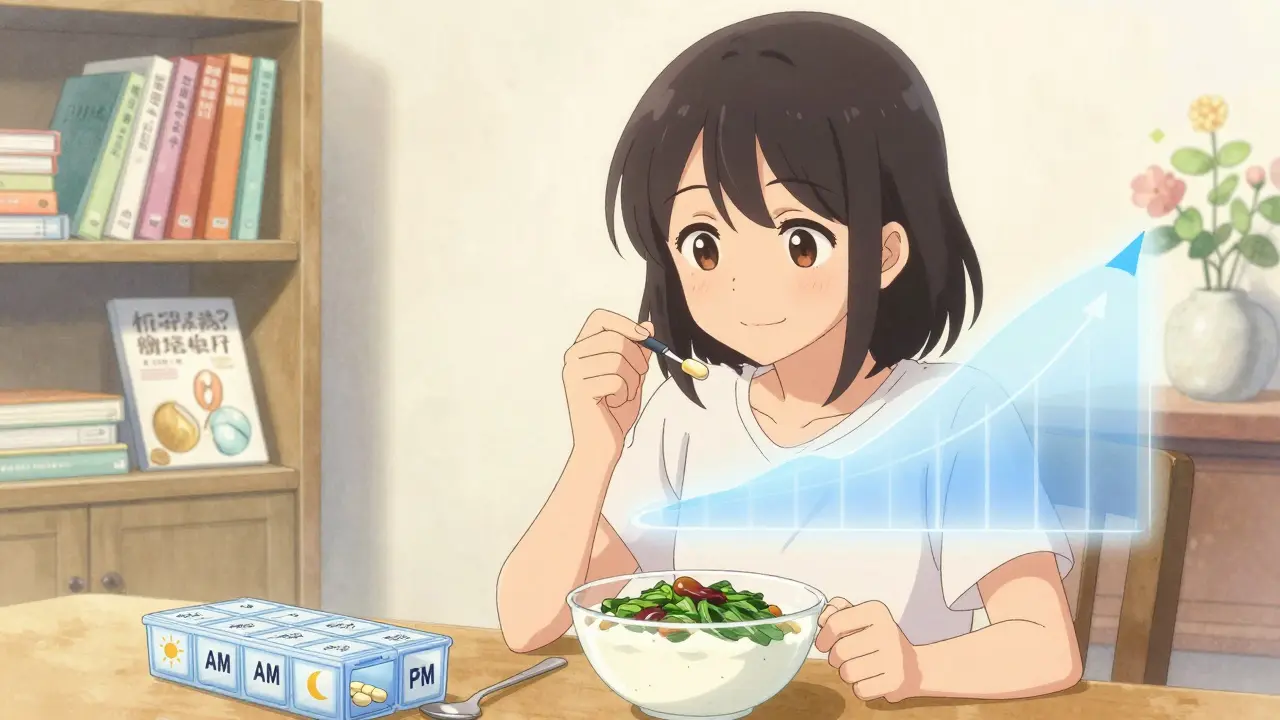
After that waiting period, you can eat, drink, and take your calcium. Many people choose to take calcium with dinner, or split it into two doses - morning and night - to avoid interference. The same goes for vitamin D. It’s best taken with a meal that contains fat, since it’s fat-soluble.
It’s not just theory. A 2006 study by Procter & Gamble found that 40% of patients were taking calcium at the same time as their bisphosphonate. That’s a huge number. And it’s not because they didn’t care - it’s because the instructions are confusing. One patient on Reddit said, “I took my pill at 7 a.m., had my yogurt at 7:15, and didn’t realize I’d ruined the whole thing.”
Real Solutions That Actually Help
Drug manufacturers noticed this problem. That’s why products like Actonel with Calcium were created. It’s a single package with one risedronate tablet and six calcium carbonate tablets - labeled clearly for each day of the week. Patients who used it showed 28% better understanding of dosing and higher satisfaction. One verified review on Drugs.com said: “The reminder system for when to take the calcium made me actually stick with it.”
But even with better packaging, adherence remains low. The National Osteoporosis Foundation found that 58% of patients stop bisphosphonates within a year. Why? The top reasons: side effects (like heartburn or stomach pain), thinking it’s not working, and - yes - the complexity of timing. If you’re juggling five different pills at different times of day, it’s easy to slip up.
What Happens If You Get It Wrong?
Getting the timing wrong doesn’t cause immediate harm. But it does mean your medication isn’t doing what it’s supposed to. You might not feel any different. Your bone density scan might look okay. But over time, without the full effect of the drug, your fracture risk creeps back up. And for someone with osteoporosis, that’s not theoretical - it’s life-changing. A hip fracture in someone over 65 has a 20-24% mortality rate within a year. That’s higher than the risk of many cancers.
On the flip side, taking too much calcium - more than 1,200 mg per day total - might carry its own risks. Some studies suggest excess calcium from supplements, not food, could slightly raise the chance of heart issues. That’s why experts recommend getting calcium from diet first. Yogurt, cheese, leafy greens, sardines, and fortified tofu are all great sources. Supplements should only fill the gap.
Long-Term Use and Drug Holidays
Bisphosphonates stick around in your bones for over ten years. That’s why many doctors recommend a “drug holiday” after 3-5 years of use, especially if your fracture risk has dropped. Your bone density is stabilized, and your body still has the drug working in the background. Taking a break reduces the chance of rare side effects like atypical femur fractures or osteonecrosis of the jaw - which affect fewer than 1 in 10,000 people per year.
But here’s the key: you don’t stop calcium or vitamin D during a drug holiday. You keep them going. Bone health doesn’t pause just because you paused the medication.
What You Should Do Today
Here’s a simple checklist to make sure you’re getting the most out of your treatment:
- Take your bisphosphonate first thing in the morning, with a full glass of plain water.
- Wait 30-60 minutes before eating, drinking, or taking any other medication or supplement.
- Take calcium and vitamin D with a meal later in the day - preferably dinner.
- Don’t lie down for 30 minutes after taking the pill.
- Review your total daily calcium intake (food + supplements). Aim for 1,000-1,200 mg total.
- Ask your doctor about a bone density scan every 1-2 years to track progress.
If you’re struggling with timing, ask your pharmacist about combination packs. They’re not perfect, but they help. And if you’re still unsure - write down your schedule. Stick it on your fridge. Set two alarms: one for the pill, one for the calcium. Small changes like this make a big difference.
Can I take bisphosphonates with orange juice or coffee?
No. Anything besides plain water - including coffee, tea, juice, or milk - can interfere with bisphosphonate absorption. These drinks contain minerals or acids that bind to the drug. Stick to water only, and wait at least 30 minutes before drinking anything else.
What if I forget and take calcium with my bisphosphonate?
If you accidentally take calcium with your bisphosphonate, don’t panic. Skip that day’s dose of the bisphosphonate and wait until tomorrow to take it again on an empty stomach. Don’t double up. Consistency over time matters more than one missed dose. Going forward, separate them by at least 30-60 minutes.
Is it okay to take calcium at night and bisphosphonates in the morning?
Yes, that’s ideal. Taking calcium at night - with dinner or before bed - avoids any overlap with your morning bisphosphonate. This is actually the most reliable way to ensure both are absorbed properly. Many patients find this schedule easier to stick with long-term.
Do I need vitamin D with calcium?
Absolutely. Without enough vitamin D, your body can’t absorb calcium from your gut - even if you’re taking supplements. Most experts recommend 800-1,000 IU of vitamin D daily. If you don’t get much sun, or live in a colder climate, you’re likely deficient. Ask your doctor to check your levels.
Can I get enough calcium from food alone?
It’s possible, but hard for most people. One cup of yogurt gives you about 300 mg, a slice of cheddar cheese about 200 mg, and a cup of fortified plant milk around 300 mg. To reach 1,000-1,200 mg daily, you’d need to eat dairy or fortified foods at every meal. Most people fall short, which is why supplements are recommended - but only to fill the gap, not replace food.



There are 10 Comments
Cory L
Man, I used to take my alendronate with my morning coffee like a boss-until my doc laid this out. Now I’m the guy who sits there with a glass of water, staring at his toast like it’s the enemy. Worth it though. No more stomach nightmares. And yeah, calcium at dinner? Best decision ever. My bones are thanking me.
Bhaskar Anand
Western medicine always overcomplicates things. In India, we’ve been using turmeric, milk, and sunlight for centuries. Why do we need fancy pills? Your body knows what to do. Stop overmedicating. Bone strength comes from nature, not chemistry.
Stephen Archbold
just wanted to say this post saved my life. i was taking calcium with my pill like a dumbass for two years. my dr never mentioned the timing thing. i read this, changed my routine, and my last scan showed a 7% increase. i’m not a medical person but i’m telling you-this stuff matters. if you’re on this med, do the 30 min rule. no excuses.
kirti juneja
As someone who’s been helping my mom manage her osteoporosis, I can’t tell you how many times she’d take her pill with yogurt. I used to get so frustrated. Then I made a chart with colored stickers-green for pill time, red for calcium time. She loves it. Now she even reminds me. Small systems, big results.
Haley Gumm
Let’s be real-90% of people taking bisphosphonates are doing it wrong. And no, the drug companies aren’t trying to help. They’re just selling more pills. The fact that they had to create those combo packs? That’s proof people are too lazy to read instructions. Also, vitamin D? Everyone’s deficient. Get tested. Don’t guess.
John Smith
Wow. A whole article about timing. Did we forget that bone health is just a capitalist scam? You think your femur is gonna thank you for a 30-minute wait? Newsflash: your body doesn’t care. Just eat meat. Lift heavy things. Stop overthinking. Also, who wrote this? A pharmacist on a caffeine bender?
Shalini Gautam
My sister took bisphosphonates for 6 years. She didn’t even know about the calcium thing. She took it with her multivitamin. Her hip fracture last year? That’s on the system. Not her. We need better education. Not more pills. More clarity. Simple. Direct. No jargon.
Gwen Vincent
I’ve been following this advice for a year now. Morning water, 30-minute wait, calcium with dinner. It’s become routine. I don’t even think about it anymore. And honestly? I feel more in control of my health than I have in years. It’s not glamorous. But it works.
Holley T
Okay, but let’s talk about the real issue here. Why is it that the only people who follow this perfectly are the ones who already read medical journals? The rest of us? We’re juggling kids, jobs, meds for diabetes, blood pressure, thyroid, and now we have to schedule our bone pills like a NASA launch? That’s not patient-centered care. That’s a design flaw. Someone needs to make a smart pillbox that auto-schedules this. Or just combine the damn thing. It’s 2024.
Ashley Johnson
They’re hiding something. Why does calcium interfere? Because the drug companies want you to buy their combo packs. They don’t want you to know that calcium from food works better. And vitamin D? That’s sunlight. You don’t need a pill. You need to go outside. This whole system is rigged. They profit from your confusion. Wake up.
Write a comment
Your email address will not be published. Required fields are marked *