St. John's wort and medications: Risks, interactions, and what you need to know
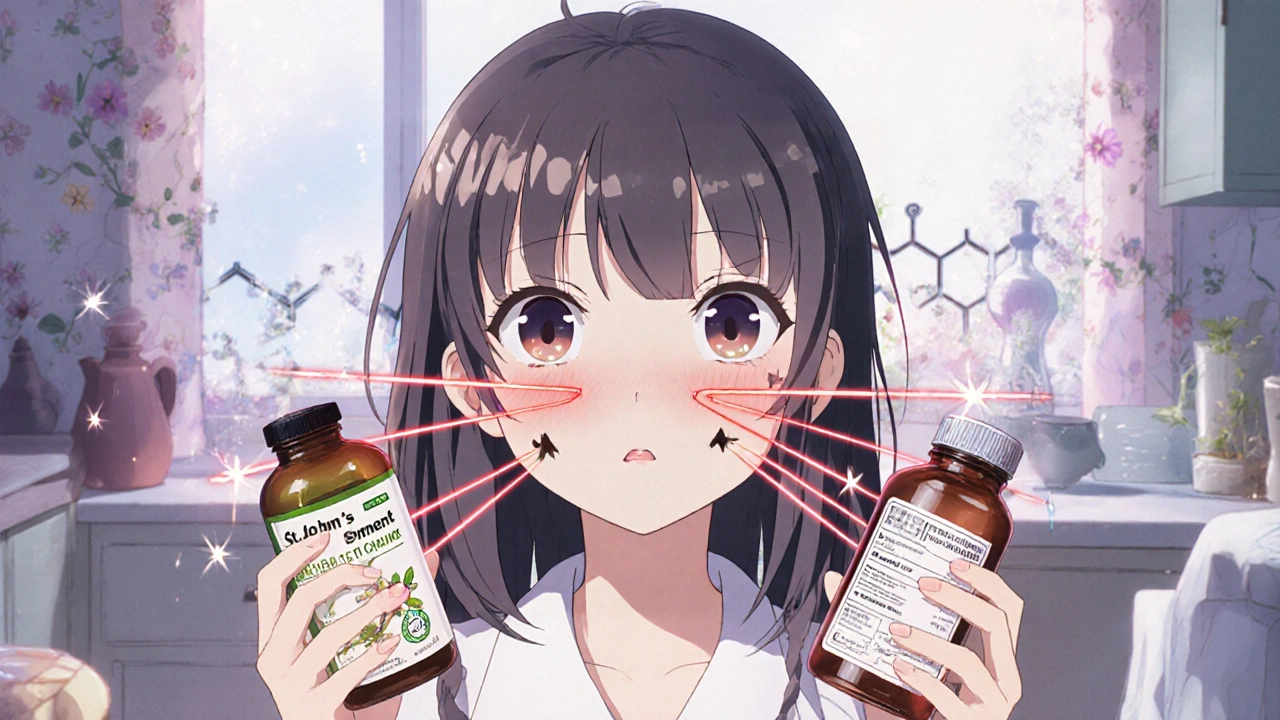
When people think of St. John's wort, a widely used herbal supplement for mild depression and anxiety. Also known as Hypericum perforatum, it's often seen as a natural alternative to prescription drugs. But what many don’t realize is that this plant can interfere with how your body processes medications—sometimes with serious consequences.
St. John's wort doesn’t just sit quietly in your system. It activates an enzyme in your liver called CYP3A4, which speeds up how fast your body breaks down other drugs. This means if you’re on birth control, blood thinners, or even certain antidepressants, the medicine might not work as well—or worse, it could build up to dangerous levels. For example, someone taking St. John's wort while on an SSRI like sertraline could develop serotonin syndrome, a rare but life-threatening condition caused by too much serotonin in the brain. And if you’re on a medication like cyclosporine after a transplant, this herb could drop your drug levels enough to put your body at risk of rejecting the organ.
It’s not just about antidepressants. People on HIV meds, cancer drugs, or even heart medications like digoxin have seen their treatments fail because of this one supplement. Even over-the-counter painkillers and allergy pills can be affected. You might think, "It’s just a herb," but your body treats it like a powerful chemical. And unlike prescription drugs, herbal products aren’t tested the same way—dosage, purity, and effects can vary wildly between brands. One bottle might have enough active ingredient to cause a reaction; another might be practically empty.
What’s more, many doctors don’t ask about herbal use unless you bring it up. Patients often don’t mention St. John's wort because they assume it’s safe. But if you’re on any regular medication—especially for mental health, heart conditions, or immune disorders—you need to know this: mixing it could be like turning your treatment off without realizing it. The FDA has issued warnings about this interaction for years, yet it still happens every day.
There’s no one-size-fits-all answer. Some people use it safely for short periods with no meds. Others can’t touch it without risking their health. The only reliable way to know if it’s safe for you is to talk to your doctor or pharmacist—with the bottle in hand. Bring up every supplement, every tea, every tincture. Don’t wait until something goes wrong.
Below, you’ll find real cases and detailed guides on how St. John's wort interacts with common drugs—from antidepressants to birth control pills to immunosuppressants. You’ll see what symptoms to watch for, which combinations are most dangerous, and how to switch safely if you’ve already been mixing them. This isn’t theory. These are the stories and data that matter when your health is on the line.