
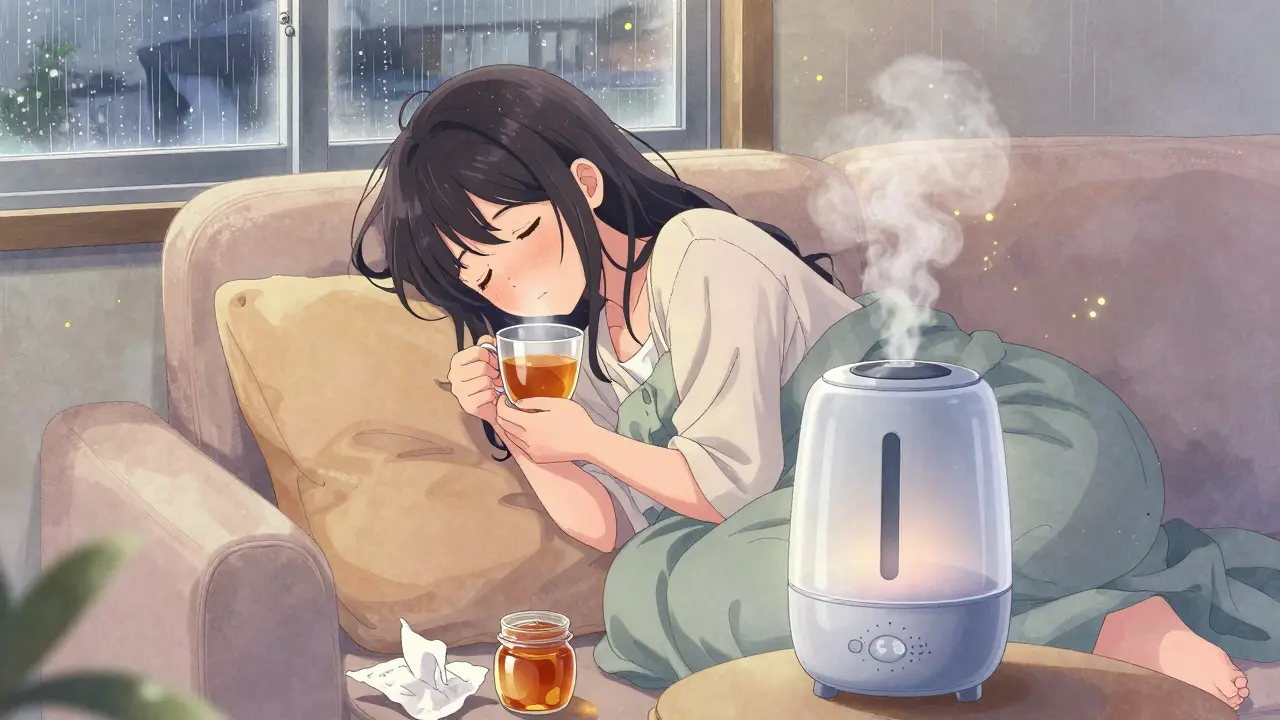
Most people think a bad cough means they need antibiotics. But if you’ve been sick with a cough for a week or two, and your doctor says it’s acute bronchitis, you’re probably better off skipping the pills. In fact, antibiotics won’t help in 90 to 95% of cases. That’s because acute bronchitis is almost always caused by a virus - the same ones that give you the common cold or the flu. Your body will clear it on its own. The real challenge? Managing the cough that lingers for weeks while avoiding treatments that don’t work - or worse, hurt you.
What Exactly Is Acute Bronchitis?
Acute bronchitis is an inflammation of the bronchial tubes - the airways that carry air to your lungs. It starts suddenly, usually after a cold or upper respiratory infection. The main symptom? A cough. It might bring up clear, white, yellow, or even green mucus. You might feel tired, have a low-grade fever, or feel a little tight in your chest. But if you don’t have a high fever, fast breathing, or sharp pain when you breathe, you likely don’t have pneumonia. That’s important, because doctors use those signs to tell the difference.
It’s not a serious illness for most healthy adults. But it’s incredibly common. About 5% of adults get it every year in the U.S. That’s around 10 million doctor visits annually. And the cough? It sticks around. Studies show that half of people are still coughing after 10 days. One in four still have it at two weeks. And 1 in 10 are coughing at three weeks. That’s normal. It doesn’t mean you’re getting worse. It just means your airways are healing slowly.
Why Antibiotics Won’t Fix Your Cough
Antibiotics kill bacteria. They don’t touch viruses. And since 9 out of 10 cases of acute bronchitis are viral, antibiotics are useless here. But they’re still prescribed way too often. In 2022, over half of patients with bronchitis still got an antibiotic prescription - even though guidelines have said not to for over 20 years.
Why does this happen? Because patients expect them. And doctors feel pressured to do something. But here’s the truth: antibiotics don’t make you feel better faster. A major review of 9 studies involving over 5,600 people found that antibiotics only shortened the cough by about 0.6 days - less than half a day. That’s not worth the risk.
What are the risks? Antibiotics cause side effects in about 1 out of every 14 people. That means stomach upset, diarrhea, rashes, or yeast infections. Worse, every time you take an antibiotic unnecessarily, you help create superbugs - bacteria that no longer respond to treatment. The CDC says respiratory infections like bronchitis are responsible for 46 million unnecessary antibiotic prescriptions every year in the U.S. That’s a huge part of why we’re losing the fight against antibiotic resistance.
What Actually Helps With the Cough?
Since antibiotics don’t work, the goal is to make you more comfortable while your body heals. And there are real, science-backed ways to do that.
- Honey - It’s not just a home remedy. A 2018 study with 355 children found honey worked as well as over-the-counter cough medicine and better than nothing at all. For adults, take 1 to 2 teaspoons as needed. But never give honey to babies under 1 year old - it can cause botulism.
- Dextromethorphan - This is the active ingredient in many cough syrups like Robitussin DM. Studies show it can slightly reduce cough frequency. The typical adult dose is 15 to 30 mg every 6 to 8 hours, not to exceed 120 mg in 24 hours. It’s not magic, but it can help you sleep.
- Hydration - Drink plenty of water. It thins the mucus so it’s easier to cough up. Aim for 8 to 10 glasses a day. Warm tea or broth helps too.
- Humidifiers - Dry air irritates your airways. A cool-mist humidifier in your bedroom can ease coughing at night. If you don’t have one, breathe steam from a bowl of hot water (keep your face 12 inches away, cover your head with a towel, and don’t let kids do this unsupervised).
- Pain relievers - If you have a sore throat or body aches, use ibuprofen (Advil) or acetaminophen (Tylenol). Stick to the label: no more than 3,000 mg of acetaminophen a day if you have liver problems.
What doesn’t work? Guaifenesin (Mucinex) - studies are mixed. Inhaled inhalers like albuterol? Only help if you’re wheezing - and only about 1 in 3 people with bronchitis are. Antibiotics? Already covered. And never give codeine or hydrocodone cough medicines to children under 12 - the FDA banned them for safety reasons.

When Should You Worry?
Most of the time, acute bronchitis is harmless. But there are signs you need to see a doctor:
- Cough lasting more than 3 weeks
- Fever over 100.4°F (38°C)
- Coughing up blood
- Shortness of breath or wheezing that gets worse
- Weight loss without trying
- History of lung disease like asthma or COPD
If you’re over 65, have a weak immune system, or smoke, you’re at higher risk for complications. Don’t wait - get checked.
Why Do Doctors Still Prescribe Antibiotics?
It’s frustrating, right? You’ve read the guidelines. You know antibiotics don’t help. So why do 50% of patients still get them?
The answer isn’t about lazy doctors. It’s about patient expectations. Many people believe a cough means infection - and infection means antibiotics. When a patient walks in asking for a prescription, the doctor feels pressure to comply. Some even give a delayed prescription - a paper you take home with instructions to fill it only if symptoms don’t improve in 48 to 72 hours. That reduces unnecessary use without making patients feel ignored.
Studies show that when doctors spend just 2 minutes explaining why antibiotics won’t help - and offer a real plan for symptom relief - patients are much less likely to demand them. One trial found that using a simple 5-question survey to check patient expectations cut antibiotic requests by 32%.

What’s Changing in 2025?
There’s progress. Antibiotic prescribing for bronchitis has dropped from 74% in 2010 to 51% in 2022. But it’s still too high. The American Academy of Family Physicians has set a goal: reduce inappropriate prescriptions to under 20% by 2026.
They’re using a simple framework called the “5 Ds”:
- Delay - Wait 48 hours before prescribing antibiotics, if at all.
- Document - Write down why antibiotics aren’t needed in the chart.
- Discuss - Explain the natural course of the illness: “Your cough might last 2 to 3 weeks. That’s normal.”
- Direct - Give clear advice on what to do instead: honey, fluids, rest.
- Decision support - Use tools like patient handouts or digital prompts to help guide the conversation.
Researchers are also testing new options. A big NIH-funded trial is studying ivy leaf extract - a natural remedy - to see if it reduces cough better than a placebo. Results are expected soon.
Bottom Line: Let Your Body Heal
Acute bronchitis is annoying. It can last longer than you want. But it’s not dangerous for most people. Antibiotics won’t speed up recovery. They only add risk. The best treatment? Rest. Fluids. Honey. Humidifiers. Patience.
It’s okay to feel frustrated when your cough won’t go away. But remember: your body is doing the work. You don’t need a pill to fix it. You just need time - and the right support.




There are 8 Comments
Andrea Di Candia
It’s wild how we’ve been trained to think medicine = pills. But sometimes, the body just needs quiet and honey. I remember coughing for 23 days after a cold last winter and being terrified I had something worse. Turns out? My lungs were just doing their job. Letting go of the need to ‘fix’ everything with drugs was the real healing.
Also, honey. Always honey. Even if it’s just a spoonful before bed. It’s like a tiny hug for your throat.
bharath vinay
Antibiotics are a scam. Big Pharma knows they don’t work for viruses but they keep pushing them because people are stupid. Doctors are just enablers. The real reason you’re still coughing? Toxins in your air, glyphosate in your food, or 5G messing with your immune system. Nobody talks about the real causes. They just hand out honey like it’s a placebo. It’s all controlled.
Dan Gaytan
THIS. 🙌 I had bronchitis last winter and my doctor actually sat down and explained all this to me - no antibiotics, just honey, steam, and rest. I was skeptical at first, but by day 10, my cough was already fading. No side effects, no stomach issues, just… healing.
Also, humidifiers are magic. I got a cheap one from Target and it felt like my lungs finally breathed again. Thank you for writing this - it’s the kind of info we need more of.
Usha Sundar
Still coughing. Still tired. Still mad.
claire davies
I’m British and we’ve got a whole folklore around this - ‘breathe in the steam, drink the ginger tea, wrap up like a burrito, and wait for the cough to run its course.’ We don’t rush to the chemist for antibiotics unless it’s a proper chest infection. Funny how the US, with all its medical tech, still clings to the ‘pill for everything’ mindset.
My mum used to say, ‘If your cough’s got a personality, it’s not pneumonia.’ And honestly? That’s the best advice I’ve ever heard. Let the cough be a dramatic actor, not a medical emergency. Honey, rest, and a good Netflix binge - that’s the NHS of the home.
Wilton Holliday
Big shoutout to doctors who take the time to explain this. It’s not easy saying ‘no’ when someone’s suffering. But when you give them a real plan - honey, fluids, humidifier - they leave feeling heard, not dismissed.
I’ve seen patients come back weeks later saying, ‘I didn’t take any meds, and I’m fine.’ That’s the win. You didn’t cure them - their body did. You just gave them permission to trust it.
Abby Polhill
From a clinical epidemiology standpoint, the antibiotic prescribing rate for acute bronchitis remains a persistent deviation from guideline-concordant care, with significant implications for antimicrobial stewardship. The 5D framework demonstrates structural and behavioral leverage points that align with the transtheoretical model of behavior change, particularly in the precontemplation and contemplation phases of patient decision-making. The delayed prescription strategy functions as a commitment device that mitigates demand-side pressure while preserving patient autonomy. Future interventions should integrate AI-driven clinical decision support tools to reduce cognitive load on providers during high-volume encounters.
Bret Freeman
Let me guess - you’re one of those people who thinks ‘natural remedies’ are science. Honey? Steam? Please. I’ve been coughing for three weeks and I’m not some hippie. I want a REAL prescription. If antibiotics don’t work, then why do they even exist? Someone’s lying. Either the CDC is lying, or my doctor is lying. I’m not falling for this ‘let your body heal’ nonsense. I paid for this visit - I want a pill.
Write a comment
Your email address will not be published. Required fields are marked *