
When you pick up a generic pill at the pharmacy, you expect it to work just like the brand-name version. But what you don’t see is the strict, often invisible system keeping those labels exactly the same - or at least, trying to. The U.S. Food and Drug Administration (FDA) doesn’t just approve generic drugs for safety and effectiveness. It also demands that their labeling matches the original brand drug down to the last comma. This isn’t about branding. It’s about safety, consistency, and legal obligation.
Identical Labeling Is the Rule - Not the Exception
Under Section 505(j)(2)(A)(v) of the Federal Food, Drug, and Cosmetic Act, generic drug makers must submit an Abbreviated New Drug Application (ANDA) that proves their product is bioequivalent to the Reference Listed Drug (RLD). That means the active ingredient, strength, dosage form, and route of administration must be the same. And so must the labeling. Every warning, every dosage instruction, every contraindication. If the brand-name drug says, "Avoid alcohol while taking this medication," so must the generic. No exceptions - unless the FDA explicitly allows one. The only permitted differences? The manufacturer’s name, address, and National Drug Code (NDC) number. Even font size or spacing can’t be changed unless it’s forced by packaging constraints. The FDA’s Division of Labeling Review (DLR) reviews about 1,200 ANDAs each year. In fiscal year 2024, labeling issues were the reason behind 37% of all complete response letters - the official notice that an application won’t be approved until fixes are made.The Physician Labeling Rule (PLR): Standardized Format for All
Since 2006, all prescription drug labels - brand and generic - must follow the Physician Labeling Rule (PLR). This isn’t just a suggestion. It’s a hard structure. Every label must include:- Highlights of Prescribing Information
- Recent Major Changes
- Indications and Usage
- Dosage and Administration
- Contraindications
- Warnings and Precautions
- Adverse Reactions
- Drug Interactions
- Use in Specific Populations (pregnancy, elderly, renal impairment)
- Clinical Pharmacology
- Nonclinical Toxicology
- References
- How Supplied/Storage and Handling
- Patient Counseling Information
Who Updates the Label? The RLD Holds All the Power
Here’s where things get risky. Brand-name drugmakers can update their own labels with new safety information using a "Changes Being Effected" (CBE) supplement. They can implement the change immediately and notify the FDA afterward. Generic manufacturers? They can’t. They must wait for the RLD to update first - then wait for the FDA to approve the RLD’s change - then wait for the FDA to approve their own identical update. This creates a dangerous lag. A 2024 study in JAMA Internal Medicine found that nearly 9,400 generic drugs - representing 89% of all prescriptions filled in the U.S. - face delays of 6 to 12 months in getting critical safety updates. Think about that: a patient takes a generic blood thinner. The brand version gets a new warning about a rare but deadly bleeding risk. The generic? Still says nothing. For a year. That’s not a glitch. It’s policy. The 2022 valsartan recall is a chilling example. Contamination risks were identified in the brand product. Generic makers couldn’t update their labels until the FDA approved the RLD’s change. Patients were left unaware, continuing to take pills with potential carcinogens because the label hadn’t caught up.
What Happens When the Reference Drug Disappears?
The FDA has approved over 1,200 drugs that are no longer on the market. Their RLDs have been withdrawn - but hundreds of generic versions still sell. What label do those generics use? The last one the RLD had. That’s a problem. Some of those labels are outdated by 10, 15, even 20 years. That’s where the MODERN Labeling Act comes in. Passed in 2020, it gave the FDA tools to fix this. Draft guidance released in January 2025 lets generic manufacturers update labels based on the most recent RLD version - even if that RLD is no longer sold. But it’s not automatic. Manufacturers must still apply, prove the change is scientifically sound, and get FDA approval. It’s progress - but slow, bureaucratic, and far from universal.Monitoring Changes Is a Full-Time Job
Generic drug companies don’t just wait for the FDA to call. They have to hunt for updates. The FDA’s Drugs@FDA database is the official source. It lists 2,850 reference listed drugs as of January 2025, updated every Tuesday. Leading manufacturers assign 3 to 5 full-time regulatory staff per 50 approved products just to track these changes. Many subscribe to CDER’s email alerts for labeling updates in specific therapeutic areas. But even then, mistakes happen. An FDA audit in October 2024 found that 17% of RLD entries in Drugs@FDA had temporary mismatches with the Orange Book - the official list of approved generic equivalents. That means a manufacturer could be following the wrong label. One wrong update. One missed warning. One patient harmed.Electronic Labels and QR Codes: The New Normal
In 2025, the FDA mandated that medication guides - those small booklets that come with prescriptions - must include a URL or QR code linking directly to the current FDA-approved labeling. The link must use HTTPS. The document must be in PDF. No redirects. No login walls. Just a direct, secure path to the official text. This isn’t just convenience. It’s accountability. Pharmacists and patients can now verify the label themselves. No more relying on outdated paper inserts. No more guessing if the label changed last month.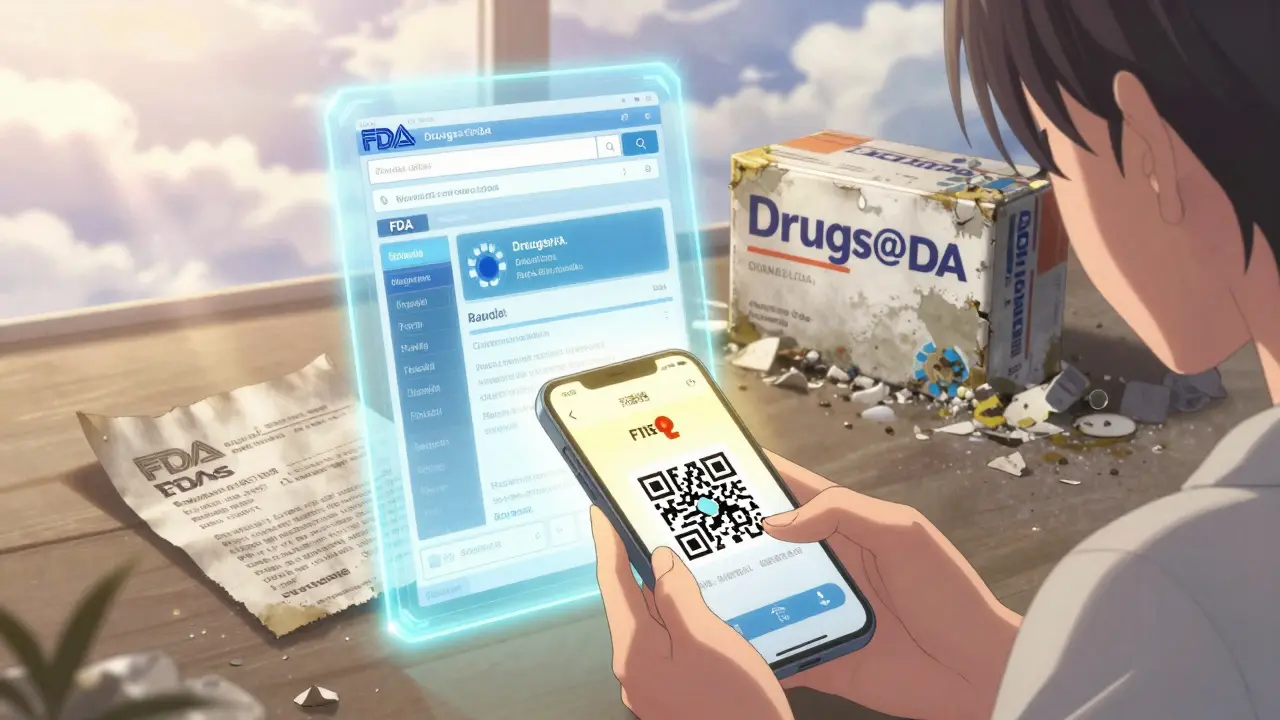
The Cost of Getting It Right
Labeling compliance isn’t cheap. It makes up 18-22% of total ANDA maintenance costs. Small generic manufacturers spend an average of $147,500 per product annually just to keep labels updated. Large ones - with more resources and automation - spend closer to $89,200. Teva, Viatris, and Sandoz - the top three generic makers - each have dedicated labeling teams of 50 to 120 people. The FDA is pushing for more automation. By Q3 2025, it plans to launch a Next Generation Generic Drug Labeling System using AI to detect changes in RLD labels and auto-notify generic manufacturers. Beta testing starts in April 2025. But until then, someone - usually a human - has to check every Tuesday.Why This System Still Exists
You might ask: Why not let generic manufacturers update their own labels when new safety data emerges? The FDA’s answer: consistency. If every generic has the same label, doctors and pharmacists don’t have to guess. Patients get the same warnings, no matter which pill they get. That’s the theory. But the reality? Millions of patients are getting outdated or incomplete safety information. Experts like Dr. Robert Temple, former deputy director at CDER, call this an "unacceptable safety gap." Dr. Janet Woodcock, former FDA deputy commissioner, admitted the tools exist - but implementation is messy. The FDA has proposed rules to fix this - allowing generics to update labels independently in urgent safety cases. But as of January 2025, those rules are still pending.What This Means for You
If you take generic drugs - and you probably do - you’re relying on a system that prioritizes uniformity over speed. It’s efficient for regulators. It’s cost-effective for the system. But it’s not always safe for patients. Here’s what you can do:- Check the label on your prescription bottle. Does it match the most recent version you can find on Drugs@FDA?
- If you’re unsure, ask your pharmacist for the latest FDA-approved labeling - they can pull it up on the FDA website.
- Use the QR code on your medication guide. Scan it. Verify the date.
- Report any discrepancies. The FDA’s MedWatch system lets patients and providers flag unsafe or outdated labels.
Do generic drugs have to have the same label as the brand-name version?
Yes. Under FDA regulations, generic drugs must have labeling that is identical to their Reference Listed Drug (RLD), with only a few exceptions: the manufacturer’s name, address, and National Drug Code (NDC) number can differ. All safety information, dosage instructions, warnings, and contraindications must match exactly.
Can generic drug manufacturers update their labels independently?
No. Unlike brand-name manufacturers, who can update safety labels using a "Changes Being Effected" (CBE) supplement, generic manufacturers must wait for the RLD to update first. Then they must submit their own identical update and wait for FDA approval. This can delay critical safety information by 6 to 12 months.
What is the Physician Labeling Rule (PLR)?
The Physician Labeling Rule (PLR), implemented in 2006, requires all prescription drug labels - brand and generic - to follow a standardized 24-section format. This includes Highlights, Recent Major Changes, Indications, Dosage, Warnings, Adverse Reactions, and more. Generic drugs must adopt the PLR format whenever the RLD does.
What happens if the brand-name drug is no longer sold?
If the Reference Listed Drug (RLD) is discontinued, the generic manufacturer must continue using the last approved label. However, under the MODERN Labeling Act (2020), the FDA now allows generics to update their labels based on the most recent RLD version, even if the RLD is no longer marketed - but only after FDA approval.
How do I know if my generic drug’s label is up to date?
Check the QR code or URL on your medication guide - it should link directly to the current FDA-approved label on Drugs@FDA. You can also ask your pharmacist to verify the label against the FDA’s official database. If the label looks outdated or differs from the brand version, report it to the FDA’s MedWatch system.
Are electronic labels required for generic drugs?
Yes. As of 2025, the FDA requires all medication guides for prescription drugs - including generics - to include a secure HTTPS link or QR code that directs patients to the current FDA-approved labeling in PDF format. This ensures patients always have access to the most recent safety information.

There are 9 Comments
Dan Mack
The FDA is just covering for Big Pharma. Generic companies are forced to use outdated labels so the brand names can keep charging $500 a pill while the generics sit there with warnings from 2008. This isn't safety-it's control. They don't want you knowing the truth. The QR code? A distraction. Scan it and you'll still get the same lie.
Gloria Montero Puertas
Oh, for heaven’s sake. The Physician Labeling Rule? A masterpiece of regulatory elegance-standardized, systematic, and-dare I say-elegant in its rigidity. To suggest that generics should be permitted to deviate even marginally is to invite chaos: a pharmacopeia of confusion, where one patient receives a warning about hepatic toxicity, and another, across the aisle, reads nothing at all. This isn’t bureaucracy-it’s bioethics in motion. The FDA’s consistency is not a flaw; it is the only bulwark against pharmaceutical anarchy.
Mike Berrange
They don’t even track the updates right. FDA’s own database has mismatches between Drugs@FDA and the Orange Book. 17%. That’s not a typo. That’s a death sentence waiting to happen. And who pays? The guy who doesn’t know how to read a QR code. The one who trusts the pharmacy. The one who doesn’t have time to audit the FDA’s spreadsheet. This isn’t a system. It’s a liability waiting to be named in a lawsuit.
Nicholas Urmaza
If you’re taking generics, you’re already saving money. Don’t complain about labeling delays. The system works. It’s not perfect, but it’s predictable. The FDA isn’t trying to kill you-it’s trying to keep every pill on the shelf identical so no one gets confused. Stop demanding faster updates and start taking responsibility for your own health. Check the label. Use the QR code. Stop being lazy.
Sarah Mailloux
Hey, just wanted to say-this is actually super important. I didn’t realize how much I was relying on outdated labels until I scanned the QR code on my blood pressure med and saw a new warning from last year. My pharmacist helped me update it. No drama. Just a quick check. If you’re on generics, do this. It takes two minutes. Could save your life. You’re not alone in this. We’re all in it together.
Nilesh Khedekar
Ah yes, the American way: make the poor person take the cheap pill, then make them responsible for reading the fine print on a QR code that might not even work on their Android phone. Meanwhile, the brand-name company in New Jersey just got a $2 billion payout. The FDA? They’re still waiting for Tuesday’s update. I’m from India-we have generics too. But we don’t pretend our system is perfect. We just admit it’s broken. America? We turn bureaucracy into a virtue.
Jami Reynolds
They’re not just delaying updates-they’re hiding them. The MODERN Labeling Act is a sham. It’s a PR move. The FDA doesn’t have the bandwidth to review every single update. They’re letting generic manufacturers submit changes, then sitting on them for months. That’s not oversight. That’s negligence. And if you think the QR code fixes anything, you’re delusional. Most patients don’t have smartphones. Or Wi-Fi. Or the patience to navigate federal databases. This is a public health crisis dressed up as regulatory precision.
RUTH DE OLIVEIRA ALVES
It is of paramount importance to recognize that the integrity of pharmaceutical labeling is not a matter of administrative convenience, but rather a foundational pillar of patient safety. The requirement for uniformity across brand and generic products ensures that healthcare providers may prescribe with confidence, and that patients-regardless of socioeconomic status-receive identical therapeutic guidance. While delays are regrettable, they are the consequence of a system designed to prevent fragmentation. To permit independent labeling would be to invite therapeutic discord, and that, I submit, is an unacceptable risk.
Crystel Ann
I just checked my generic metformin label. It’s from 2019. The QR code links to a 2024 update. I didn’t know. I’m glad I looked. Thanks for posting this. I’ll tell my mom to check hers too.
Write a comment
Your email address will not be published. Required fields are marked *