

When you walk into a pharmacy for a simple antibiotic or a life-saving injection, you expect it to be there. But for millions of Americans, that’s no longer a guarantee. As of April 2025, there are 270 active drug shortages in the U.S.-and nearly all of them are generic medications. These aren’t rare or obscure drugs. They’re the ones doctors reach for every day: vancomycin for infections, cisplatin for cancer, epinephrine for allergic reactions, and saline bags used in nearly every hospital room. When these drugs vanish, the ripple effect hits patients, nurses, and hospitals hard.
Why Are Generic Drugs So Often Out of Stock?
Generic drugs make up 90% of all prescriptions filled in the U.S., but they account for more than 70% of all shortages. Why? It comes down to money. These drugs are cheap. Manufacturers earn as little as 5-10% gross profit on them, compared to 30-40% for brand-name drugs. That’s not enough to cover the cost of maintaining high-quality, sterile production lines-or to invest in backup systems when something goes wrong.Many of these drugs are sterile injectables, which require special facilities that can’t be easily switched to other products. One broken machine, one contaminated batch, or one failed FDA inspection can shut down production for months. And because most generic drugs have only one or two manufacturers approved by the FDA, there’s no backup. If one plant goes offline, the entire country runs out.
Over half of all drugs used in the U.S. are made overseas, and about 80% of the active ingredients come from just two countries: China and India. These regions face their own challenges-regulatory delays, power outages, trade restrictions, and quality control issues. When a factory in India gets flagged for poor sanitation, it can take over a year to fix and get re-approved. Meanwhile, U.S. hospitals are left scrambling.
The Hidden Cost: Longer Shortages, Higher Prices
It used to be that a drug shortage lasted a few months. Now, the median duration is two years. That’s not a glitch. It’s the new normal. The FDA reports that 62% of shortages stem from manufacturing and quality problems-not because of demand spikes or raw material issues, but because the system is built to run on the edge.When a generic drug disappears, prices don’t stay low. They spike. The median price increase for a shortage drug is 14.6%. But here’s the kicker: the alternative drugs doctors have to use? Their prices can jump three times higher. A patient who needed a $2 generic antibiotic might now pay $60 for a substitute. Many simply don’t fill the prescription.
Independent pharmacies report that 43% of patients abandon their meds during shortages-not because they don’t need them, but because they can’t afford the alternatives. In hospitals, pharmacists spend an average of 15-20 hours a week just trying to find replacements, update electronic records, and reprogram automated dispensing machines. That’s time taken away from patient care.
Who Gets Hurt the Most?
It’s not just inconvenience. Real people are being put at risk.Cancer centers report that 67% have had to change chemotherapy regimens because cisplatin or other key drugs were unavailable. Nurses have to mix drugs from different vials, increasing the chance of error. Oncologists delay treatments. Patients get sicker. In one case, a patient with leukemia had to wait six weeks for a critical drug because the only U.S. supplier had a quality issue. That delay cost her a chance at remission.
Even routine care suffers. Vancomycin, used to treat deadly infections like MRSA, has been out of stock for over eight months in many hospitals. Pharmacies are forced to use less effective, more expensive alternatives-and sometimes, those alternatives cause more side effects. One pharmacist on Reddit wrote: “We’re giving patients drugs we know are inferior because we have no choice.”
Chronic pain patients are also caught in the crossfire. Opioid shortages mean people with legitimate pain are being denied refills. Emergency rooms see more visits from patients whose pain has spiraled out of control. It’s not just about access-it’s about safety.
Manufacturing Is Shrinking, Not Growing
You might think more companies would jump in to fill the gap. But the opposite is happening. Between 2015 and 2024, the number of FDA-registered generic drug manufacturing facilities in the U.S. dropped by 22%. The top 10 manufacturers now control 60% of the market-up from 45% a decade ago. That means less competition, less innovation, and more risk.Companies are leaving the generic market because it’s unprofitable. Why invest in a new sterile line if you’re competing with factories overseas that produce the same drug for half the price? And when the FDA increases inspections and issues more citations-up 35% since 2020-smaller manufacturers can’t afford the fixes. They shut down.
The result? A system that’s dangerously concentrated. One plant in Ohio, one facility in India, one batch of raw material-and the whole country is out of a vital drug. There’s no redundancy. No safety net. Just thin margins and fragile supply chains.
What’s Being Done-and Why It’s Not Enough
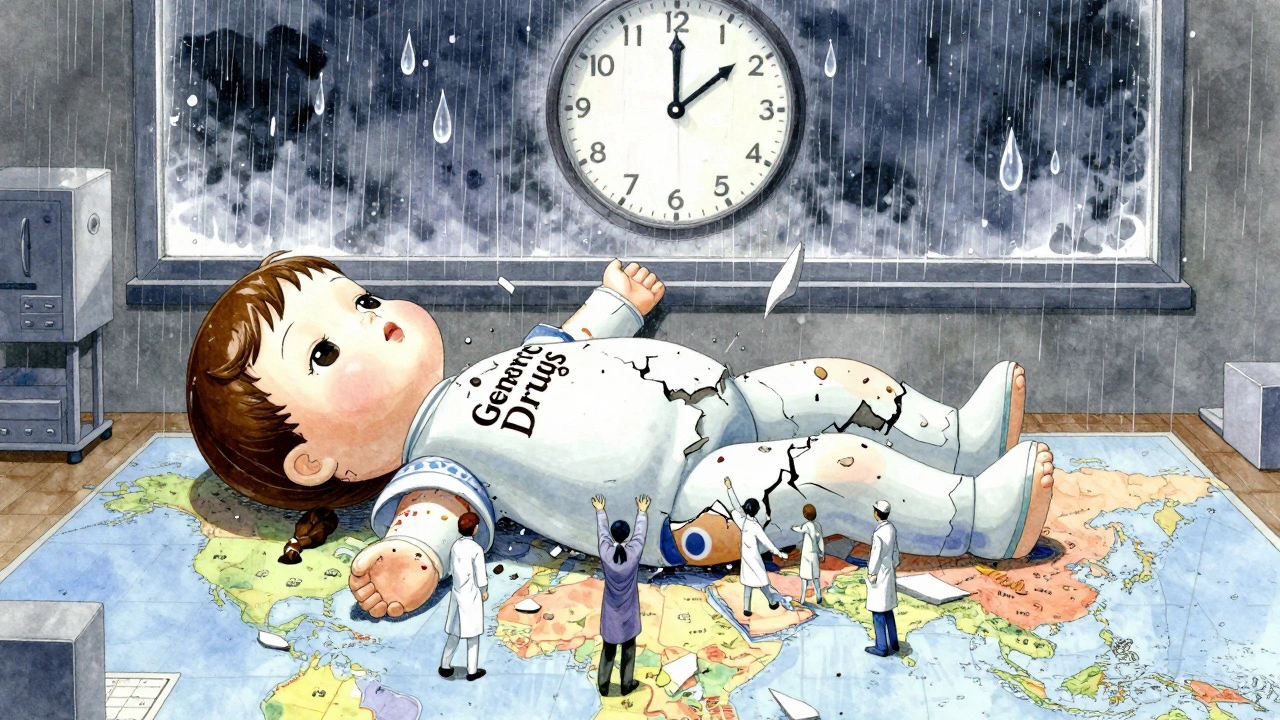
The FDA launched a Drug Shortage Task Force in 2024 with four goals: diversify manufacturing locations, create financial incentives for reliable supply, adopt advanced manufacturing tech, and improve early warning systems. Some progress has been made. After the 2020 executive order to prioritize essential medicines, shortages of those drugs dropped by 32%.But the core problem remains: the market rewards the lowest price, not the most reliable supply. As long as hospitals and insurers keep choosing the cheapest generic, manufacturers have no reason to invest in quality or backup capacity. FDA Commissioner Robert Califf told Congress in 2024: “The current market structure doesn’t incentivize reliability.”
Proposed tariffs on imported drugs could make things worse. If the U.S. slaps 50-200% tariffs on drugs from China or India, manufacturers will either raise prices or stop shipping altogether. Analysts warn this could trigger a new wave of shortages-especially for sterile injectables like chemotherapy drugs and IV fluids.
The Bottom Line: It’s Not a Supply Issue. It’s a System Failure.
Generic drug shortages aren’t random accidents. They’re the predictable result of a system designed to cut costs at every level-while ignoring the cost of patient safety. We’ve outsourced manufacturing, squeezed profit margins, and eliminated redundancy-all in the name of affordability. But when a life-saving drug disappears, the real cost isn’t measured in dollars. It’s measured in delayed treatments, preventable infections, and lives lost.Fixing this won’t happen with better tracking or more inspections. It will require changing how we pay for drugs. If we want reliable access to generics, we need to pay enough for them to be made safely, reliably, and in multiple places. Otherwise, the next shortage won’t be an exception. It’ll be the next routine emergency.

There are 11 Comments
Norene Fulwiler
I’ve seen this up close-my mom’s chemo got delayed for three months because cisplatin was gone. They gave her a substitute that made her sick for weeks. No one talks about how this isn’t just a ‘supply chain issue’-it’s a moral failure. We treat life-saving meds like commodities, not rights.
And yet, the same people screaming about ‘socialized medicine’ won’t lift a finger to fix this. Hypocrisy is the real drug shortage here.
William Chin
It is imperative to underscore, with the utmost formality and procedural rigor, that the systemic degradation of the U.S. pharmaceutical manufacturing infrastructure constitutes a direct violation of the public trust, as codified under Title 21 of the United States Code, Section 355, and further exacerbated by the absence of a federally mandated minimum inventory threshold for essential sterile injectables.
Furthermore, the reliance upon foreign jurisdictions for active pharmaceutical ingredients-particularly those with inconsistent regulatory oversight-constitutes an existential vulnerability, which, if left unaddressed, may precipitate a national health emergency of unprecedented magnitude.
Ada Maklagina
Vancomycin out again? Cool. Guess I’ll just drink bleach like in the 90s memes.
lol
Harry Nguyen
Oh no, the government isn’t forcing billionaires to pay more for antibiotics so we can afford to make them? How dare they prioritize profit over your grandma’s kidney infection.
Maybe if you didn’t demand $2 drugs, companies wouldn’t shut down. Try buying a name-brand for once. Or better yet, don’t get sick. That’s what evolution is for.
Katie Allan
This isn’t just about drugs-it’s about how we value human life in a market-driven society. We’ve optimized for cost, not care. And now we’re reaping what we’ve sown: fragmented supply chains, overworked pharmacists, terrified patients.
But here’s the quiet truth: we can fix this. We’ve done it before with vaccines during the pandemic. We mobilized. We funded. We prioritized.
Why not now? Because it’s cheaper to look away. Let’s stop pretending this is inevitable. It’s not. It’s a choice.
Deborah Jacobs
Picture this: a nurse in a rural hospital, 3 a.m., holding a vial of saline that’s been sitting in a fridge since 2022 because the new batch got quarantined for ‘microbial irregularities.’ She’s got three patients on drip, no backup, and the pharmacy’s out of anything that isn’t a $120 substitute.
Meanwhile, some suit in a boardroom in New Jersey is getting a bonus for ‘cost savings’ because they switched to the cheapest generic vendor in Gujarat-whose last inspection was three years ago.
And we call this capitalism? Nah. This is just a slow-motion massacre dressed up as fiscal responsibility.
People think ‘affordable’ means ‘cheap.’ But cheap ain’t affordable when it kills you.
James Moore
Let’s be clear, here: the entire pharmaceutical supply chain has been hijacked by a cabal of profit-driven oligarchs who have systematically dismantled domestic manufacturing capacity through a combination of regulatory capture, globalization fetishism, and the deliberate erosion of the American industrial base-yes, I said it-and now, when the system inevitably collapses under its own weight, we are told to ‘adapt’ or ‘be grateful’ for whatever substandard substitute is left over from the last batch of imported API that passed a cursory FDA scan.
Meanwhile, the FDA, which was once a bulwark of public safety, has become a bureaucratic paper-pusher, issuing citations with one hand while accepting industry-funded ‘consulting fees’ with the other-don’t pretend you didn’t know this was happening!
And let’s not forget the real villains: the insurance companies, who negotiate prices down to pennies, then turn around and charge patients $500 for a ‘non-formulary’ alternative-this is not a market failure, this is a crime.
And yes, I’ve read the FDA’s 2024 report, and I’ve also read the Congressional Research Service’s 2023 analysis on foreign dependency-and I’m telling you, we are one natural disaster away from a national health catastrophe, and nobody’s talking about it because the media is owned by the same conglomerates that profit from this mess.
Wake up.
It’s not a shortage.
It’s a siege.
Manish Shankar
As someone who has worked in pharmaceutical manufacturing in India for over 18 years, I can confirm that quality control standards have improved significantly in recent years, especially in facilities exporting to the U.S. and EU markets.
However, the pressure to reduce costs and meet tight delivery timelines often forces factories to operate at maximum capacity, leaving little room for maintenance or contingency planning.
It is not a matter of negligence, but of systemic imbalance: Western buyers demand low prices, while expecting European or American quality. This tension is real, and it is unsustainable.
True reform must involve fair pricing, long-term contracts, and joint investment in infrastructure-not tariffs or blame. We are not the enemy. We are part of the solution-if we are treated as partners, not pawns.
luke newton
My cousin died because he couldn’t afford the $80 substitute for his generic antibiotic. But hey, at least the CEO of the pharmacy chain got a $12 million bonus last year. So… win-win?
People like you who cry about ‘patient safety’ are the reason this system stays broken. You don’t want to pay more? Then stop complaining. You’re the problem.
Ali Bradshaw
There’s hope here. Small independent manufacturers in Ohio and Pennsylvania are starting to rebuild sterile lines-with community funding, grants, and local hospital partnerships.
It’s slow. It’s messy. But it’s real.
And if we start supporting these local efforts-buying from them, pressuring insurers to cover them-we can rebuild a safer system from the ground up.
It’s not about big pharma. It’s about community resilience.
Let’s not wait for Washington to save us. Let’s start saving each other.
an mo
Per the FDA’s 2024 Drug Shortage Report, 62% of shortages are attributable to GMP non-compliance, with 78% of those originating from Class 2 or 3 manufacturing deviations-primarily in aseptic processing and environmental monitoring.
Furthermore, the Herfindahl-Hirschman Index for the generic injectables market exceeds 1,800, indicating a highly concentrated oligopoly with minimal elasticity of supply.
Any policy intervention that fails to address the structural disincentives for capital reinvestment-namely, the 5-7% net margin ceiling imposed by Medicaid rebate rules and PBM formulary restrictions-is functionally inert.
Recommendation: Implement a tiered pricing model with a 20% premium for FDA-designated ‘Resilient Manufacturers’ with redundant capacity, and enforce mandatory 90-day buffer inventory requirements for Tier 1 critical drugs.
Otherwise, we’re just rearranging deck chairs on the Titanic.
Write a comment
Your email address will not be published. Required fields are marked *