
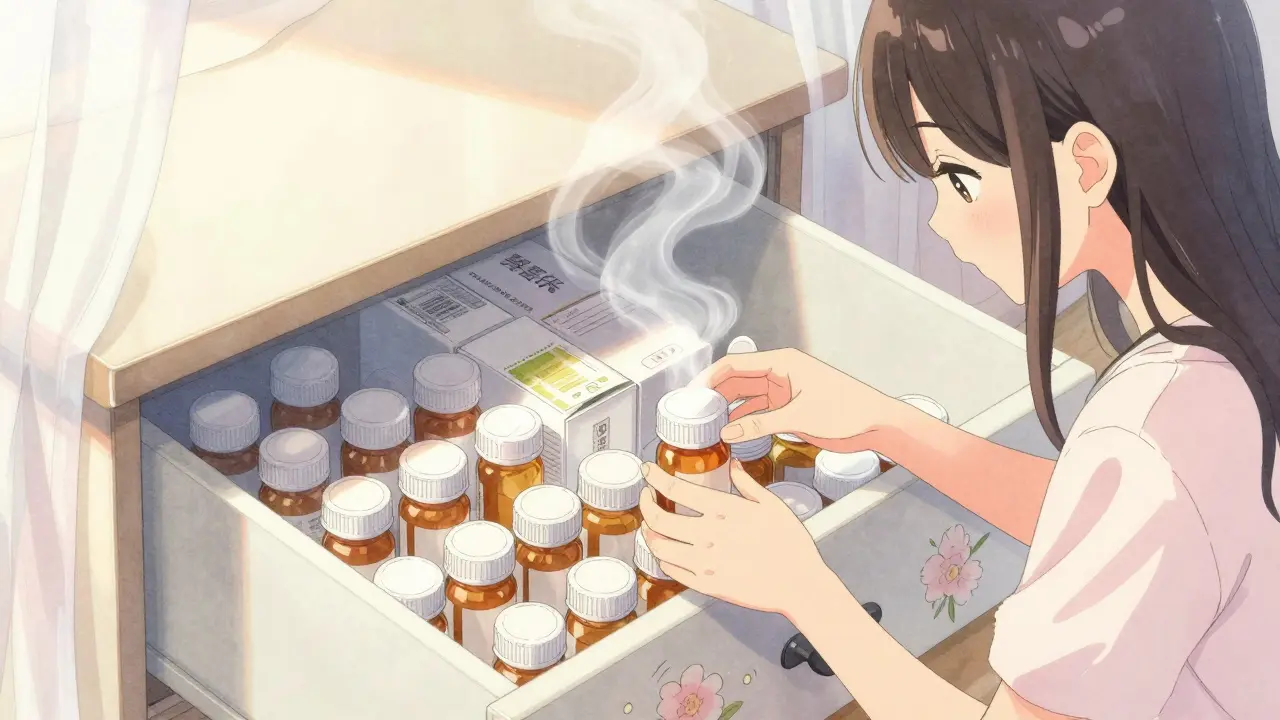
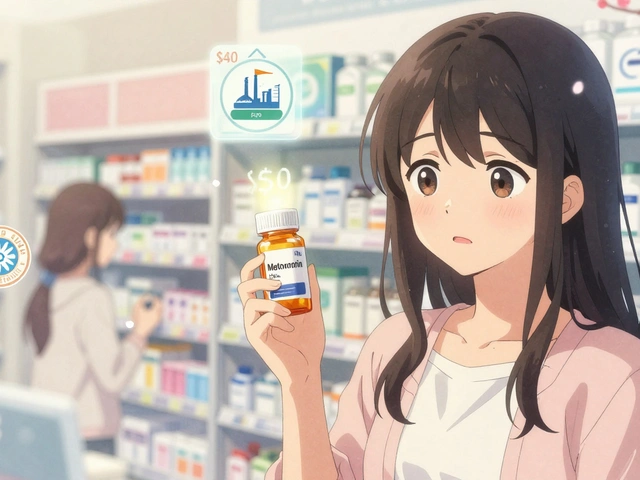
Most people throw away pills after the expiration date on the bottle. But what if those pills are still good? What if, with the right storage, they could last years longer-without losing effectiveness or becoming dangerous? The truth is, medication storage matters more than most realize. And it’s not just about keeping them out of reach of kids. It’s about keeping them stable, dry, cool, and protected from light.
Why Expiration Dates Aren’t Always the Full Story
Expiration dates aren’t random. They’re based on manufacturer testing under ideal conditions. But they’re also conservative. The U.S. government’s Shelf-Life Extension Program (SLEP), started in 1986, tested over 3,000 lots of medications from military stockpiles. The results? 88% of them were still safe and effective years after their labeled expiration date. Some, like naloxone and fentanyl, showed no loss in potency even after five extra years. This isn’t theoretical. In 2013, the FDA confirmed that certain lots of Tamiflu stored properly could be used up to 10 years past the printed date during a flu emergency. The same logic applies to doxycycline, used for anthrax exposure. These aren’t edge cases-they’re backed by real data. But here’s the catch: this doesn’t mean you should keep every pill you’ve ever bought. The rules change depending on the type of medicine.What Medications Last Longer-and What Doesn’t
Solid pills and capsules, like ibuprofen, aspirin, or antibiotics like amoxicillin, are the most stable. If stored right, many retain potency for years beyond expiration. That’s because they’re less exposed to moisture and air. Liquid medications? Not so much. Suspensions, syrups, and reconstituted antibiotics like amoxicillin-clavulanate break down faster. Once mixed with water, they can grow bacteria or lose strength in days or weeks. Even if the bottle says “use within 14 days,” that’s not a suggestion-it’s a safety limit. Insulin, vaccines, and biologics are even more fragile. These are made from proteins or living cells. Heat, shaking, or even brief exposure to room temperature can destroy them. No amount of careful storage will fix that. If your insulin looks cloudy or has particles, throw it out-even if it’s before the date. And never trust expired nitroglycerin. It’s used in heart emergencies. If it’s past its date, it might not work when you need it most. Same with epinephrine auto-injectors. Their effectiveness drops sharply after expiration.The Right Way to Store Medications at Home
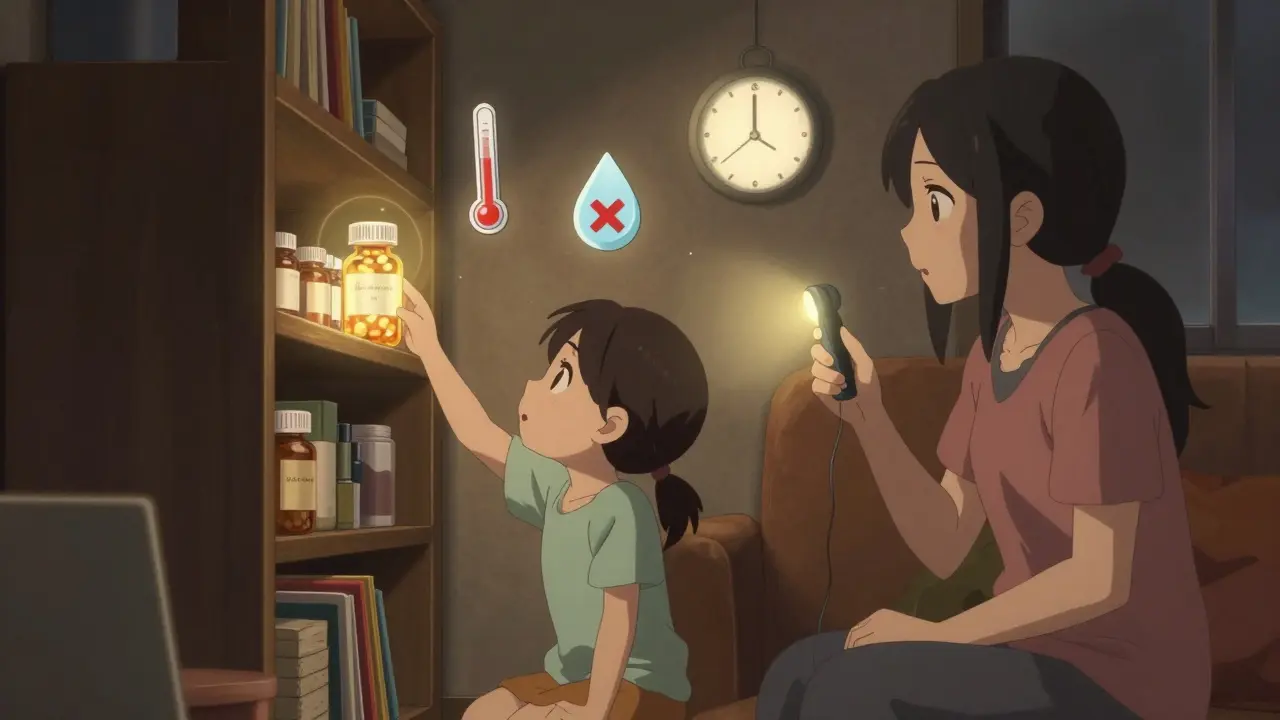
The biggest enemy of most medications? Moisture. That’s why the bathroom medicine cabinet is the worst place to keep them. Steam from showers, humidity from sinks-it all seeps into bottles and breaks down the active ingredients. Instead, store pills in a cool, dry place. A bedroom drawer, a kitchen cabinet away from the stove, or a dedicated shelf in a closet works. Keep them in their original containers. Those bottles are designed to block light and moisture. Don’t transfer them to pill organizers unless you’re using them for daily doses-and even then, only fill them for a few days at a time. Some medications need refrigeration. Check the label. If it says “store between 2°C and 8°C,” that means the fridge-not the freezer. Freezing can ruin tablets and liquids. Keep them on a middle shelf, not in the door where temperatures swing. Light-sensitive drugs, like certain antibiotics or thyroid meds, come in amber bottles for a reason. If yours came in a clear bottle, keep it inside its box. Sunlight breaks down chemicals. And always keep medications away from heat sources. Don’t leave them in a car on a summer day. Even a hot garage can push temperatures above 30°C-far beyond what most drugs can handle.
What Happens When Medications Expire?
You might think expired pills turn toxic. That’s a myth. Most don’t become poisonous. They just lose strength. A 10-year-old aspirin might not relieve your headache as well. A 5-year-old antibiotic might not fully kill an infection. But there are exceptions. Tetracycline antibiotics, if stored improperly or past expiration, can break down into compounds that damage the kidneys. That’s rare, but it’s why you should never take old tetracycline. Same with certain eye drops-once they’re contaminated, they can cause serious infections. The real risk isn’t poisoning. It’s treatment failure. Taking a weakened antibiotic could let an infection spread. Using an expired EpiPen during an allergic reaction could be life-threatening.How the Military and Hospitals Extend Shelf Life
The U.S. Department of Defense doesn’t just rely on luck. They test. Every lot of medication in their stockpile goes through chemical, physical, and microbiological testing. If it passes, the expiration date gets extended-sometimes by years. This isn’t guesswork. It’s science. They use sealed packaging: high-density polyethylene bottles with child-resistant caps, or blister packs with aluminum barriers. These stop air and moisture from getting in. Some facilities even use modified atmosphere packaging-filling the container with nitrogen instead of air to slow oxidation. They also track temperature. Every shipment is monitored. If a vaccine was exposed to 10°C for 12 hours, they know exactly how that affects its potency. That’s why their stockpiles last longer than yours. And they’re not alone. Hospitals are starting to use smart packaging-bottles with time-temperature indicators that change color if the drug got too warm. That way, pharmacists can tell at a glance whether it’s still good.What You Can Learn from the Experts
You don’t need a lab to store your meds safely. But you can borrow the principles:- Keep everything dry and cool-room temperature is fine, unless the label says otherwise.
- Avoid bathrooms, kitchens near the stove, and cars.
- Use original containers. Don’t mix pills in unlabeled containers.
- Check for changes: color, smell, texture. If a pill crumbles, smells odd, or looks different, toss it.
- For liquids and injectables, follow the “use by” date strictly.
- Don’t rely on expiration dates as absolute cutoffs for solid pills-but don’t assume they’re always safe either.
What About Emergency Situations?
During disasters-floods, fires, power outages-people often run out of meds. In those cases, taking an expired pill might be better than nothing. But only if:- It’s a solid oral medication (pill or capsule)
- It’s been stored properly
- It looks and smells normal
- It’s not insulin, epinephrine, or a critical life-saving drug
What to Do With Old Medications
Never flush pills down the toilet or throw them in the trash without mixing them with coffee grounds or cat litter first. That’s a safety hazard and bad for the environment. Instead, find a drug take-back program. Many pharmacies, hospitals, and police stations offer free disposal bins. In Australia, you can drop off old meds at any pharmacy that participates in the National Medicines Take-back Program. If that’s not available, mix pills with an unappealing substance-dirt, kitty litter, used coffee grounds-seal them in a plastic bag, and put them in the trash. Remove personal info from bottles before recycling them.Final Thoughts: Storage Is Your Best Defense
Expiration dates are a guide, not a guarantee. But how you store your meds is the real determinant of how long they’ll work. A well-stored aspirin might still be effective 10 years later. A poorly stored insulin might fail in a week. The goal isn’t to hoard old pills. It’s to make sure the ones you rely on don’t go to waste-and that they’ll work when you need them most.If you’re unsure about a medication’s condition, ask your pharmacist. They’ve seen what happens when things go wrong. And they can tell you whether it’s worth keeping-or if it’s time to replace it.


There are 9 Comments
Ethan Purser
Okay but like… if my grandma’s aspirin from 2012 still works, does that mean we’re all just victims of Big Pharma’s expiration date conspiracy? 🤔 I mean, I’ve got a bottle of ibuprofen that’s been in my nightstand since before I graduated high school. It’s not expired-it’s just… vintage. And I’m not dying. So who’s really lying here? The label? Or the system?
Cassie Tynan
Wow. So the government has been quietly extending drug shelf lives for decades while you and I are tossing perfectly good pills like they’re expired milk? Classic. I’m not mad, I’m just disappointed we’ve been conditioned to fear expiration dates like they’re radioactive. Meanwhile, the military’s got a whole lab system for this and we’re over here storing pills in the bathroom like it’s a sauna. 🙄
Rory Corrigan
my meds are in a drawer next to my socks and i’ve never had an issue 🤷♂️
Stephen Craig
Moisture is the real enemy. I keep all my pills in their original bottles inside a sealed plastic container with silica gel packs. No fridge, no bathroom. Just a cool, dark shelf. Works. Simple. No drama.
Connor Hale
I used to be the guy who threw everything out on the dot. Then I started asking my pharmacist. Turns out, most solid meds are fine. I keep my antibiotics, painkillers, and antihistamines for a few years past expiry if they look good. Not for insulin. Not for epinephrine. But for everything else? I trust the science more than the label. Just don’t be reckless.
Roshan Aryal
Let me guess-you’re all sitting there in your sanitized American bedrooms with your silica gel and amber bottles while the rest of the world survives on expired pills bought from street vendors in Mumbai. You think your fridge-stored ibuprofen is ‘safe’? Tell that to the 800 million people who’ve taken expired meds and lived. Your privilege is showing. The FDA doesn’t care about your drawer. They care about lawsuits. Real people? They use what works. Stop pretending your storage habits are moral superiority.
Clint Moser
Wait-did you know the FDA’s SLEP program was originally funded by DARPA? And that the military uses nitrogen-purged packaging to prevent oxidation? That’s not ‘storage’-that’s classified tech. And they’ve been using it since the Cold War. Why? Because they know the government’s been hiding this from the public to keep people buying new pills. This is a controlled supply chain manipulation. I’ve seen the redacted memos. The expiration date? It’s a GDP booster. You’re being played.
Ashley Viñas
It’s sweet that you’re all so concerned about your ‘vintage’ aspirin, but let’s be real-most of you are just trying to avoid spending $12 on a new bottle. I get it. But if your child has an allergic reaction and your EpiPen doesn’t work because you ‘thought it was fine,’ you won’t be having a philosophical debate. You’ll be at a funeral. Please, for the love of all that is holy, don’t be the reason someone dies because you were too cheap to replace a $300 auto-injector.
Justin Lowans
Thank you for this thoughtful, well-researched breakdown. I’ve worked in community pharmacy for 18 years, and I’ve seen too many people panic over expired meds-or worse, cling to them dangerously. The truth is in the middle: most pills are fine, but some are life-or-death. Always check with your pharmacist. They’re not just dispensing-they’re protecting. And if you’re storing meds in the bathroom? Please. Just… don’t. Your body will thank you.
Write a comment
Your email address will not be published. Required fields are marked *