
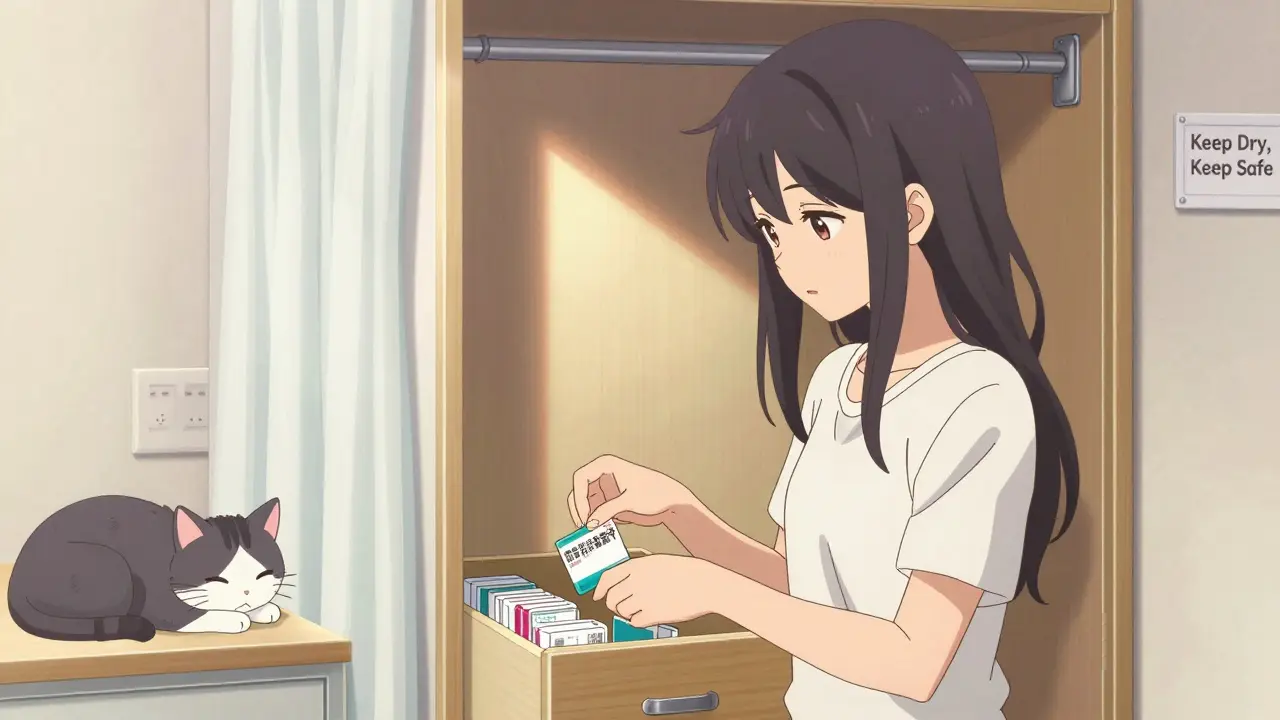
Keeping medications out of the wrong hands and out of the water supply isn’t just a good idea-it’s a safety requirement. Every year, millions of unused pills sit in bathroom cabinets, kitchen drawers, or medicine chests, quietly posing risks to children, pets, and the environment. In Australia, as in many countries, improper storage and disposal of prescriptions is a quiet public health issue. You might think flushing an old painkiller or tossing a bottle in the trash is harmless. It’s not. And there’s a better, safer way.
Where to Store Medications (And Where Not To)
Your medicine cabinet isn’t the best place for prescriptions. Humidity from showers, heat from sunlight, and fluctuating temperatures can break down active ingredients, making pills less effective-or even dangerous. The ideal storage is a cool, dry place, away from direct light. A locked drawer in a bedroom closet or a high shelf in a hallway cabinet works better than the bathroom.
For controlled substances-like opioids, benzodiazepines, or stimulants-locking them up isn’t optional. These drugs are targeted for misuse, and even a single pill can be fatal if taken by someone it wasn’t prescribed for. A small, lockable medication box (available at pharmacies or online) is a simple, affordable solution. Keep it out of reach of kids and teens, even if you think they’re responsible.
Temperature matters too. Most pills are fine at room temperature (between 20°C and 25°C), but some biologics, insulin, or liquid antibiotics need refrigeration. Always check the label. If it says "store in the fridge," don’t freeze it. Freezing can destroy the medicine. And never leave pills in a hot car or a sunny windowsill. Heat degrades potency.
What Happens When You Flush or Toss Pills?
You’ve probably heard not to flush meds down the toilet. But why? Because pharmaceuticals don’t break down easily in wastewater systems. Even modern treatment plants can’t fully remove them. Studies show trace amounts of antidepressants, birth control, and antibiotics show up in rivers, lakes, and even drinking water supplies. In the U.S., improper disposal contributes to nearly 250 million pounds of pharmaceuticals entering waterways every year. Australia’s water systems face similar pressures.
Throwing pills in the trash seems safer-but it’s not. Curbside trash gets picked up, sorted, and often ends up in landfills where rainwater can leach chemicals into groundwater. Pets or wildlife can dig through trash and get sick. Children might find them. The EPA estimates that 5% to 10% of all pharmaceutical waste is classified as hazardous, meaning it can harm ecosystems if not handled properly.
The Best Way to Dispose: Take-Back Programs
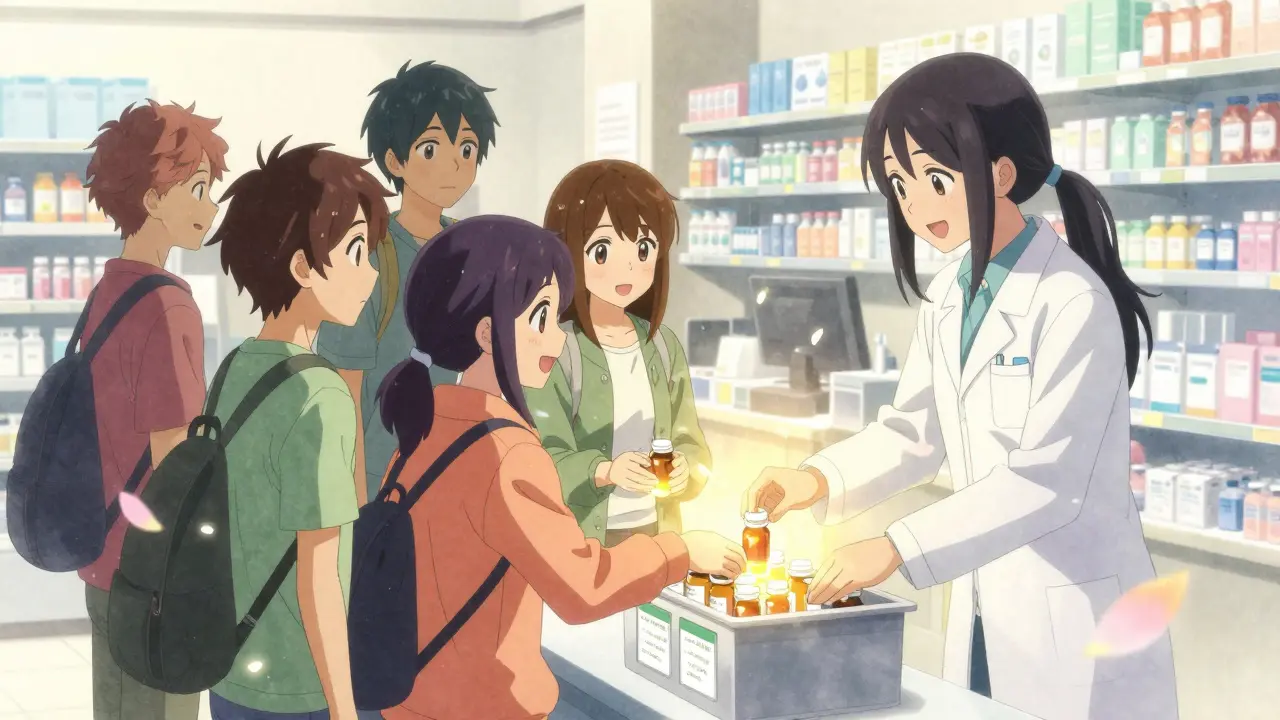
The safest, most responsible way to get rid of unused or expired medications is through a drug take-back program. In Australia, these are offered by pharmacies, hospitals, and sometimes local councils. The National Drug Take Back Day, held twice a year, is the easiest way to drop off pills. But you don’t have to wait for that day. Many pharmacies have permanent collection bins-just ask the pharmacist.
These programs accept almost everything: pills, patches, liquids, inhalers-even needles (in sealed containers). No questions asked. No need to remove labels. Staff handle the rest, sending medications to licensed incineration facilities that destroy them safely. Since 2010, take-back programs in the U.S. have collected over 14 million pounds of medication. Australia’s network is growing fast, with over 1,000 permanent drop-off points nationwide as of 2025.
What If There’s No Take-Back Option?
If you can’t get to a drop-off site, here’s what to do:
- Remove pills from their original bottles.
- Crush or dissolve them (if they’re not controlled substances).
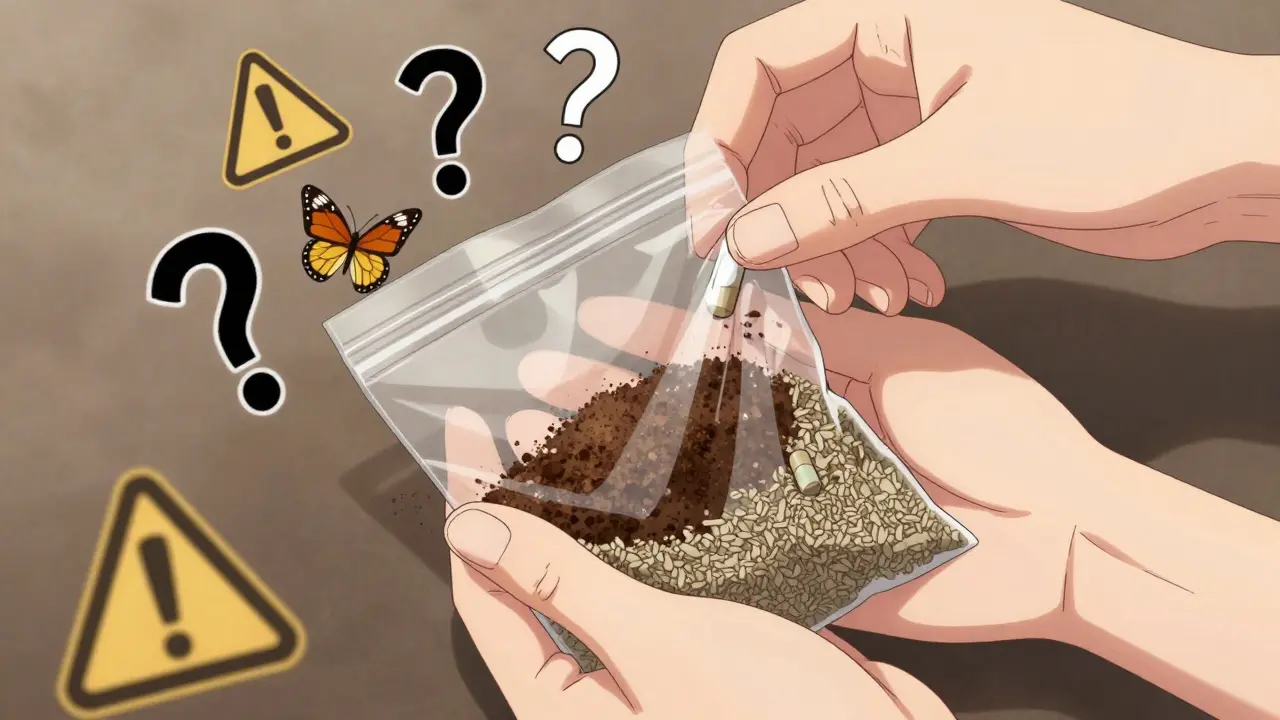
- Mix them with something unappetizing-used coffee grounds, cat litter, or dirt.
- Place the mixture in a sealed plastic bag or container.
- Scratch out or remove your name and prescription info from the empty bottle.
- Put the sealed container in your regular household trash.
This method reduces the chance of someone finding and using the drugs. It also keeps them from leaching into soil or water. The FDA says this approach cuts environmental contamination by 99.8% compared to flushing.
There’s one exception: the FDA’s flush list. A small number of highly dangerous drugs-like certain opioids and sedatives-are so risky if misused that flushing is actually the safest option if you can’t get to a take-back site. These include fentanyl patches, oxycodone, and alprazolam. Check the FDA’s current list or ask your pharmacist. If your medicine is on it, flush it. No waiting.
Controlled Substances: A Special Case
Drugs like morphine, oxycodone, Adderall, or Xanax are tightly controlled. You can’t just drop them into a pharmacy bin like other meds. In Australia, only authorized collection points-usually hospitals or police stations-can take these. Many pharmacies won’t accept them because of legal restrictions. If you have unused controlled substances, call your local pharmacy or health department. They’ll tell you where to go. Don’t try to dispose of them yourself. Improper handling can lead to legal trouble or accidental overdose.
Why This Matters Beyond Your Home
Improper disposal doesn’t just affect your family. It affects everyone. Hospitals and clinics generate tons of pharmaceutical waste, and since 2019, strict rules (like the EPA’s Subpart P) require them to separate hazardous waste, keep records for three years, and use licensed transporters. Failure to comply can mean fines or shutdowns. In the U.S., healthcare facilities now spend an average of $12,500 a year just on proper disposal-costs that are slowly trickling down to patients.
But the real cost is environmental. Pharmaceuticals in waterways harm fish, frogs, and other aquatic life. Studies show male fish developing female traits because of estrogen from birth control pills. Antibiotics in rivers encourage drug-resistant bacteria. These aren’t distant problems-they’re happening now, and they’re preventable.
What You Can Do Today
Start with a quick audit. Go through your medicine cabinet. Pull out anything expired, unused, or no longer needed. Don’t wait until it’s cluttered. Make disposal part of your routine, like checking smoke alarms.
- Keep meds locked and dry.
- Use take-back programs whenever possible.
- If no take-back is available, mix pills with coffee grounds or cat litter before trashing.
- Flush only if your drug is on the FDA’s flush list.
- For controlled substances, contact your local health authority.
It’s not complicated. It’s not expensive. And it’s one of the simplest ways to protect your family and your community.
Can I just throw old pills in the trash without mixing them with anything?
It’s not recommended. Unmixed pills in the trash can be found by children, pets, or scavengers. They can also leach into soil and water over time. Mixing them with coffee grounds, cat litter, or dirt makes them unappealing and harder to recover. It’s a small step that makes a big difference.
Are all pharmacies required to take back medications?
No. While many pharmacies offer take-back bins, it’s not mandatory in Australia. Some only accept non-controlled substances. Always call ahead to ask what they accept. Hospitals, police stations, and local council events are more reliable for controlled drugs.
What if I have liquid medications or patches?
Liquid medications can be poured into a sealable container and mixed with absorbent material like sawdust or kitty litter. Patches (like fentanyl or nicotine) should be folded in half with the sticky sides together, then placed in the same mixture before disposal. Never flush liquids down the sink unless explicitly instructed.
Is it safe to keep expired medications?
Most pills are still safe after expiration, but their effectiveness drops over time. Some, like insulin or epinephrine, can become dangerous if used after expiry. If you’re unsure, don’t risk it. Dispose of anything expired, especially if it’s been stored in poor conditions (heat, moisture).
Why can’t I flush all my meds if I don’t have a take-back option?
Flushing sends chemicals into water systems that aren’t designed to remove them. Even small amounts of drugs can affect wildlife and enter drinking water supplies. Only flush if your medication is on the FDA’s flush list-those are the ones that pose immediate danger if misused. For everything else, the coffee grounds method is far safer for the environment.

There are 15 Comments
matthew runcie
shannon kozee
Shaun Wakashige
Solomon Kindie
Natali Shevchenko
Johny Prayogi
Nicole James
Nishan Basnet
Casey Tenney
Sandy Wells
Bryan Woody
Chris Dwyer
Desiree LaPointe
Jackie Tucker
Thomas Jensen
Write a comment
Your email address will not be published. Required fields are marked *