
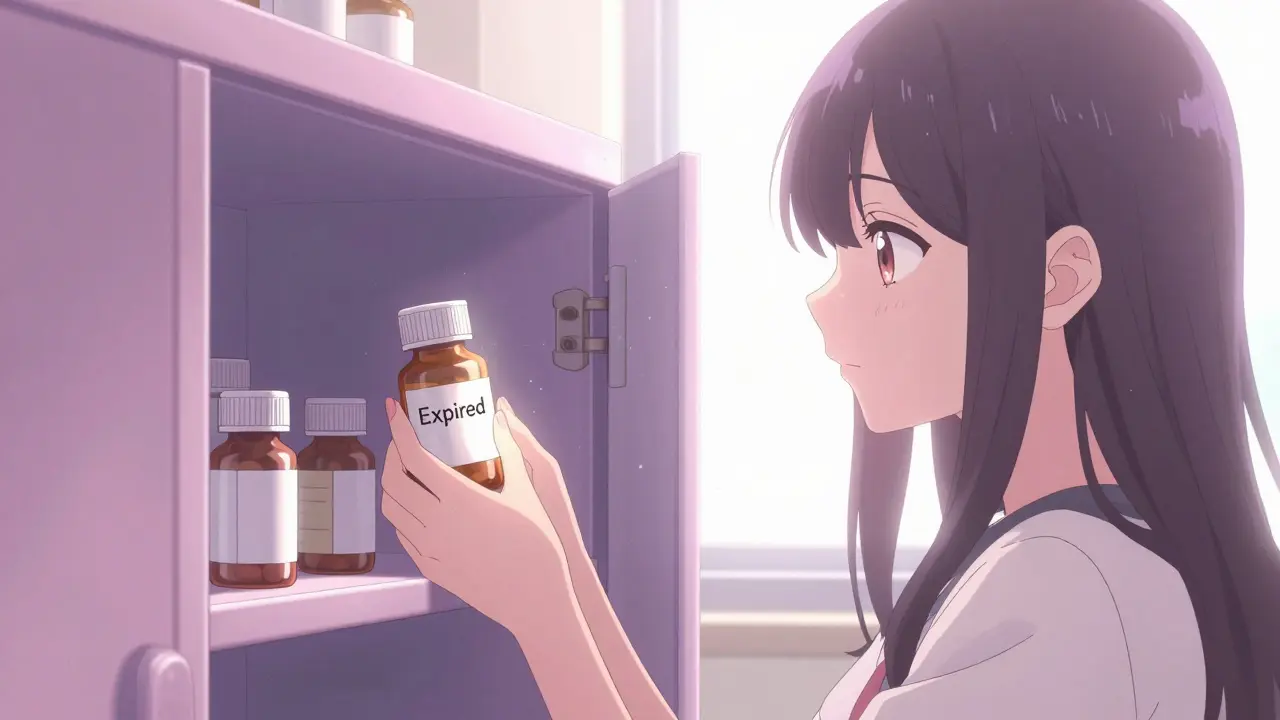
Most of us have a drawer or cabinet full of old pills-antibiotics from last year’s cold, painkillers from a back injury, maybe even that anxiety med you stopped taking months ago. We look at the date printed on the bottle and think: expired. But what does that really mean? Is it dangerous to take? Or is it just a marketing trick to make us buy more?
Expiration Dates Are About Potency, Not Poison
The expiration date on your medication isn’t a "use-by" label like milk. It’s not saying the pill turns toxic after that day. What it actually means is this: the manufacturer guarantees the drug will work as intended-fully potent, safe, and stable-up until that date, if stored properly.
The U.S. Food and Drug Administration (FDA) has required expiration dates on all prescription and over-the-counter drugs since 1979. That rule came from a simple goal: make sure you get the full benefit of the medicine you paid for. To set that date, companies test the drug under controlled conditions-heat, humidity, light-to see how long the active ingredient stays above 90% of its labeled strength. That’s the standard. Once it drops below that, the expiration date hits.
It’s not about safety in the way you might think. Most pills don’t become poisonous. They just become weaker. But here’s the catch: for some medications, even a little less potency can be dangerous.
When Expired Drugs Are Risky-And When They’re Not
Not all expired medications are created equal. Some degrade quickly and dangerously. Others sit there like time capsules, still working decades later.
High-risk categories include:
- Nitroglycerin (for chest pain): Loses half its potency in just 3-6 months after opening. If you’re having a heart attack and your spray doesn’t work, that’s not a near-miss-it’s life or death.
- Insulin: Starts breaking down if it’s been above 8°C for too long. Even before expiration, improper storage can make it useless. Diabetics who rely on it can end up in the hospital if it’s degraded.
- Liquid antibiotics (like amoxicillin suspension): Once mixed, they’re good for only 14 days. After that, bacteria can grow in the liquid, and the drug stops killing infections. Taking it won’t hurt you-but it won’t help either.
- Epinephrine auto-injectors (EpiPens): These lose 15-20% potency per year after expiration. In anaphylaxis, that drop could mean the difference between saving a life and losing one.
- Warfarin: This blood thinner has a narrow safety window. If the dose is off-even slightly-due to degradation, you could bleed internally or form dangerous clots.
On the other hand, many solid pills-like statins, antidepressants, or blood pressure meds-stay stable for years. A U.S. military study called the Shelf Life Extension Program (SLEP) tested over 3,000 lots of 122 different drugs. About 88% were still effective 15 years past their expiration date. Ciprofloxacin? Still 97% potent after 12 years. Amoxicillin? 94% after 8. Even aspirin and codeine held up.
So why does the FDA say not to use expired drugs? Because they’re not responsible for what happens after you take it home. The date is based on ideal storage: cool, dry, dark. Your bathroom? That’s a steam room. Your car in summer? A sauna. That changes everything.
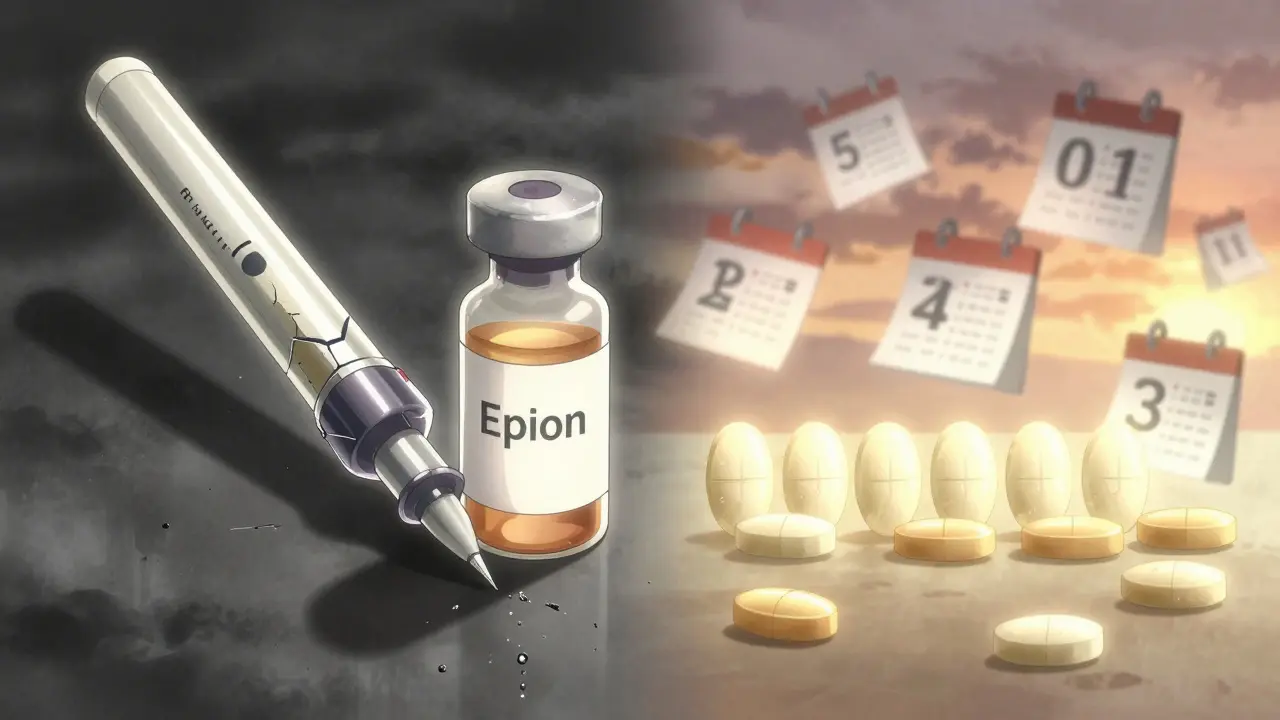
Storage Matters More Than the Date
Think of your medication like a smartphone battery. If you leave it in the sun all day, it dies faster-even if it’s brand new. The same goes for pills.
Medications stored at 30°C degrade 40-60% faster than those kept at 25°C, according to European guidelines. Humidity above 60% RH causes tablets to crumble, capsules to stick, and liquids to grow mold. That’s why your medicine cabinet above the sink is the worst place to keep anything.
Best storage practices:
- Keep meds in their original bottles-those caps are designed to block light and moisture.
- Store in a cool, dry place: a bedroom drawer, kitchen cabinet away from the stove, or even a sealed container in the fridge (if the label says it’s okay).
- Avoid bathrooms, garages, and cars.
- Check for signs of degradation: discoloration (white pills turning yellow), strange smells, crumbling texture, or crystals in liquids.
If it looks or smells off, toss it. No exceptions.
The Bigger Picture: Waste, Cost, and Policy
Every year, Americans throw away $765 billion worth of unused or expired medications. That’s more than the entire health budget of Australia. Most of it is perfectly good.
The military’s SLEP program saves $1.2 billion annually by extending expiration dates on stockpiled drugs. They don’t just guess-they test. And they’ve proven most drugs last far longer than labels suggest.
Now, the FDA is running pilot programs using Bluetooth-enabled sensors to track real-time storage conditions. Imagine a pill bottle that tells you: "I’ve been in a hot car for 48 hours-I’m now 12% weaker than my label says." That’s the future. But until then, we’re stuck with a one-size-fits-all date that ignores how you actually store your meds.
Pharmacies already do this. When they dispense a prescription, they put a "beyond-use" date on the label-usually one year for pills, 14 days for liquid antibiotics. That’s because once you open it, the clock starts ticking differently than when it was sealed in the factory.
What Should You Do?
Here’s a simple rulebook for real-life decisions:
- Don’t use expired drugs for life-threatening conditions-heart issues, seizures, anaphylaxis, infections needing antibiotics.
- For chronic conditions (like high blood pressure or depression), if the pill is only a few months past expiration and stored well, it’s likely still fine. But don’t rely on it long-term. Replace it when you can.
- Never use expired insulin, epinephrine, or liquid antibiotics. These aren’t worth the risk.
- Check the physical condition. If it looks wrong, throw it out-even if the date is still valid.
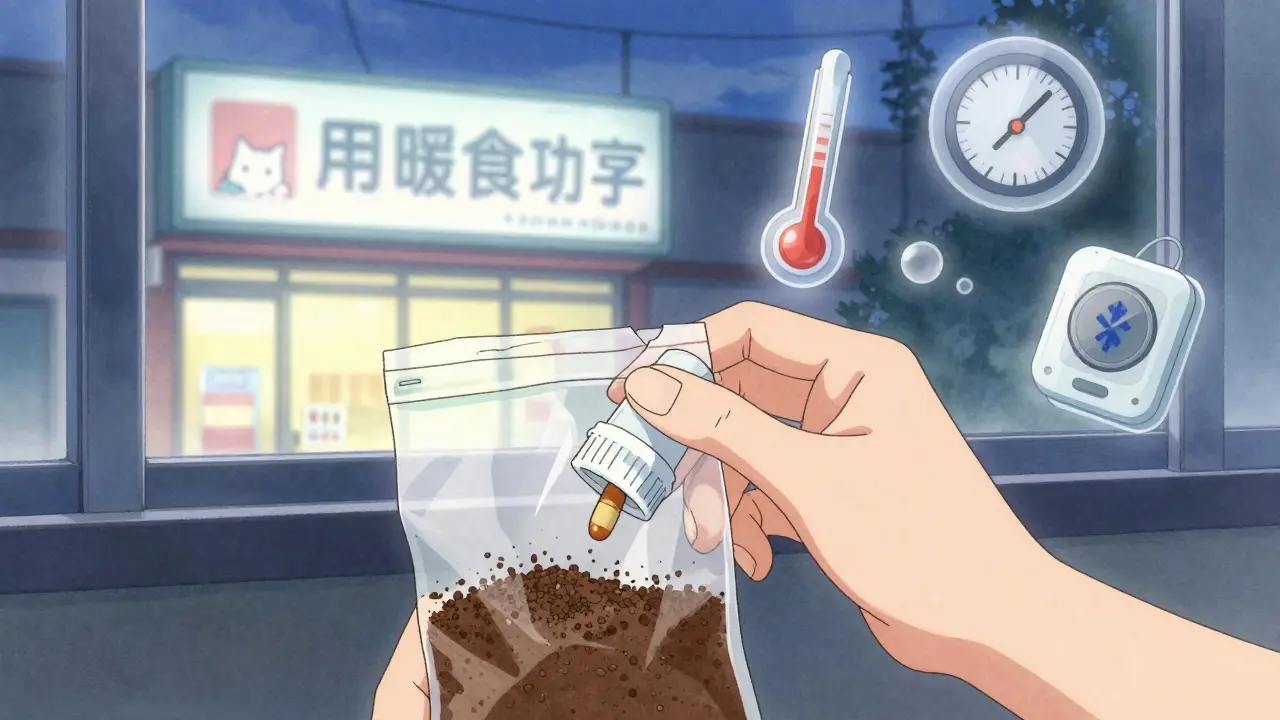
- Dispose safely. Don’t flush everything. Use a drug take-back program (like the DEA’s semi-annual events) or mix pills with coffee grounds or cat litter, seal them in a bag, and toss in the trash. Only flush if the label says to (like fentanyl patches).
There’s no shame in keeping a small supply of old meds on hand-especially if you live far from a pharmacy or have limited income. But know the risks. And when in doubt, call your pharmacist. They’re trained to answer this exact question.
Is the System Broken?
Yes-and no.
The expiration date system was designed to protect you. It works for the majority of cases. But it’s outdated. It doesn’t account for storage, doesn’t differentiate between drug types, and ignores real-world data proving many pills last far longer.
Research from the University of Utah shows machine learning can predict remaining potency with 89.7% accuracy based on storage history. Countries like Canada and the UK already allow expiration extensions for emergency stockpiles. The U.S. is starting to catch up.
For now, treat expiration dates as a safety net-not a guarantee. Be smart. Be informed. And when it comes to your health, don’t gamble with what’s in your medicine cabinet.
Can expired medicine make you sick?
Most expired pills won’t make you sick-they just won’t work as well. But some, like liquid antibiotics or degraded insulin, can cause serious harm if they lose potency. Bacteria can grow in expired liquids, and underdosed epinephrine during an allergic reaction can be fatal. Always avoid expired drugs for critical conditions.
How long after expiration are pills still good?
It depends. Solid pills like statins or antidepressants often stay potent for years past expiration if stored properly. The military’s SLEP study found 88% of drugs tested were still effective 15 years later. But liquids, insulin, and nitroglycerin degrade fast-sometimes within months. Never assume all expired meds are safe.
Should I throw away expired medicine?
For high-risk drugs like insulin, epinephrine, or antibiotics, yes-immediately. For stable pills like ibuprofen or blood pressure meds, you can use them short-term if they look and smell normal and were stored properly. But replace them as soon as possible. When in doubt, dispose of them safely through a take-back program.
Is it safe to store medicine in the bathroom?
No. Bathrooms are humid and hot, especially after showers. Humidity above 60% RH causes pills to break down faster. Store medicines in a cool, dry place like a bedroom drawer or kitchen cabinet away from heat sources.
What should I do with expired pills?
Don’t flush them unless the label says to (like fentanyl patches). Mix pills with coffee grounds or cat litter, seal them in a bag, and throw them in the trash. Use a DEA Drug Take-Back Day (held twice a year) or find a local drop-off site. Many pharmacies also accept expired meds for safe disposal.

There are 13 Comments
Alex Smith
So let me get this straight - we’re all supposed to throw away perfectly good pills because some bureaucrat decided a date on a bottle is gospel? Meanwhile, my grandpa’s 1998 aspirin still works like a charm, and he’s got more sense than half the FDA.
Madhav Malhotra
In India, we’ve been using expired meds for decades - especially in villages where pharmacies are miles away. My aunt took her BP pills 3 years past expiry and she’s still walking fine. Storage matters more than the date. If it doesn’t look or smell weird, it’s probably fine. 🙏
Priya Patel
YES. I keep my antidepressants in a sealed jar in my closet. They’re 18 months past expiry. I’ve felt zero difference. Why are we being scared into wasting money? 💊❤️
Christian Basel
Let’s not conflate pharmacokinetic stability with regulatory compliance. The expiration date isn’t a suggestion - it’s a liability boundary. The 88% SLEP statistic is cherry-picked from controlled environments. Real-world storage? Chaotic. You’re not a lab rat.
Roshan Joy
My cousin in Kerala uses expired insulin because she can’t afford new ones. It’s heartbreaking. We need policy changes, not just ‘be careful’ advice. Pharma companies profit from fear. 🤔
Michael Patterson
Okay but like… have you ever seen a pill that’s turned into a dusty crumb? Or a bottle that smells like wet socks? That’s not ‘potency loss’ - that’s biohazard. I’ve seen people take expired amoxicillin and get worse. So no, I’m not taking chances. Your grandma’s aspirin isn’t a public health model.
Matthew Miller
You people are idiots. You think you’re saving money? You’re gambling with your liver, your kidneys, your life. That ‘88% still work’ stat? It’s from a military program that tests drugs in climate-controlled vaults. You store yours next to your toaster. You’re not a scientist. You’re a liability.
Alfred Schmidt
WHY DO WE STILL TRUST THIS SYSTEM?!?!?! The FDA doesn’t even test most drugs after they’re sold!! The expiration date is a marketing tool!! I’ve got 10-year-old ciprofloxacin in my drawer - it’s still in the original bottle, dry, cool, dark - and I’m not throwing it out!! I’m not a guinea pig for Big Pharma!!
Priscilla Kraft
My pharmacist told me the same thing - if it’s a chronic med, looks fine, and was stored well, it’s probably okay for a few extra months. But never for EpiPens or insulin. And always check with a pro. 🙌
Sam Davies
Oh, so now we’re all amateur pharmacists because we read a blog post? Brilliant. Next you’ll be prescribing your own antibiotics based on a Reddit thread and a Google image of your pill’s color. Truly, the pinnacle of modern healthcare.
Jennifer Littler
The SLEP data is compelling, but the real issue is access. In rural America, people can’t just walk to CVS every 3 months. We need tiered expiration labels - not one-size-fits-all. Also, why don’t pharmacies offer free expiry checks? They know this stuff.
Jason Shriner
So… we’re supposed to trust the same system that gave us opioid crisis + Vioxx + fen-phen? Nah. I’m keeping my meds. If I die? At least I died on my own terms. 🤷♂️
Vincent Clarizio
Let’s be real - this whole expiration date system is a capitalist farce wrapped in pseudoscientific packaging. The FDA doesn’t care if your aspirin works after 12 years - they care that you buy new ones. The military’s SLEP program proves it: 88% of drugs are still potent past expiry. But if you’re a taxpayer, you’re not allowed to know that. Why? Because the pharmaceutical industry spends $20 billion a year lobbying to keep this nonsense alive. They don’t want you to know that your $50 bottle of blood pressure pills could last 15 years. They want you to panic, toss it, and buy another. And here’s the kicker - they’ve been doing this since the 1970s. The date isn’t science. It’s a sales tactic. You’re not just wasting money - you’re funding a system that profits from your fear. So go ahead - keep your 10-year-old statins. The real danger isn’t the expired pill. It’s believing the lie that you need to replace it.
Write a comment
Your email address will not be published. Required fields are marked *