
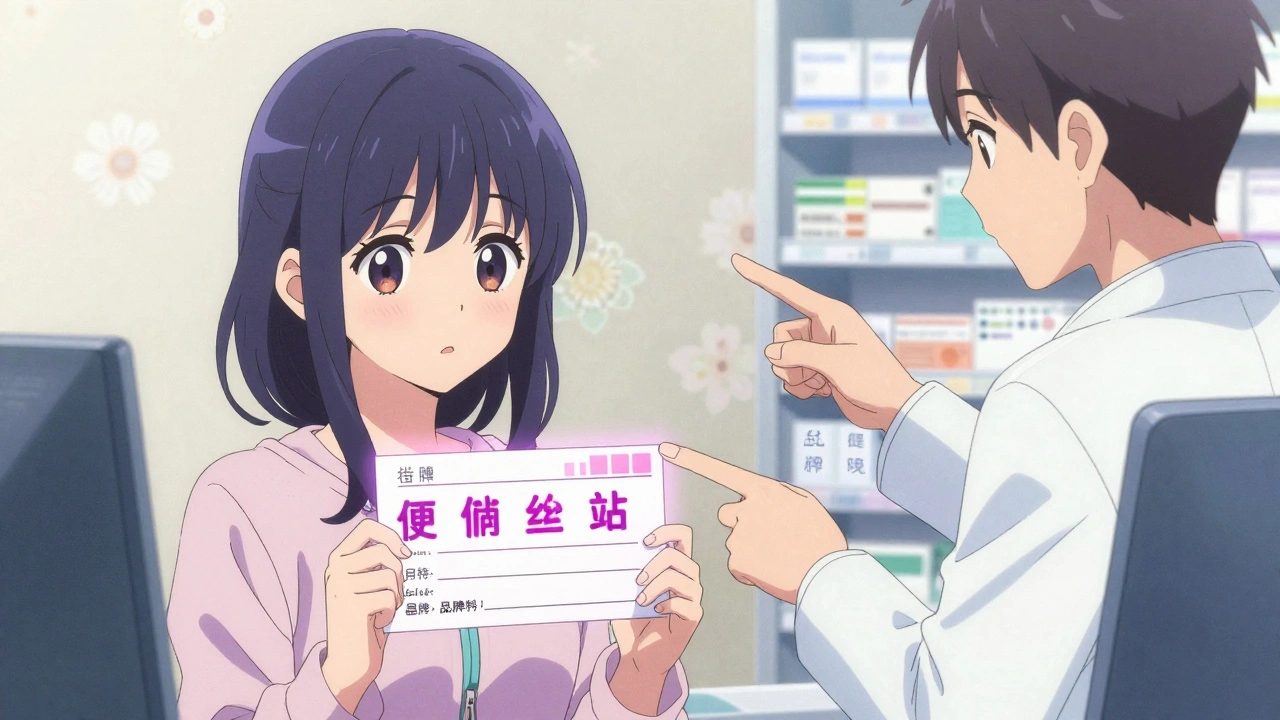
Every time you pick up a prescription, you’re handed a small piece of paper that could mean the difference between healing and harm. It’s not just a receipt - it’s a safety guide, a set of instructions, and sometimes, your only reminder of why you’re taking this medicine. But most people glance at it, rush out the door, and never really read what’s written there. And that’s dangerous.
Your Name Is on There for a Reason
Right at the top, you’ll see your full name. It seems obvious, but this isn’t just for show. Medication errors due to mix-ups happen more often than you think. In the U.S., about 1.5 million medication errors occur every year, and many of them are because someone grabbed the wrong person’s prescription. That’s why your name is printed in bold, clear letters. If it doesn’t match your ID, don’t take it. Ask the pharmacist to double-check. It’s not being difficult - it’s staying alive.
Brand Name vs. Generic Name - Know the Difference
You’ll see two names for your medicine. One is the brand name - like Abstral - and the other is the generic name - fentanyl. The brand name is what the company calls it when they sell it. The generic name is the actual drug inside. They’re the same thing. Many people think the brand name is stronger or better, but that’s not true. Generic drugs are required by law to work exactly the same. Knowing the generic name helps you recognize the medicine if you get it from a different pharmacy, or if your insurance switches your prescription. It also helps you avoid accidentally taking two versions of the same drug.
Dosage: How Much Is Too Much?
This part tells you how strong each pill, capsule, or drop is. For example: 100 micrograms per tablet. That’s the amount of active drug in one unit. If your doctor says take one tablet, you’re getting exactly 100 micrograms. If you take two, you’re getting 200. It sounds simple, but people mix this up all the time. Especially with liquids. A teaspoon (tsp) is 5 milliliters - not a random spoon from your kitchen. And if the label says 5 mg/mL, that means every milliliter has 5 milligrams of medicine. If you’re supposed to take 10 mg, you need 2 mL. Use the syringe or cup that came with the bottle. Never guess.
Instructions: When, How Often, and How
This is where most people get confused. The label might say: Take one tablet by mouth every 4 hours as needed for pain. That means you can take it up to six times a day - but only if you still have pain. It doesn’t mean take it every four hours whether you feel anything or not. Some labels say take with food - that’s to avoid stomach upset. Others say take on an empty stomach - because food can block absorption. And if it says at bedtime, don’t take it at 8 p.m. if you’re going to bed at midnight. Take it when you’re about to lie down. Always follow the exact wording. Don’t assume.
Expiration Date: It’s Not Just a Suggestion
Every prescription has an expiration date - usually 12 to 18 months after it was filled. That’s not when the medicine becomes poisonous. It’s when it starts losing strength. A pill that’s 6 months past its date might still work, but it’s not guaranteed. And some drugs, like insulin or liquid antibiotics, can break down into harmful substances after expiration. Never take expired medicine. If you’re not sure, bring it back to the pharmacy. They’ll dispose of it safely. And if you refill a prescription and the expiration date is way out in the future? That’s because the pharmacy printed the original date - not the refill date. Ask them to update it.
The Rx Number and Pharmacy Info
The Rx number is like your prescription’s ID. It’s unique to this specific order. If you call the pharmacy to ask about refills, they’ll need this number. If you get a new prescription from a different doctor, it’ll have a different Rx number. Don’t confuse them. The pharmacy’s name, address, and phone number are there so you can call if you have questions - like, “Is this supposed to make me dizzy?” or “Can I take this with my blood pressure pill?”. Also, your doctor’s name is printed there. If you’re unsure whether the medicine is right, you can call your doctor and say, “I got this prescription from your office - can you confirm it’s for [condition]?”
What Does This Medicine Even Do?
This is the part most labels still leave out - and it’s the most important. The reason you’re taking the medicine. Is it for high blood pressure? For depression? For a bladder infection? If it doesn’t say, ask. A 2020 FDA study found that 78% of patients took their meds wrong because they didn’t know why they were taking them. One woman in Melbourne told her pharmacist she was taking her thyroid pill every morning - but she thought it was for her headaches. She’d been taking it for three years. That’s how common this mistake is. More pharmacies are starting to add the indication - like “For high cholesterol” - right on the label. If yours doesn’t, request it. You have the right to know why you’re swallowing this pill.
The Appearance: Color, Shape, Imprint
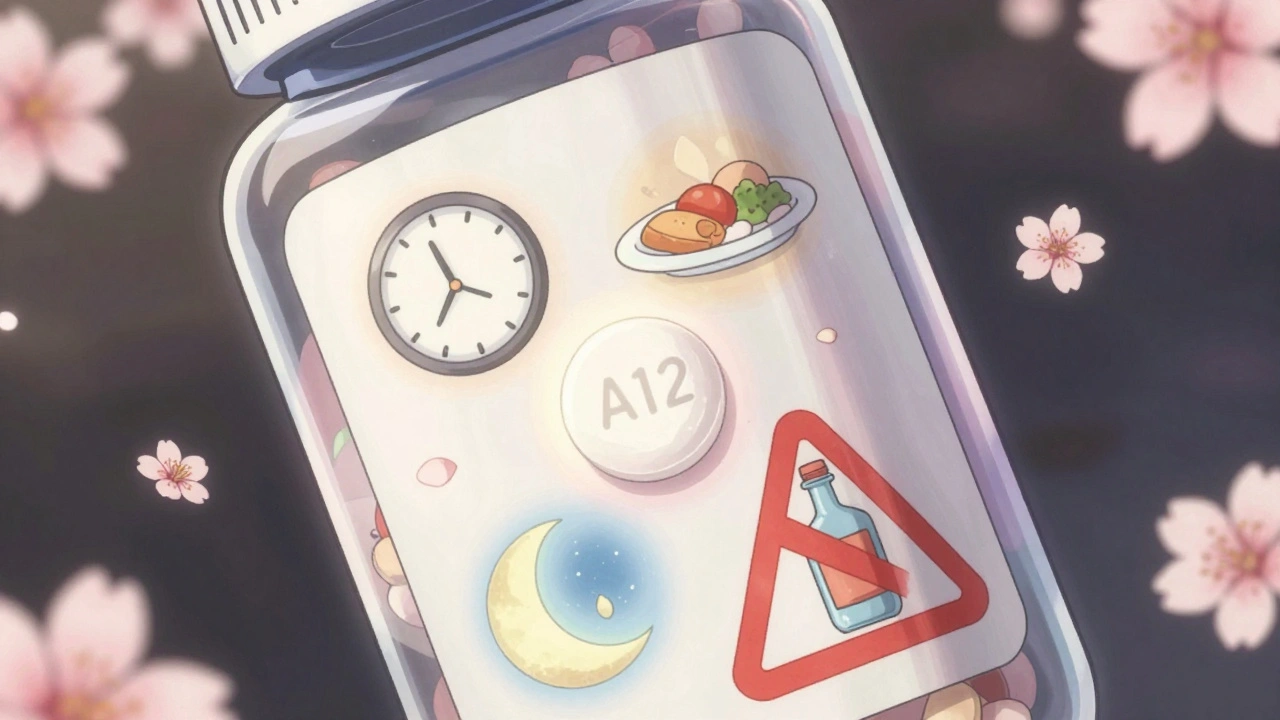
Some labels describe what the pill looks like: white, round, scored tablet with “A12” imprinted. Why does this matter? Because if you get a refill and the pill looks completely different - say, now it’s blue and oval - you might think it’s the wrong medicine. But sometimes, generic manufacturers change the shape or color. That’s legal. But you should still check. If the pill looks nothing like the last one and the label doesn’t explain why, call the pharmacy. Don’t assume it’s fine. Also, if you have trouble reading small print, ask for a large-print label. Many pharmacies offer it.
NDC Number: The Secret Code
You’ll see a 10- or 11-digit number - the National Drug Code (NDC). It’s not for you to remember. It’s for the system. Pharmacies, insurers, and the FDA use it to track exactly which drug, from which maker, in which package size, you got. It helps in recalls. If a batch of your medicine is found to be contaminated, they can find everyone who got it. You don’t need to do anything with this number - but if you’re ever in a hospital and they ask, “What’s the NDC?” - you can tell them it’s on the label.
Storage Instructions: Keep It Safe
Some medicines need to be kept cold. Others need to stay dry. The label might say: Store at room temperature (68°-77°F) or Refrigerate. If it says refrigerate, don’t leave it on the counter. Heat and moisture can ruin the medicine. Some pills break down faster in the bathroom because of steam. Don’t store them there. Keep them in a cool, dry place - like a bedroom drawer. And never leave them in a hot car. If you’re traveling, keep them in your bag, not the glove compartment.
Warnings: The Red Flags
This section might say: Do not take if pregnant, May cause drowsiness, or Avoid alcohol. These aren’t suggestions. They’re warnings. Taking a medicine you’re allergic to can kill you. Mixing certain drugs with alcohol can cause liver failure. Drowsiness can lead to falls or car crashes. If you see a warning, read it. If you don’t understand it, ask. Don’t skip it because it’s small print. That’s where the life-saving info lives.
What You Should Do Every Time You Get a New Prescription
Before you leave the pharmacy, check these five things:
- Is your name correct?
- Is the medicine name right - brand and generic?
- Is the dosage clear? (e.g., 10 mg, not just “take one”)
- Do the instructions make sense? (When? How often? With or without food?)
- Is there a reason listed for why you’re taking it?
If anything feels off - even a little - stop. Ask the pharmacist to explain it again. Use the “teach-back” method: say, “So just to make sure I got it - I take this once a day at night for my blood pressure, right?” If they nod, you’re good. If they hesitate, dig deeper.
What’s Missing - And What’s Coming
Right now, not all pharmacies include the reason for the prescription on the label. But that’s changing. In 2023, the U.S. Pharmacopeia proposed a rule that by 2025, every prescription label must include the indication. That’s because pilot programs in California and Massachusetts showed this one change alone could prevent 150,000 medication errors a year. The FDA is also pushing for pictograms - simple images showing how to take a pill, or when to avoid sun exposure. If your label doesn’t have them yet, ask for one. You’re not asking for a favor. You’re asking for safety.
Final Tip: Write It Down
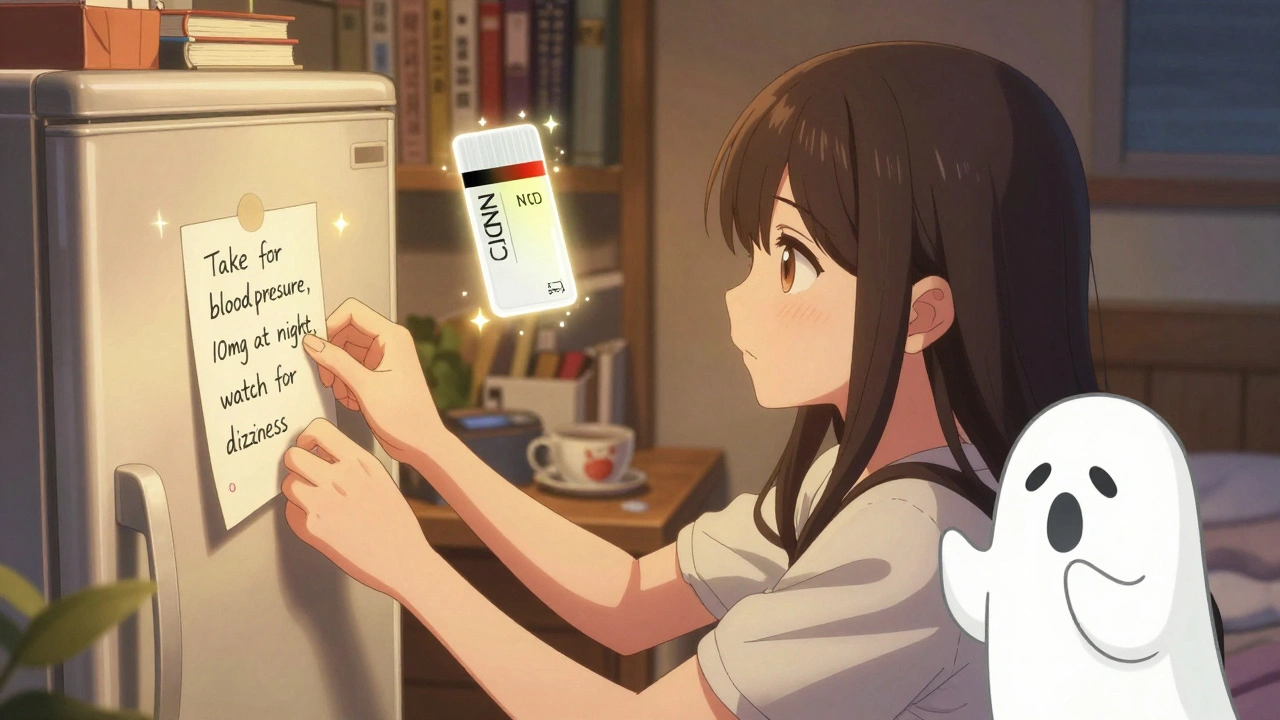
When you get home, take five minutes. Write down the five key points: name, dose, when to take it, why you’re taking it, and what to watch for. Stick it on your fridge. Put it in your phone. Share it with a family member. Medication errors don’t happen because people are careless. They happen because people forget. And when you’re tired, stressed, or sick, your memory isn’t reliable. Write it down. It’s the simplest, most effective way to stay safe.
What should I do if my prescription label looks different from last time?
Don’t assume it’s the same medicine. Check the name, dosage, and instructions. If the pill looks different in color, shape, or size, call the pharmacy. Generic versions can look different but still be correct. But if the name or dose changed without your doctor’s approval, that’s a red flag. Ask for confirmation.
Can I take my medicine after the expiration date?
For most pills, taking them a few months past the date won’t hurt you - but they may not work as well. For liquids, insulin, or antibiotics, never use them past expiration. They can break down into harmful substances. When in doubt, return it to the pharmacy. They’ll dispose of it safely.
Why doesn’t my label say why I’m taking this medicine?
Many pharmacies still don’t include the reason on labels due to outdated systems. But you have the right to ask for it. Say: “Can you please add the indication - like ‘for high blood pressure’ - to my label?” More pharmacies are doing this now, and by 2025, it will be required nationwide.
What if I can’t read the small print on the label?
Ask for a large-print label. Most pharmacies offer this for free. You can also request a verbal explanation or a pictogram guide. If you have vision problems, ask if they have a version with audio instructions or a QR code that links to a voice reading of the label.
How do I know if this medicine interacts with my other drugs?
Always tell your pharmacist every medication you take - including vitamins, supplements, and over-the-counter drugs. They run a check every time you pick up a new prescription. If you’re unsure, ask: “Does this interact with my blood pressure pill or my daily aspirin?” Never assume it’s safe just because your doctor prescribed it.
If you’re still confused after reading the label, don’t guess. Call your pharmacist. They’re trained to explain this stuff - and they won’t mind. It’s their job to keep you safe.


There are 13 Comments
Elliot Barrett
This whole thing is just common sense but nobody ever reads it. I once took my grandma’s blood pressure med by accident because I didn’t check the name. Ended up in the ER. Don’t be me.
Ajit Kumar Singh
In India we dont even get labels most times just a plastic bag with pills and a scribble on it in Hindi. I once took a painkiller thinking it was for fever and ended up in hospital for 3 days. Why is this so hard in the US too?
Maria Elisha
OMG I literally just threw out my last refill because the pill looked different. I thought I got scammed. Turns out it was just a different generic. Phew.
Andrea Beilstein
It’s fascinating how we treat medication like a black box. We swallow pills without understanding their purpose, their mechanism, their consequences. We outsource our health to strangers in white coats and then wonder why we’re confused when side effects hit. The label isn’t just instructions-it’s a contract between you and your body. And you’re the only one who can read it properly.
Why do we let systems dictate our understanding of our own biology? Because it’s easier than learning. Because we’re tired. Because we’ve been taught to trust authority over curiosity. But curiosity saves lives.
I used to take my thyroid med for migraines for two years. I didn’t know why I was taking it. I just trusted the script. When I finally asked, the pharmacist looked at me like I’d asked if the moon was made of cheese. But I learned. And now I write the reason on the bottle with a Sharpie. Because knowledge isn’t optional. It’s survival.
Olivia Portier
YESSS this is so important!! I work in a pharmacy and people just grab their scripts and run. I had a lady yesterday take her diabetes med at breakfast instead of bedtime because she thought 'as needed' meant whenever she felt tired. She almost passed out. Please please please read the label!! And if you can't read it, ASK!! We're not here to judge, we're here to help!! 😊
Asset Finance Komrade
Interesting. A 2020 FDA study found 78% of patients take meds wrong because they don't know why they're taking them. But the study sample size? Methodology? Control group? Was it peer-reviewed? Or just a survey of people who already read Reddit posts like this? The real issue isn't labels-it's systemic medical illiteracy. And this post, while well-intentioned, is just another performative nod to a problem that requires structural reform, not just better typography.
Also, why do we still use 'micrograms' instead of metric prefixes? We're in 2025. Let's evolve.
🫡
Jennifer Blandford
I CRIED reading this. My mom died because she took her heart med with grapefruit juice. The label didn’t say NOT TO. She didn’t know. She was 72. I swear to god if this saves one life, it’s worth every word.
My sister now writes everything on a sticky note. I’ve started putting my meds in a pill organizer with the reason written on each slot. I even made a little QR code that links to a voice recording of my pharmacist explaining it. My grandma thinks I’m crazy. I don’t care. I’m not losing anyone else.
Brianna Black
Let me just say this: If your pharmacy doesn’t include the indication on the label, demand it. Demand it loudly. Demand it in writing. Demand it with your whole damn soul. This isn’t a luxury. It’s a human right. And if they give you flak, ask to speak to the manager. And if they still refuse? Call your state board of pharmacy. I did. They changed their policy within two weeks. You have power. Use it.
Ronald Ezamaru
I’ve worked in pharmacies for 18 years. I’ve seen people take insulin like candy because they didn’t know it was for diabetes. I’ve seen people take antibiotics until they felt better, then stop-creating superbugs. I’ve seen people ignore warnings because the font was too small.
None of this is about intelligence. It’s about time, stress, fatigue, and the fact that we’re expected to be medical experts after a 9-minute doctor visit.
The label isn’t the problem. The system is. But this guide? It’s the best band-aid we’ve got. Share it. Print it. Tape it to your fridge. Do it for your mom. Do it for your kid. Do it for yourself.
Iris Carmen
so like i just got my new script and the pill was blue instead of white and i thought i got ripped off but then i checked the name and it was the same so i took it and now i feel weird but maybe its fine?? idk
Delaine Kiara
Let me tell you about my cousin. She took her antidepressant for a year thinking it was for her chronic fatigue. Turns out she was supposed to take it for anxiety. She didn’t know. Her doctor never told her. The label didn’t say. She didn’t ask. She just took it because it was small and white and she trusted the system. Then she had a breakdown. And then she sued. And then the pharmacy changed their policy. And then she started a podcast. And now she’s a motivational speaker. And now she’s rich. And now she’s got a TED Talk. And now she’s got a line of branded pill organizers. And now she’s got a Netflix special. And now she’s got a memoir. And now she’s got a Patreon. And now she’s got a dog named Fentanyl. And now she’s got a private jet. And now she’s got a yacht. And now she’s got a mansion in Malibu. And now she’s got a therapist. And now she’s got a new prescription. And now she’s taking it for… well, she’s not sure anymore. But she’s got a label. And it says ‘for existential dread.’ So I guess that’s something.
Point is: read the label. Or don’t. Either way, someone’s gonna monetize it.
Noah Raines
Y’all need to chill. I take 7 meds and I just glance at the label and trust my pharmacist. If they mess up, that’s on them. I’m not a pharmacist. I’m a human being trying to survive. Also, I use emojis. 💊🫠
And yes, I know my meds are for anxiety and blood pressure. I don’t need a 1000-word essay to remind me. Just give me the damn pill.
Gilbert Lacasandile
Just wanted to say thanks for this. My dad’s 84 and he’s got 12 different prescriptions. I printed this out and taped it to his fridge next to his pill organizer. He says he reads it every morning now. He’s not perfect, but he’s trying. And that’s enough.
Write a comment
Your email address will not be published. Required fields are marked *